

YARN CONDITIONING CHAMBERS
for textile applications
YARN CONDITIONING CHAMBERS
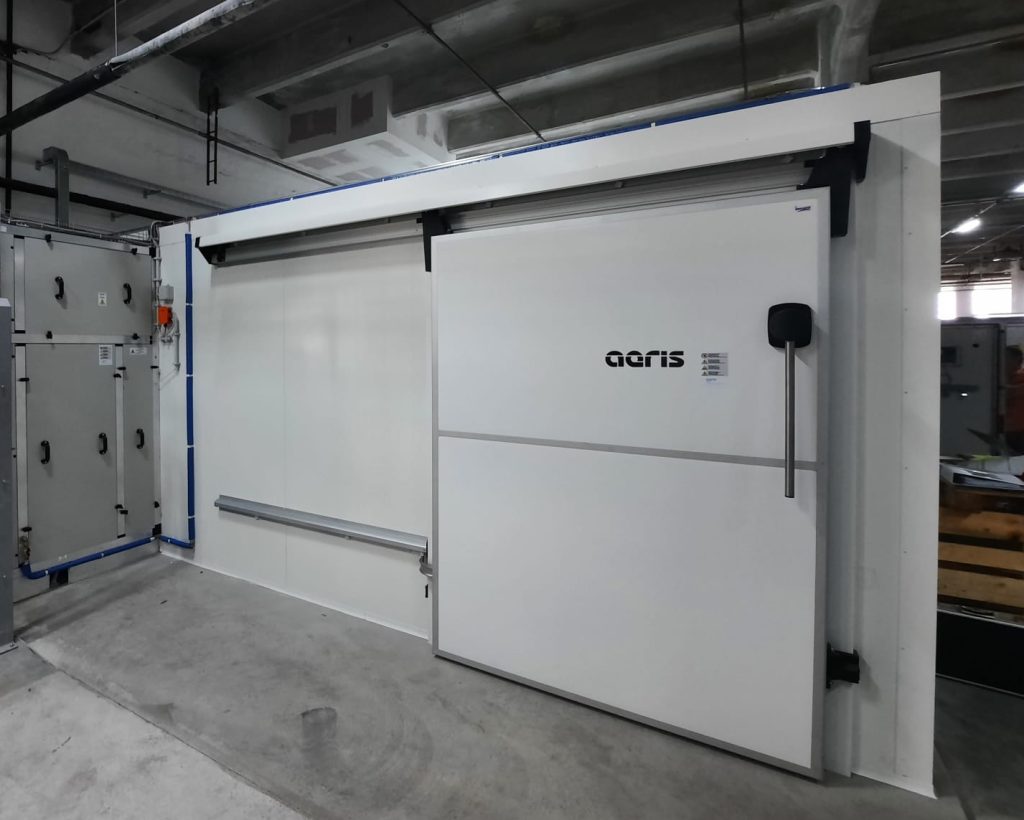
Yarn conditioning chambers are designed to grant the correct moisture regain of yarn following the thermal stress during previous processing stages.
Custom-engineered to meet specific storage and production requirements, they ensure stable and controlled humidity levels, which are essential for achieving high product quality.
Yarn conditioning chambers represent a strategic solution for manufacturers aiming to improve textile quality, optimise processing times, and maintain stable and controlled environmental conditions throughout the production cycle.
KEY ADVANTAGES
- Precise and constant humidity control;
- Optimisation of yarn properties;
- Improved final product quality.
OPERATING PRINCIPLE OF YARN CONDITIONING CHAMBERS
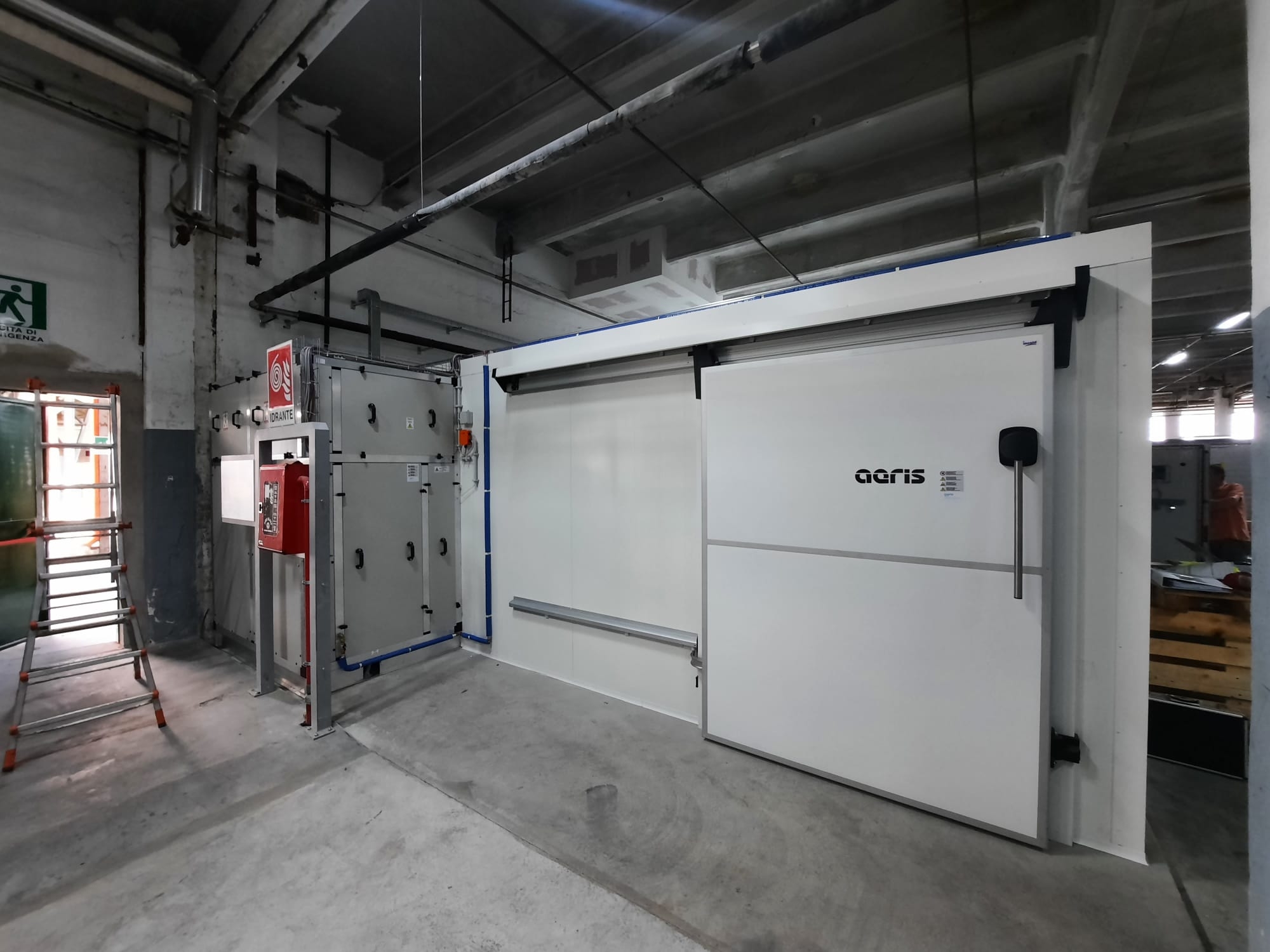
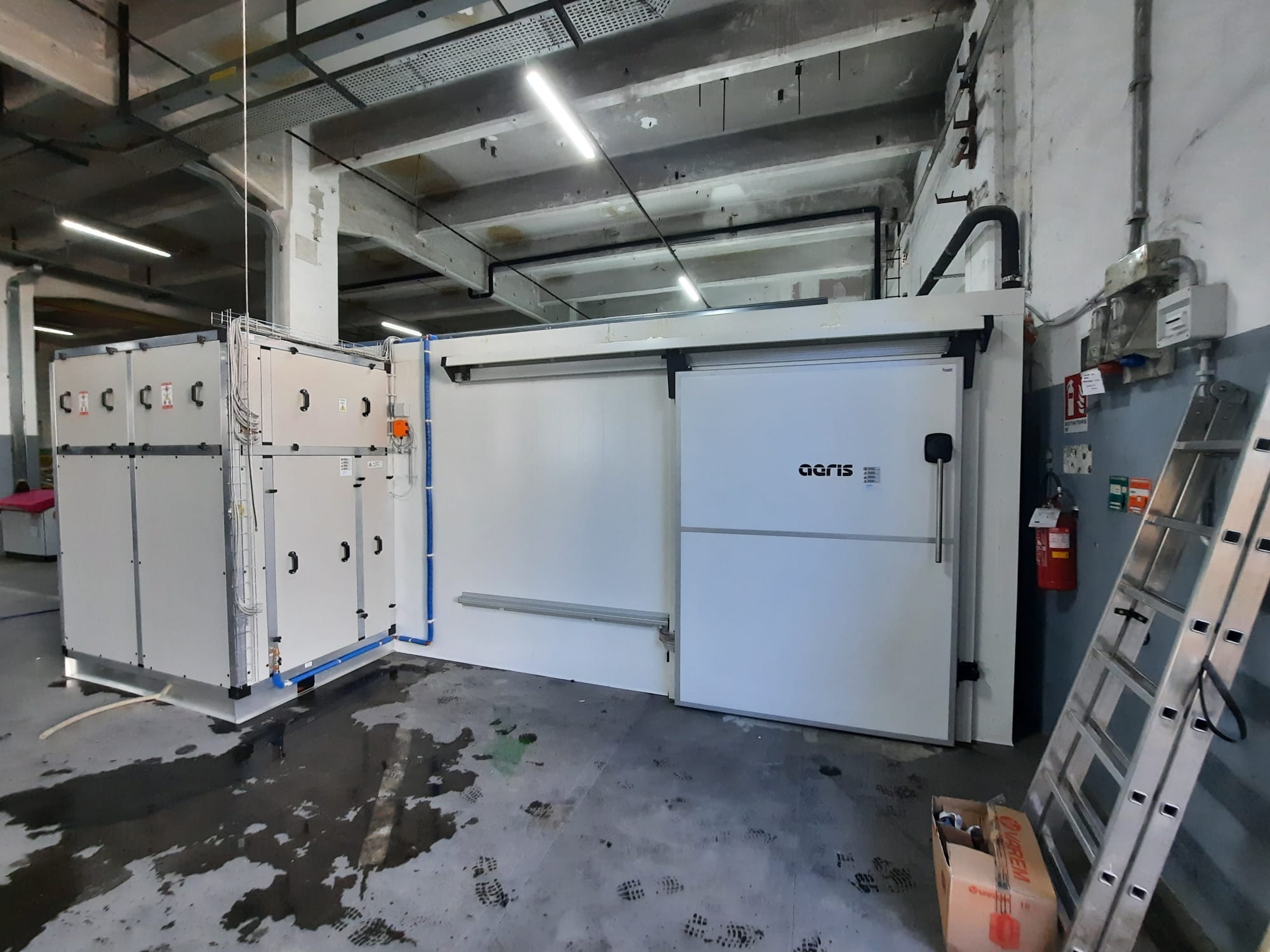
Yarn conditioning chambers are designed as enclosed and controlled environments, where a continuous flow of recirculated air is managed through dedicated ventilation and humidification systems.
Humidity control is a critical factor: thanks to the natural hygroscopic properties of textile fibres, the yarn absorbs the required moisture to maintain elasticity, uniformity, and dimensional stability. This conditioning process helps preserve high quality standards and prepares the product for subsequent processing stages, packaging, or shipment.
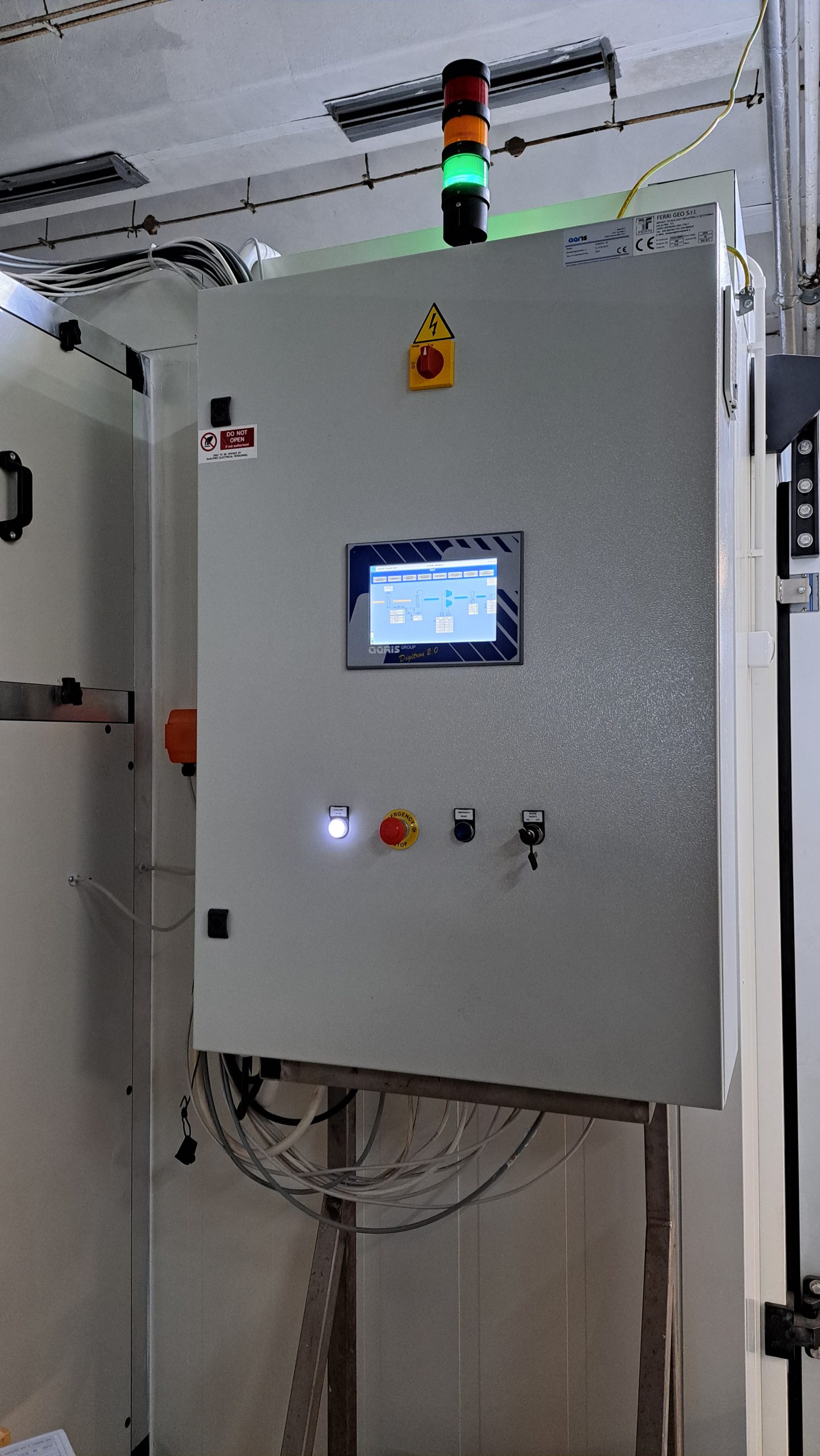
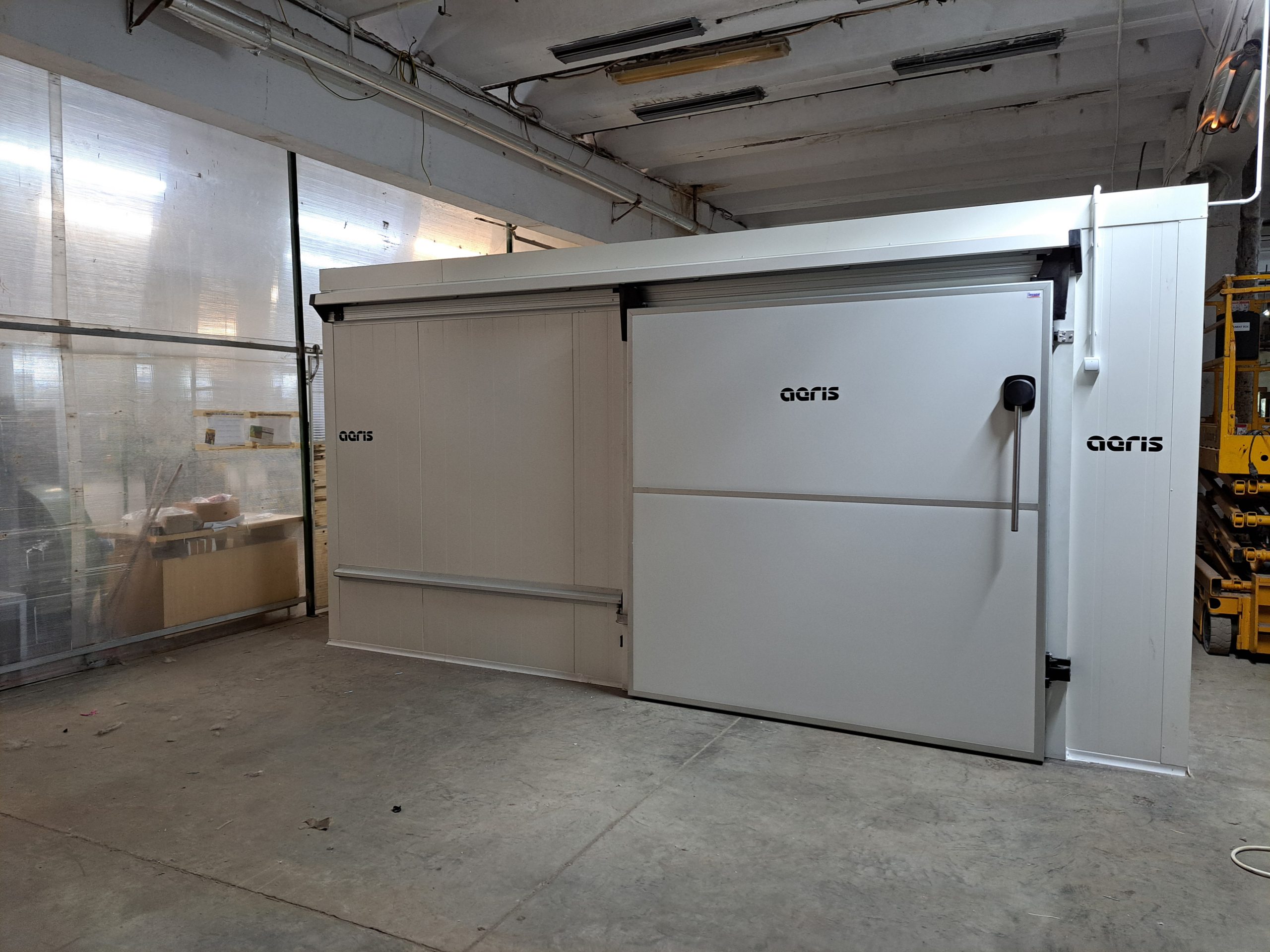
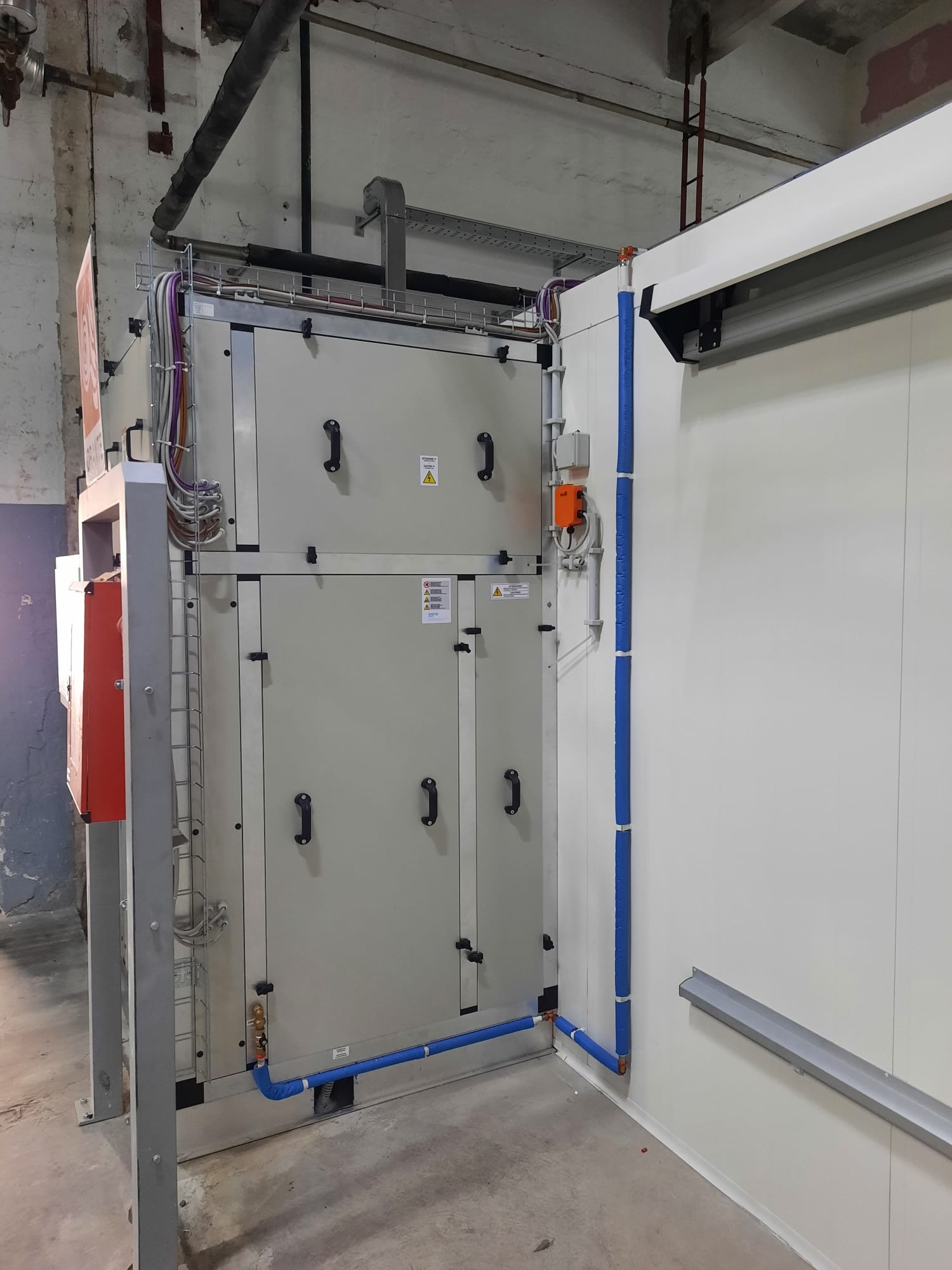
The chambers are constructed using sandwich panels with pre-coated galvanised steel outer layers and an insulated core, ensuring excellent thermal insulation and fast installation. They are equipped with automatic temperature and humidity control systems, with the capability to integrate into centralised plant supervision and control systems.

Aeris is the ideal partner to improve comfort and productivity in your industrial environment with our customised solutions.
Request a free technical evaluation to identify the most suitable solution for your application.
FILTRI A CARTUCCE ...
APPLICATIONS AND INDUSTRIES
This system is used in different industrial sectors, including:
FAQ
What is a Yarn Regain Chamber and why is it essential in the textile industry?
The AERIS Yarn Regain Chamber is a climate-controlled industrial system specifically designed to restore the natural moisture regain of yarns after spinning or before weaving.
Its primary purpose is to return textile fibres to their optimum moisture content, improving elasticity, tensile strength and processability while significantly reducing yarn breakage during subsequent manufacturing processes.
What quality and economic benefits do a Yarn Regain Chamber provide?
Controlled yarn conditioning stabilizes the fibres and eliminates electrostatic charges generated during mechanical processing. From an economic perspective, restoring the correct moisture regain enables the yarn to recover its standard commercial weight, reducing claims related to weight loss while improving production yield, product quality and overall batch profitability.
How does the AERIS Yarn Regain Chamber differ from conventional systems?
The AERIS Yarn Regain Chamber is distinguished by its ability to distribute conditioned air and humidity uniformly throughout the entire chamber, eliminating dead zones and temperature or humidity variations.
By integrating high-efficiency ventilation and humidification technologies, the system provides fast conditioning cycles, complete moisture absorption and significantly lower energy consumption than conventional solutions.
How is uniform conditioning ensured throughout large volumes of yarn?
The chamber has been engineered to generate a carefully balanced airflow that passes uniformly through pallets, trolleys and yarn packages. This controlled airflow ensures that the core of every yarn package reaches the same moisture regain as the outer layers, providing perfectly uniform conditioning throughout the entire batch and guaranteeing consistent product quality.
Does the system provide monitoring and traceability of conditioning cycles?
Yes. The AERIS Yarn Regain Chamber is equipped with intelligent control panels and high-precision sensors that can be fully integrated with Industry 4.0 manufacturing systems.
Operators can create dedicated conditioning recipes for different fibre types—including cotton, wool and synthetic fibres—while continuously monitoring all operating parameters in real time.
The system records historical operating data for complete process traceability and quality assurance, while remote monitoring capabilities enable efficient supervision and management of the entire installation.