

AIR HANDLING UNIT
AHU - UTA
AIR HANDLING UNITS (AHUs)
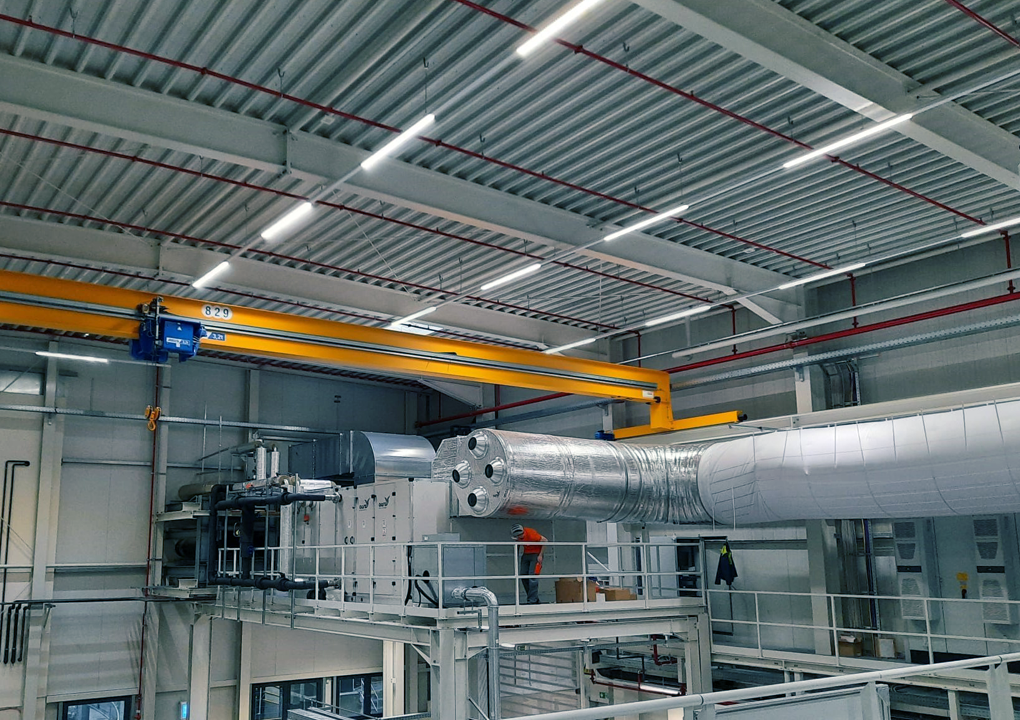
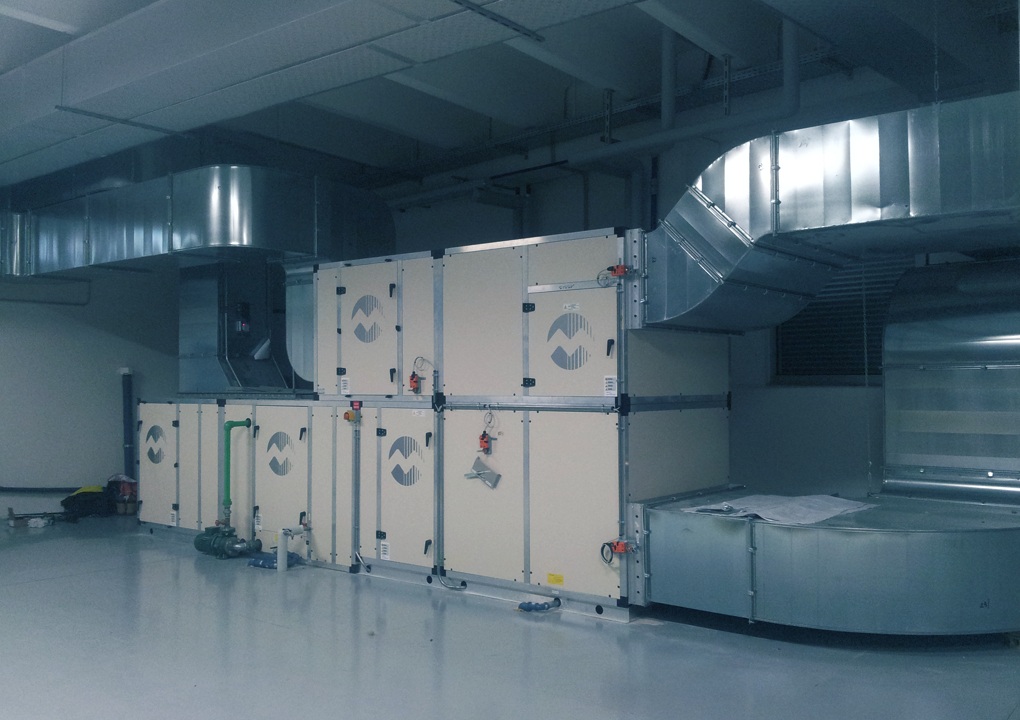
Prefabricated air handling units (AHUs) are modular systems designed to provide complete control of air conditions in industrial environments. These systems enable precise regulation of temperature, humidity, and air quality, ensuring optimal conditions for production processes and operator well-being.
With proven experience in the design and installation of air handling units, Aeris is the ideal partner for companies seeking efficiency, quality, and innovation.
OPERATING PRINCIPLE OF AIR HANDLING UNITS
The air, recirculated from the production area or fully supplied from outside, is first filtered with appropriate efficiency to remove dust, particulate matter, and airborne contaminants. It is then thermally conditioned through heating or cooling coils, powered by different energy sources depending on seasonal requirements.
Humidity control, when required, is ensured by dedicated humidification systems, which are essential for maintaining optimal environmental conditions and process quality.
The treated air is then evenly distributed throughout the facility through a ductwork system, with the possibility of adjusting climate parameters for each individual zone.
All functions are managed by automatic control systems, ensuring precise, reliable, and energy-efficient operation.
HEAT RECOVERY
To improve overall system efficiency, heat recovery modules can be integrated to recover thermal energy that would otherwise be wasted and reuse it to support the operation of the air handling unit.
ADVANTAGES OF AHUs
- High energy efficiency: COPH more than 40;
- High saturation efficiency (SEH): up to 100%;
- Compliance with hygiene standards: compliant with VDI 6022 requirements for hygienic air handling systems;
- High humidification and cooling capacity compared to conventional systems;
- Maintenance-free operation: volumetric stainless steel pump lubricated by water, without valves, mechanical seals, or oil sump;
- Uniform and stable humidity levels throughout the treated environment;
- Prevention of biofilm and bacterial growth within system components;
- Elimination of corrosion risks on system components;
- Ability to supply low-temperature air directly into the production area without condensation issues;
- Reduced electrical energy consumption;
- No wastewater discharge;
- Air distribution system with completely dry ductwork;
- Reduced number of pipes within the production area.
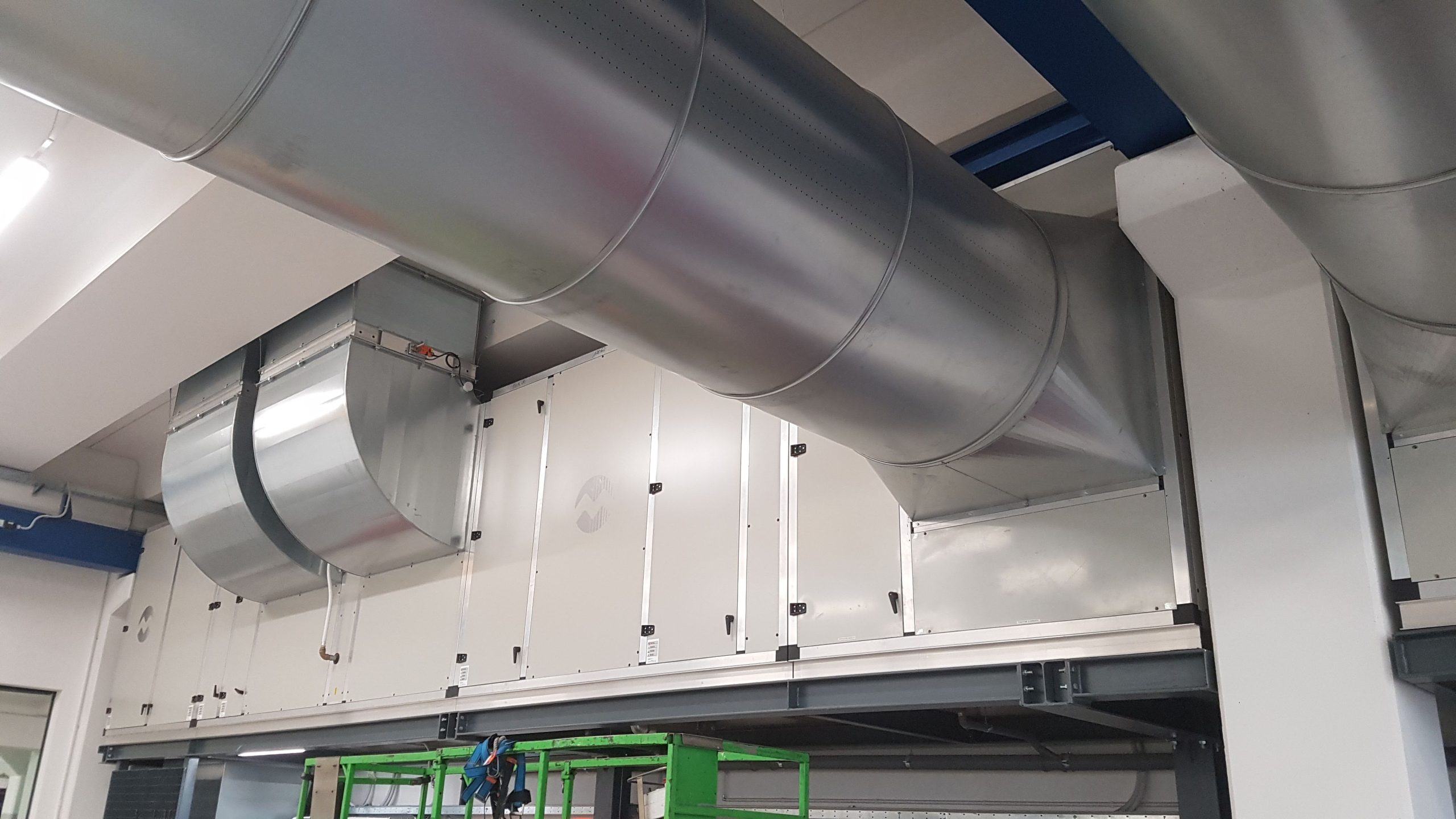
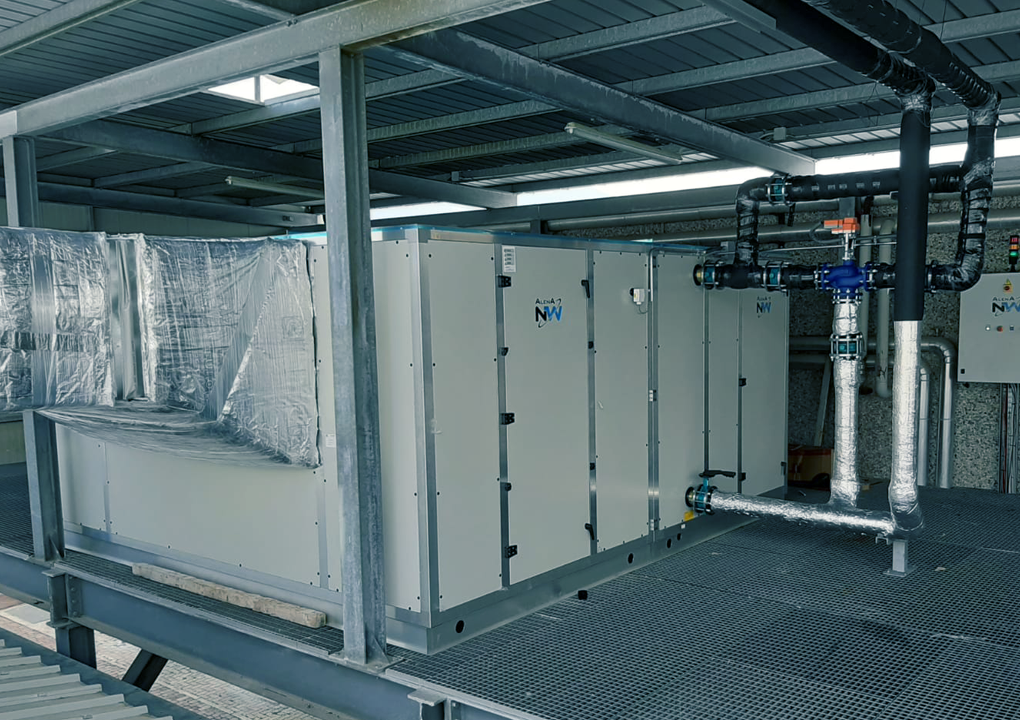
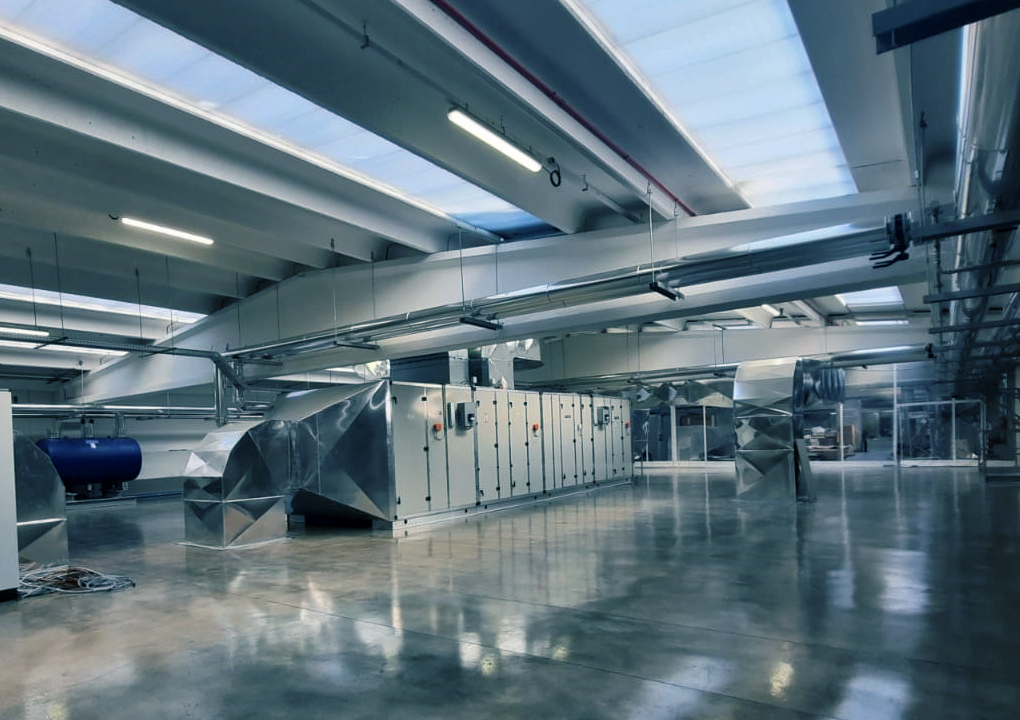
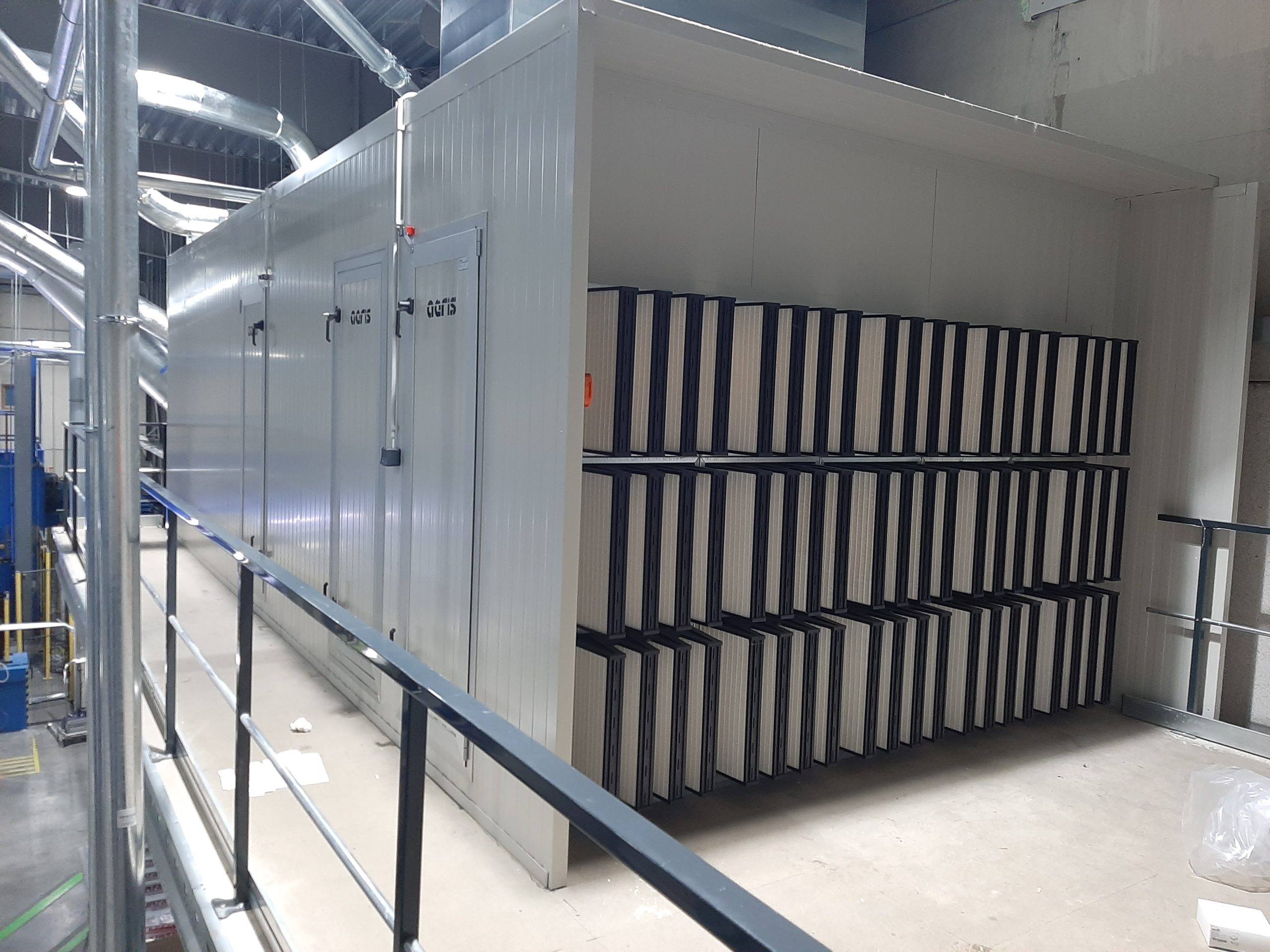
Aeris is the ideal partner to improve comfort and productivity in your industrial environment with our customised solutions.
Request a free technical evaluation to identify the most suitable solution for your application.
FILTRI A CARTUCCE ...
APPLICATIONS AND INDUSTRIES
These systems are used across a wide range of industrial sectors, including:
FAQ
What is the primary function of an Air Handling Unit (AHU) in an industrial environment?
An industrial Air Handling Unit (AHU) is the central system designed to provide the precise air quality and thermodynamic conditions required by specific manufacturing processes and occupational safety standards.
Unlike commercial HVAC systems, industrial AHUs are engineered to handle high airflow rates and substantial thermal loads while performing three essential functions:
• Multi-stage air filtration, ensuring the progressive removal of airborne contaminants.
• Temperature and humidity control, maintaining even very tight tolerances to protect sensitive raw materials such as hygroscopic powders or electronic components.
• Air pressure control, maintaining either positive pressure to prevent the ingress of external contaminants or negative pressure to contain hazardous substances, while continuously supplying the make-up air required to replace the air extracted by the dust collection system.
What treatment stages does the air pass through inside a standard industrial AHU?
An industrial AHU is built using a modular configuration, with each section performing a specific function:
• Air Filtration – The air passes through multiple filtration stages, ranging from pre-filters and panel filters to high-efficiency absolute filters, removing dust, pollen and airborne particulate.
• Heating and Cooling – Finned heat exchanger coils supplied with hot water, chilled water or refrigerant regulate the air temperature according to process requirements.
• Humidification / Dehumidification – Nozzle-based or steam humidification systems precisely control the relative humidity of the supplied air.
• Air Distribution – High-pressure fans—typically plug fans controlled by Variable Frequency Drives (VFDs)—deliver the treated air into the duct distribution network.
How do Air Handling Units contribute to energy savings and lower operating costs?
Energy efficiency in industrial AHUs is achieved through optimized thermal recovery and intelligent airflow control.
From a thermal perspective, high-efficiency heat recovery systems—primarily cross-flow heat exchangers or run-around coil systems—are integrated to ensure complete physical separation between exhaust air and supply air, eliminating any risk of cross-contamination.
These systems recover heating or cooling energy from the exhaust air before discharge, pre-heating or pre-cooling the incoming outdoor air and significantly reducing the energy demand of boilers and chillers.
From an electrical standpoint, high-efficiency fan motors combined with Variable Frequency Drives (VFDs) continuously adjust airflow according to the actual requirements of the production areas.
When outdoor conditions are favourable, free cooling can also be employed, allowing the facility to be cooled using outside air while minimizing mechanical cooling demand.
Which industrial sectors require custom-engineered Air Handling Units?
Custom-engineered AHUs are essential wherever indoor environmental conditions directly influence product quality or production stability.
Typical applications include:
• Rubber, plastics, printing and paper converting industries, where AHUs control high thermal loads and maintain constant humidity to prevent material deformation and drying defects.
• Electroplating and surface treatment facilities, where AHUs are manufactured using stainless steel or engineered thermoplastics, with motors isolated from the process airflow to withstand corrosive and acidic vapours.
• Foundries and steel plants, where specially designed AHUs operate under extreme temperatures using corrosion-resistant heat exchanger coils while supplying the large volumes of make-up air required by the production process.
• Textile manufacturing, where precise humidity control prevents electrostatic charge build-up, reduces yarn breakage and effectively manages airborne fibres and textile lint.
What routine maintenance is required to preserve the performance of an Air Handling Unit?
To prevent energy losses, reduced airflow and unexpected downtime, industrial AHUs require systematic maintenance focused on maintaining maximum thermal and aerodynamic efficiency.
The primary maintenance activity is the continuous monitoring of differential pressure gauges, allowing filters to be replaced before excessive loading reduces airflow to the production areas.
Equally important is the periodic chemical and mechanical cleaning of the heat exchanger coils and internal surfaces to remove dust, grease and industrial residues that reduce heat transfer efficiency and accelerate corrosion.
Routine maintenance should also include:
• Inspection of drive belts, including wear and tension adjustment.
• Inspection of fan bearings.
• Verification of condensate drain operation.
• Monitoring of motor electrical current consumption.
These preventive maintenance activities ensure stable performance, maximum energy efficiency and long service life of the Air Handling Unit.