effective and versatile source capture directly at the point of emission
INDUSTRIAL EXTRACTION ARMS
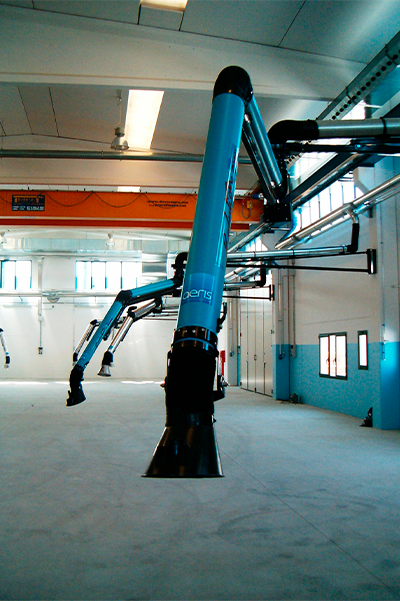
Aeris extraction arms are designed to ensure effective capture of dust, fumes, vapours, and oil mist directly at the source. Thanks to their flexible and articulated structure, each extraction arm can be easily positioned to suit different operational requirements, ensuring maximum efficiency and operator safety. Aeris designs and manufactures industrial extraction arms tailored to specific application needs, ensuring maximum safety, high performance, and long-term reliability.
What is an industrial extraction arm and what is its purpose in production environments?
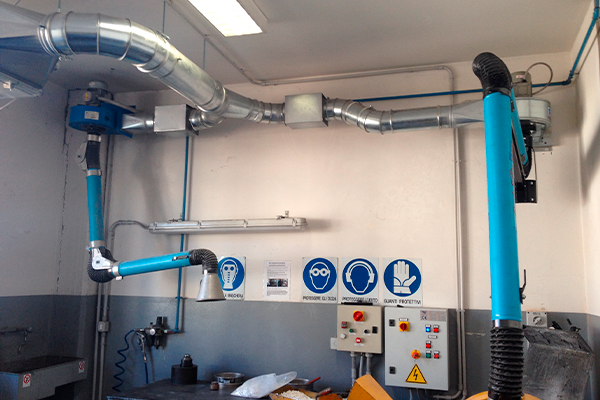
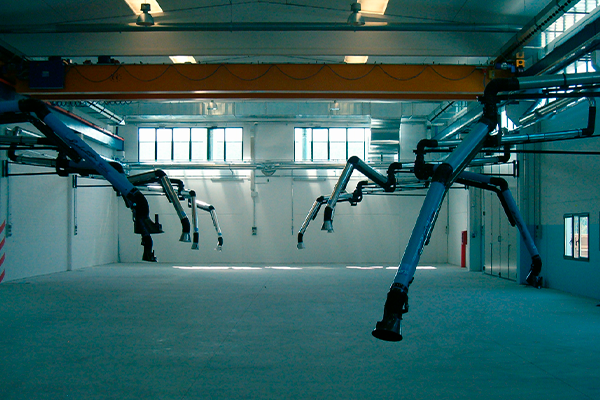
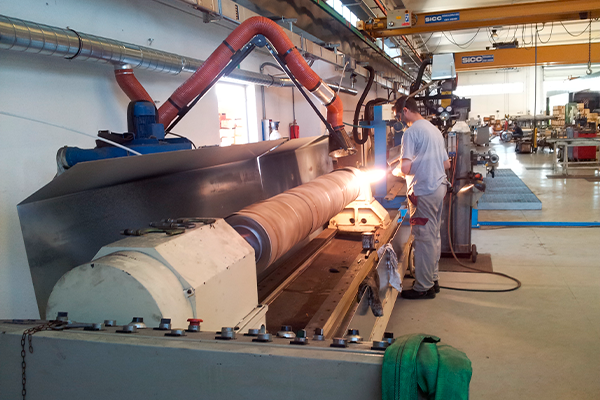
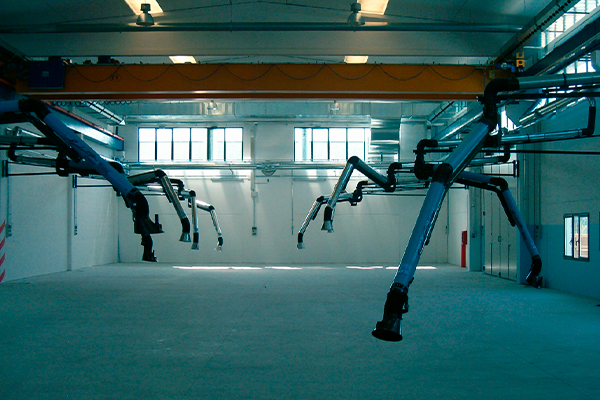
An industrial extraction arm is an articulated extraction device designed to capture dust, fumes, vapours and airborne contaminants directly at the source, before they reach the operator’s breathing zone or disperse throughout the workplace. Its effectiveness lies in the flexibility of its articulated structure. Thanks to self-supporting joints and swivel assemblies, the operator can easily position and adjust the extraction hood close to the specific work area. This targeted positioning ensures the required capture velocity, optimizes the airflow rate and reduces the energy demand of the downstream filtration system.
Which industrial applications are best suited for extraction arms?
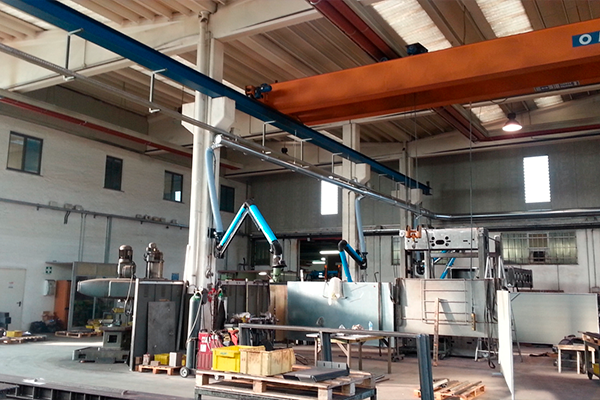
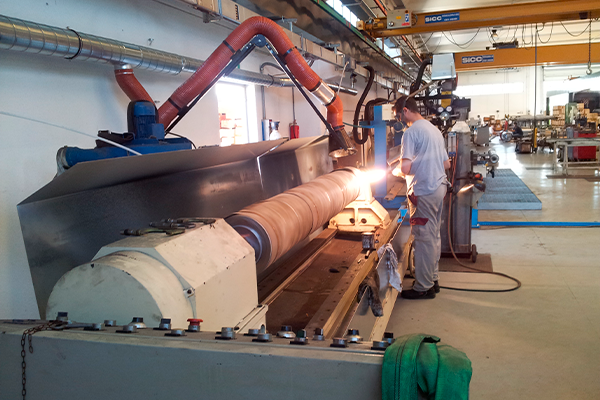
Extraction arms are the ideal solution for flexible workstations and applications involving medium or large workpieces where the operator frequently changes position. Typical applications include: • MIG/MAG, TIG and stick welding. • Light grinding and finishing operations. • Chemical and pharmaceutical laboratories during the transfer or weighing of volatile substances. • Adhesive application, sealing and painting of small components.
How do you select the most suitable extraction arm for a specific application?
The selection is based on three key parameters evaluated by our engineering team: • Reach and Installation Requirements – Arm length (typically from 2 to 5 metres, extendable with extension booms) and mounting configuration (wall-mounted, ceiling-mounted or mobile trolley-mounted). • Type of Contaminant – Standard flexible hoses for general fumes or smooth rigid aluminium or stainless-steel ducting to minimize pressure losses and facilitate cleaning. • Working Environment – Availability of special versions designed for corrosive environments, such as chemical processing or electroplating applications.
Are extraction arms available in ATEX-certified configurations for potentially explosive atmospheres?
Yes. For applications involving combustible dust or flammable vapours, extraction arms are available in fully ATEX-certified configurations. These models are specifically engineered to eliminate ignition risks associated with electrostatic charge build-up. Depending on the application, the structure can be manufactured from stainless steel or conductive thermoplastics such as PP-EL, combined with antistatic flexible hoses and a continuous grounding system that ensures complete electrical continuity. In addition, all mechanical joints and friction mechanisms are positioned outside the contaminated airflow to prevent moving parts from coming into contact with flammable substances or allowing dust accumulation inside the ductwork.
What maintenance is required to ensure smooth movement and consistent extraction performance?
Routine maintenance is designed to preserve both aerodynamic performance and ease of operation. Recommended maintenance activities include: • Cleaning the extraction hood and internal ductwork to remove deposits that could restrict airflow. • Inspecting the flexible hose and tightening hose clamps to prevent air leakage. • Lubricating the pivot points and periodically adjusting the friction joints and balancing mechanisms (spring- or gas-strut-assisted) to ensure the arm remains in the desired position without drifting. • Checking the smooth operation of the manual airflow control damper to ensure accurate airflow adjustment.