

CLEAN ROOM
controlled contamination environments
WHAT IS A CLEANROOM
Cleanrooms are controlled contamination environments designed in accordance with ISO 14644-1 classifications to ensure optimal conditions for sensitive production processes. Each installation is custom-engineered and integrated with high-efficiency air conditioning, filtration, and environmental control systems.
Cleanrooms provide a tailored solution to ensure quality, safety, and precise environmental control in critical manufacturing processes. From design to validation, we deliver certified environments that meet the highest industry standards.
OPERATING PRINCIPLE OF CLEANROOMS
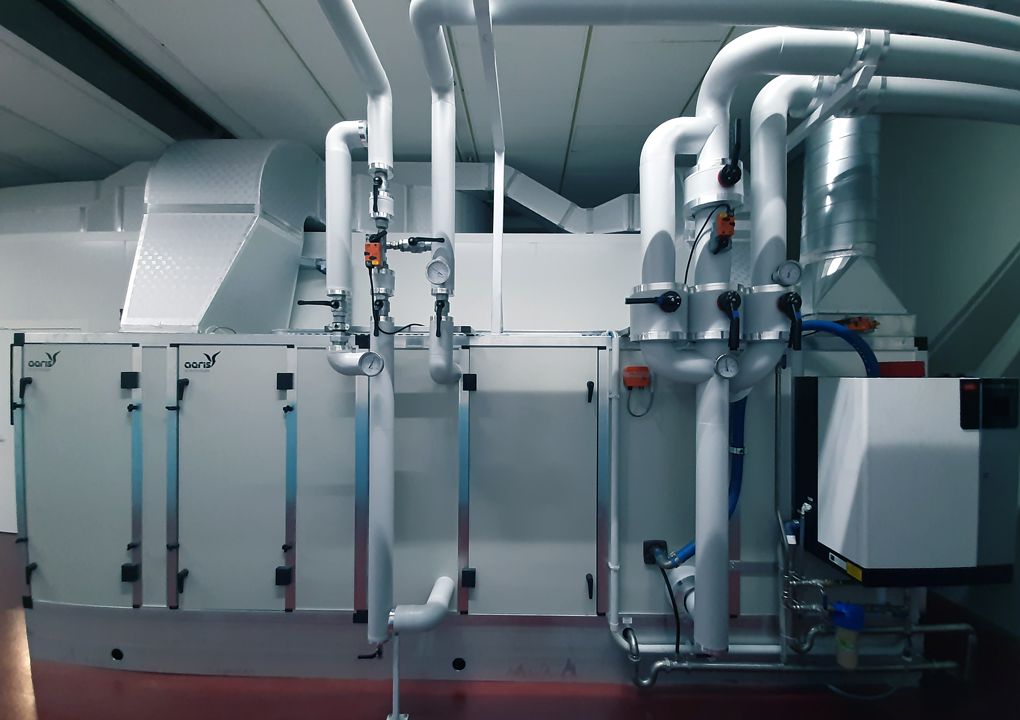
Depending on the required ISO classification and specific process requirements, cleanrooms are equipped with advanced air treatment systems that include high-efficiency filtration, controlled air exchange, and airflow management. The objective is to ensure the controlled removal of airborne particles and the maintenance of environmental conditions compliant with the required ISO class.
Based on the application and the criticality of the production process, cleanrooms can also be equipped with monitoring and control systems for key environmental parameters, including temperature, relative humidity, and differential pressure between adjacent areas. These systems, managed through digital sensors and centralised control units, ensure stable, traceable conditions in full compliance with technical and regulatory requirements.
FUNCTIONAL AREAS AND ACCESSORIES OF CLEANROOMS
- Airlocks for personnel and materials: pressurised transition areas that separate zones with different classifications, minimising the ingress of contaminants;
- Changing rooms: dedicated areas for personnel gowning, arranged in progressively cleaner zones to ensure controlled access to cleanrooms;
- Pass-through boxes (pass boxes): interlocked double-door transfer systems designed for the safe transfer of materials between areas with different classifications, reducing contamination risks;
- Technical and service rooms: dedicated spaces for housing equipment and plant systems, designed to facilitate maintenance without interfering with controlled contamination areas.
KEY ADVANTAGES OF CLEANROOMS
- Effective contamination control;
- Compliance with regulatory and industry standards;
- Improved product quality and process reliability;
- Modular and flexible design;
- Advanced environmental control;
- Enhanced operational efficiency;
- Protection of personnel and product integrity;
- Full traceability and continuous monitoring;
- Competitive advantage, providing added value for customers and business partners.
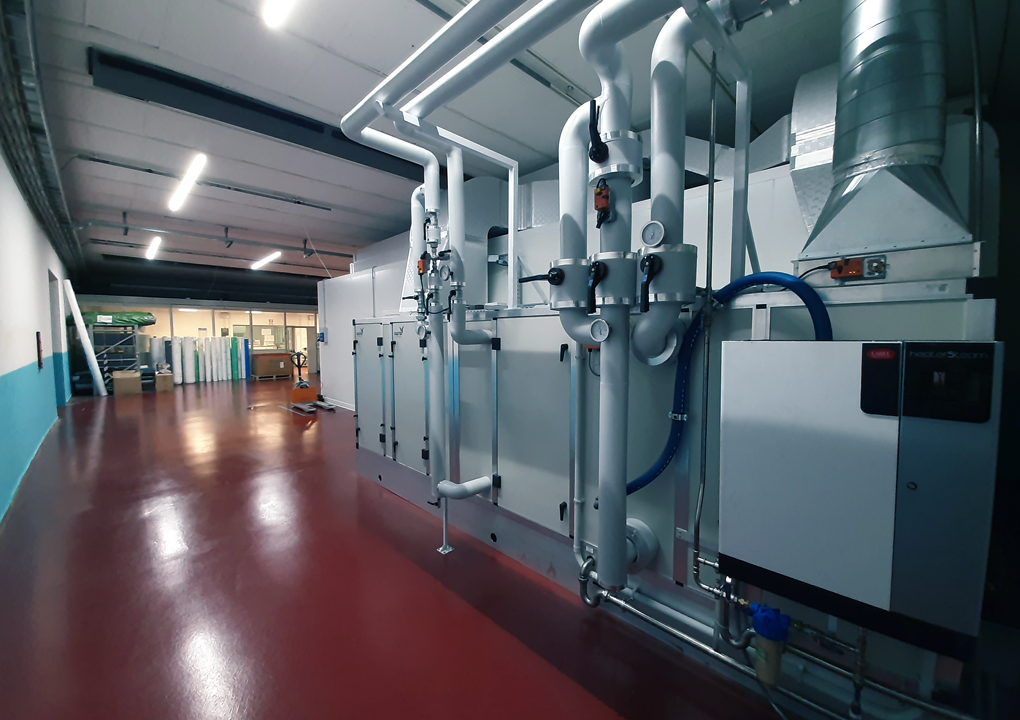
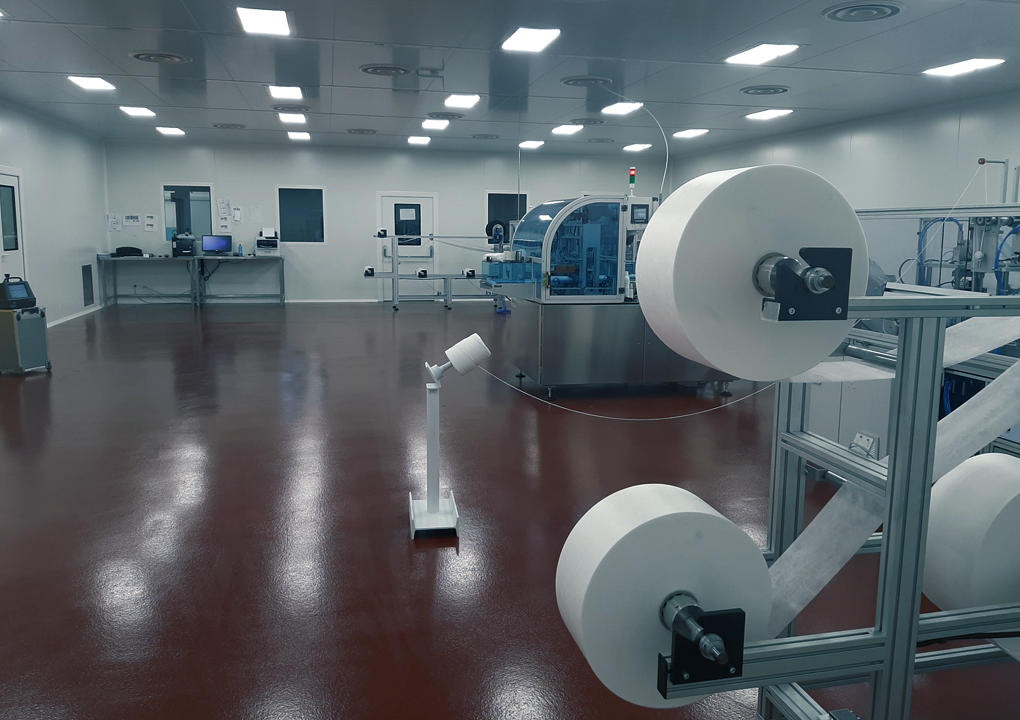
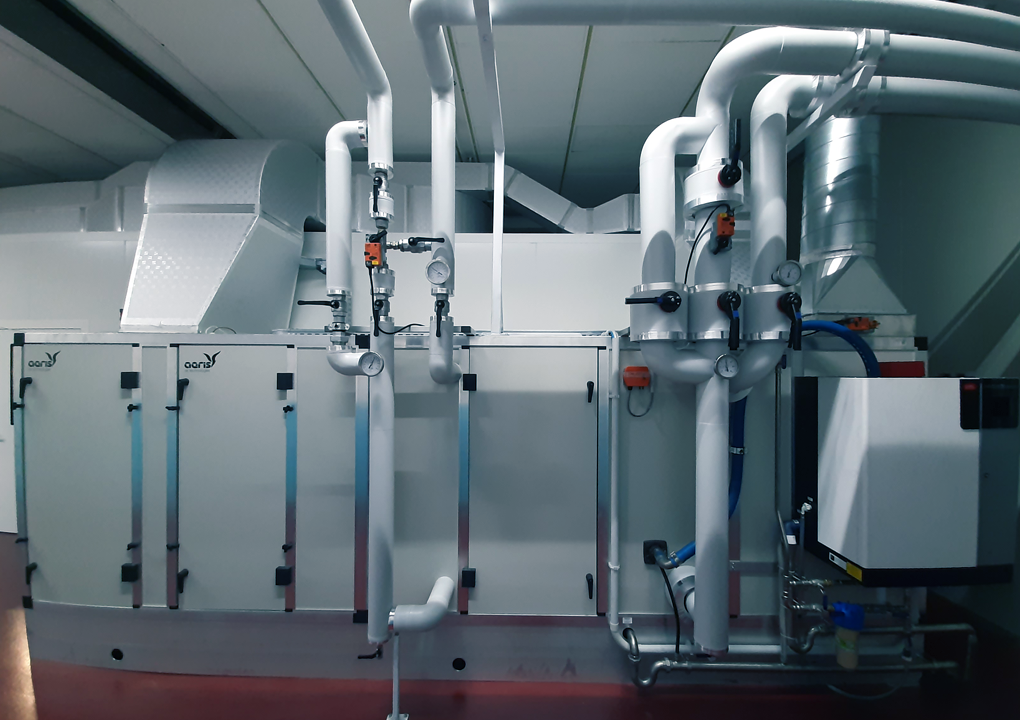
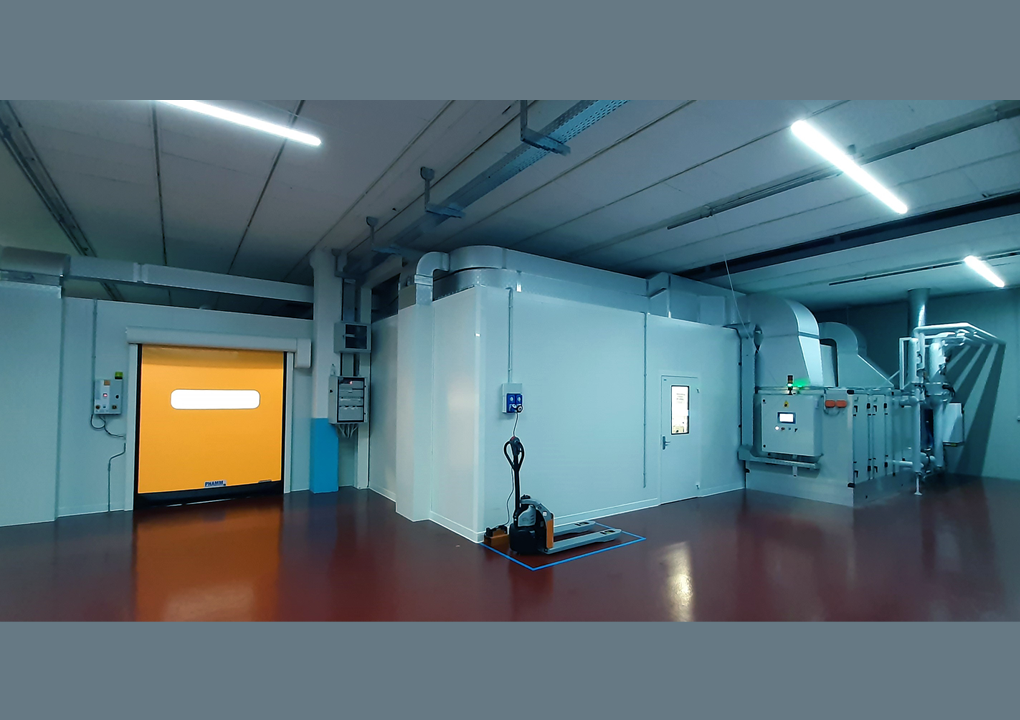
Aeris is the ideal partner to improve comfort and productivity in your industrial environment with our customised solutions.
Request a free technical evaluation to identify the most suitable solution for your application.
FILTRI A CARTUCCE ...
APPLICATIONS AND INDUSTRIES
These systems are used across a wide range of industrial sectors, including:
FAQ
What is a Clean Room and what is its primary purpose?
A Clean Room is a controlled environment specifically designed to maintain airborne particulate contamination within strictly defined limits, protecting sensitive manufacturing processes from dust, microorganisms and other airborne contaminants. Unlike conventional HVAC systems, a clean room simultaneously controls multiple environmental parameters, including air cleanliness through HEPA filtration, precise temperature and relative humidity, and differential air pressure between adjacent areas.
Maintaining positive pressure prevents the ingress of contaminants whenever doors are opened, ensuring a consistently controlled production environment.
Which industries require Clean Rooms?
Clean Rooms are essential wherever microscopic contamination could compromise product quality, process reliability or regulatory compliance.
Typical applications include:
• Pharmaceutical and biotechnology manufacturing.
• Medical device production.
• Microelectronics and semiconductor manufacturing.
• Food processing and packaging under controlled environments.
• Biosafety laboratories.
• Precision engineering, optics and advanced manufacturing.
In these industries, even a single airborne particle may affect product quality or render high-precision components unusable.
What does the turnkey Clean Room service include?
The AERIS turnkey solution provides a single point of responsibility throughout the entire project, from initial engineering to final validation.
The service includes:
• Airflow analysis and clean room design.
• Air change rate calculations.
• Installation of modular clean room structures, including flush wall panels, sealed ceilings, interlocked doors and technical flooring.
• Installation of dedicated HVAC and air filtration systems.
• Functional commissioning and performance testing.
• HEPA filter integrity testing.
• Airborne particle classification.
• Preparation of IQ (Installation Qualification) and OQ (Operational Qualification) documentation in accordance with current international guidelines.
How are Clean Rooms classified and which standards apply?
Clean Rooms are classified according to the international ISO 14644-1 standard, which defines cleanliness classes from ISO Class 1 to ISO Class 9 based on the maximum allowable concentration of airborne particles under both at-rest and operational conditions.
For pharmaceutical and healthcare applications, facilities are additionally designed in accordance with EU GMP guidelines, which classify clean environments into Grades A, B, C and D.
Each installation is engineered to maintain the required cleanliness classification through carefully controlled airflow patterns, using either unidirectional (laminar) airflow or non-unidirectional (turbulent) airflow, depending on process requirements.
How can a Clean Room with high air change rates remain energy efficient?
Energy efficiency is achieved by separating the thermal treatment of outdoor make-up air from the recirculation of the large airflow volumes required to maintain the specified cleanliness class.
Electrical energy consumption is minimized through the use of high-efficiency Fan Filter Units (FFUs) equipped with EC motors, combined with intelligent airflow control strategies that automatically reduce air change rates during non-production periods while maintaining the minimum positive pressure and filtration levels required to preserve room classification.
Thermal energy efficiency is further enhanced by incorporating high-efficiency cross-flow plate heat exchangers or run-around coil heat recovery systems on the exhaust air stream.
In addition, progressive low-pressure-drop pre-filtration reduces system resistance, lowering fan energy consumption while extending the service life of the final HEPA filters.