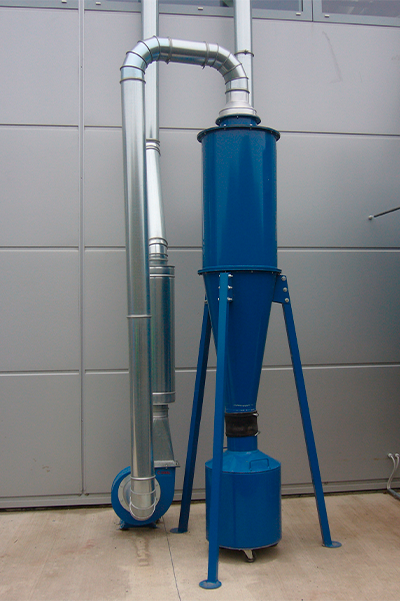
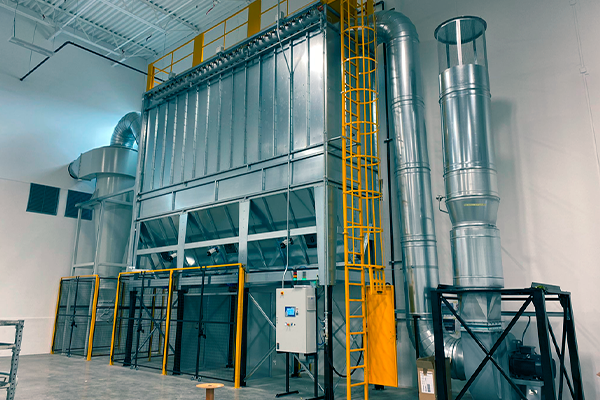
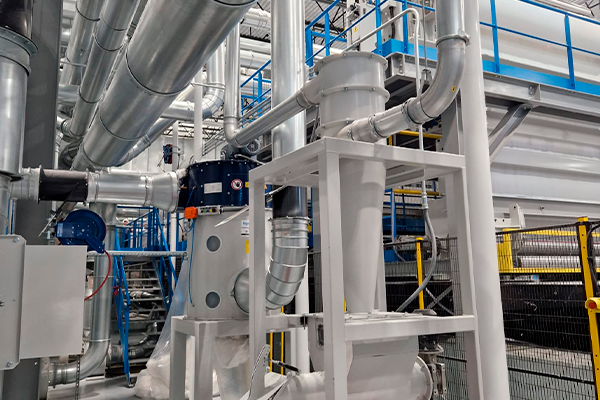
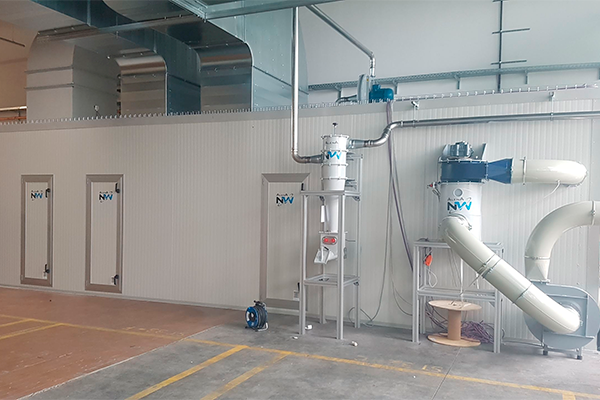
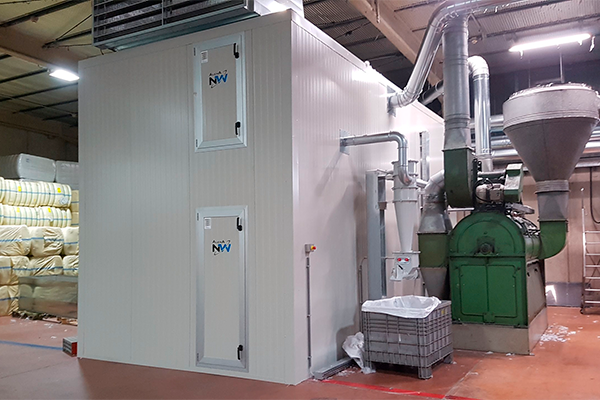
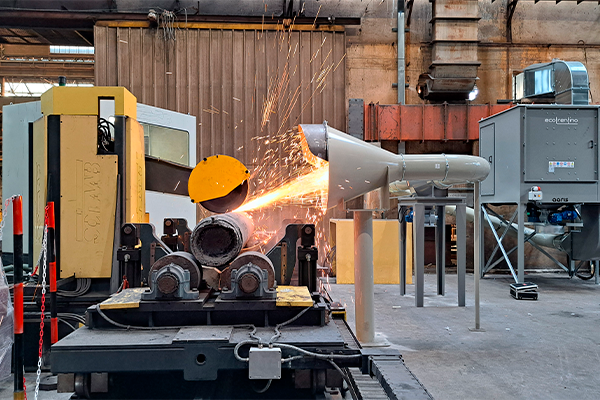
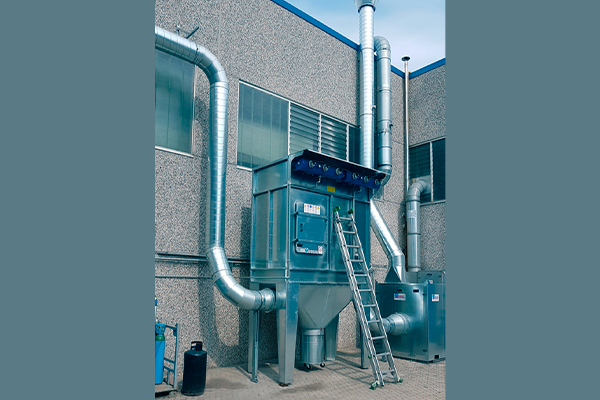
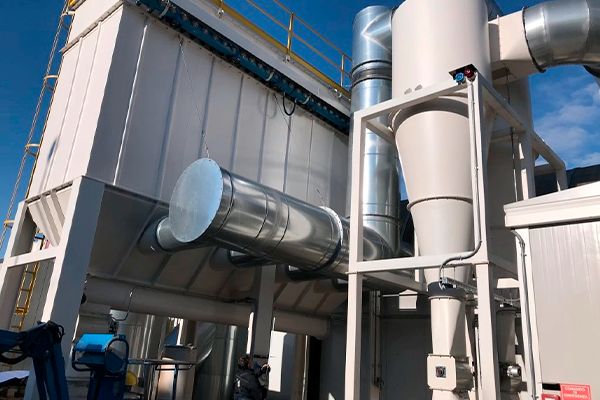
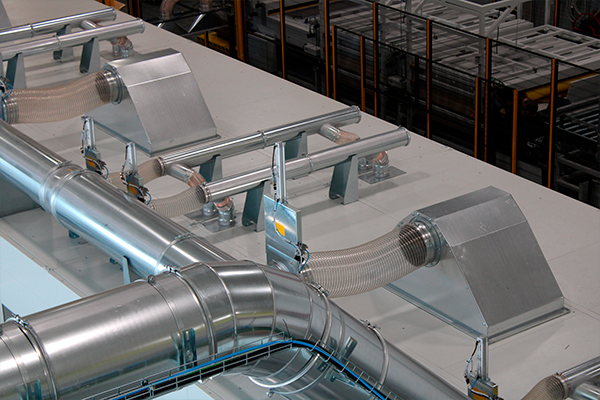
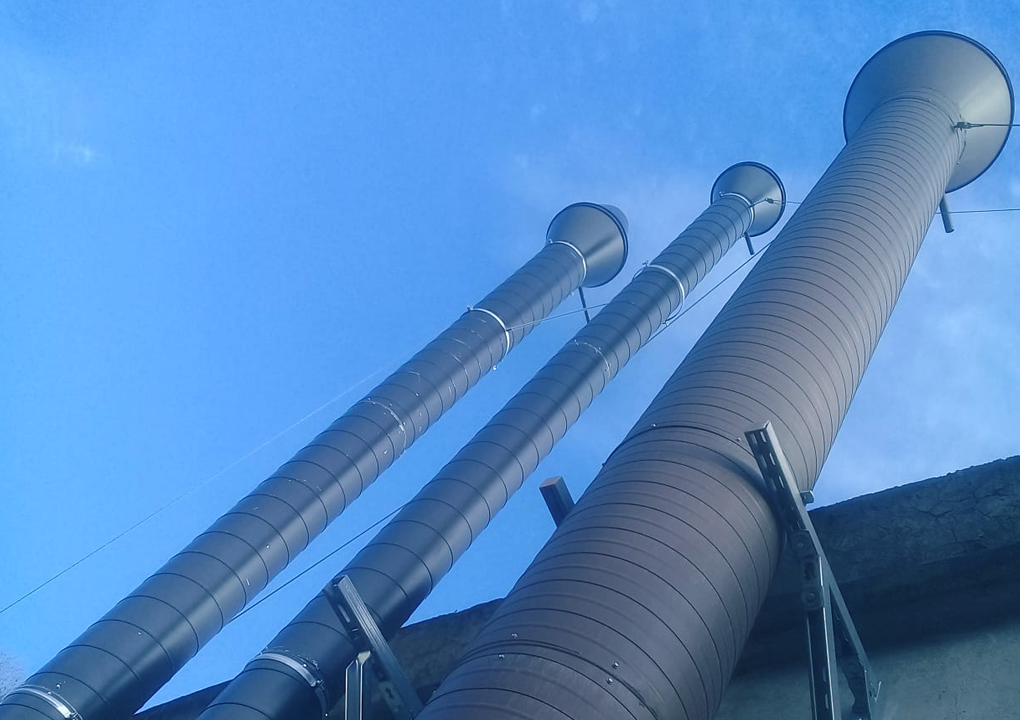
A cyclone separator, also known as a cyclone filter or cyclonic separator, is a device used in industrial environments for air purification by removing suspended solid particles.
Cyclone separators operate using centrifugal force to separate particulate matter from the airflow, providing effective pre-filtration and protecting downstream filtration systems.
Each Aeris cyclone is custom designed to meet the client’s specific requirements, considering key factors such as particle size, material properties, and operating conditions. We provide tailored solutions to deliver long-term performance and reliability, helping protect both workers’ health and the surrounding environment.
CYCLONE SEPARATOR OPERATION
Contaminated air enters the cyclone separator tangentially, creating a high-speed vortex inside the unit.
Due to centrifugal force, the heavier solid particles are driven against the inner walls of the cyclone and then fall into the lower section, where they are collected in a dedicated hopper. The cleaned air rises through the central outlet and is discharged from the top of the cyclone, having been effectively separated from the majority of dust particles.
ADVANTAGES OF CYCLONE SEPARATORS
Cost-effective and durable: competitive investment cost and long-term reliability thanks to a simple and solid design;
Minimal maintenance: require very limited maintenance due to the absence of complex mechanical components;
Efficient dust collection: the simple design allows easy and effective recovery of separated particles;
Operational versatility: effective in both dry conditions and in the presence of humidity or moist air streams;
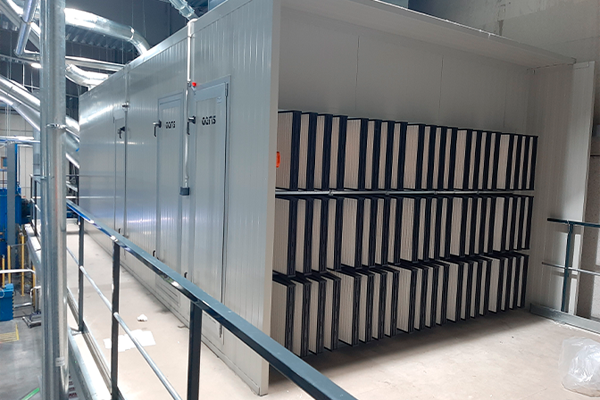
Protection of downstream filtration systems: reduce wear and extend the service life of bag or cartridge filters installed downstream, improving overall system efficiency;
ATEX certification: versions available in compliance with ATEX regulations for use in potentially explosive environments.
OUR PROJECTS
Aeris is the ideal partner for companies seeking efficiency, quality, safety, and innovation.
Request a free, personalised technical evaluation to identify the most suitable filtration solution for your application.
How does a cyclone separator operate without moving parts?
The separator operates by exploiting centrifugal force and gravity. The air stream enters tangentially through the upper section of the cyclone, creating a powerful downward vortex. Dust particles, being heavier than air, are forced against the cyclone walls, where they lose velocity due to friction before falling into the collection hopper. At the centre of the vortex, the cleaned air reverses its flow direction and rises through the vortex finder before being discharged through the outlet at the top. This entirely mechanical process operates continuously and requires virtually no maintenance.
In which industrial applications is a cyclone separator recommended and when is it used as a pre-separator?
The Aeris CYC range is ideal for separating dust, fibres and granular materials in industries such as woodworking, metal fabrication, recycling and flour milling. Cyclone separators are frequently installed upstream of bag filters or cartridge filters as pre-separators. By removing the heavier and coarser particles, they reduce the load on the final filtration stage, minimize mechanical wear and significantly extend the service life of the filter media.
What are the advantages of cyclone separators compared to fabric filters?
The main advantage is the significant reduction in operating and maintenance costs. Since cyclone separators contain no internal filter elements that can clog or wear out, there is no need for replacement filter media or compressed-air cleaning systems. In addition, Aeris cyclone separators offer exceptional operational flexibility. They can operate under both positive and negative pressure, adapt to virtually any airflow rate, and withstand high temperatures and sparks, also providing an effective spark arresting function.
Are cyclone separators suitable for fine dust collection and compliance with atmospheric emission limits?
Yes. Aeris CYC cyclone separators provide high separation efficiency and can successfully collect fine particulate, achieving optimum cut-point (d₅₀) performance between 2 and 10 microns, depending on the model. However, to comply with stringent atmospheric emission regulations for very fine particulate, cyclone separators are generally used as the first mechanical separation stage, followed by a fabric filter or a high-efficiency absolute filter for final air purification.
Which discharge accessories are available and what operating precautions should be taken?
For continuous material discharge, cyclone separators can be equipped with either a rotary airlock valve or a motorized screw compactor. To ensure consistent separation efficiency, two basic operating requirements should always be observed:
Regular emptying of the collection container to prevent dust from being re-entrained into the vortex.
Perfect air sealing of the discharge system. Any air leakage from the bottom of the cyclone will disrupt the internal airflow pattern and significantly reduce separation efficiency.