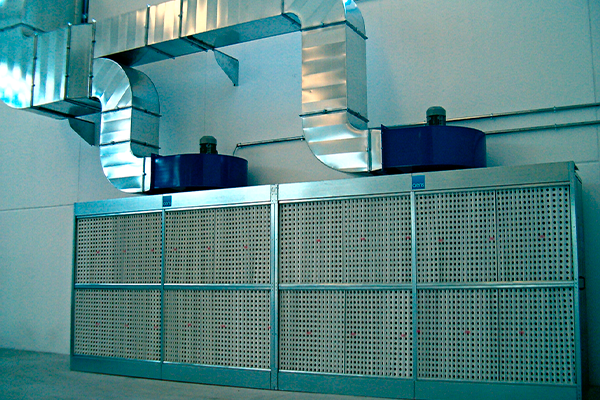
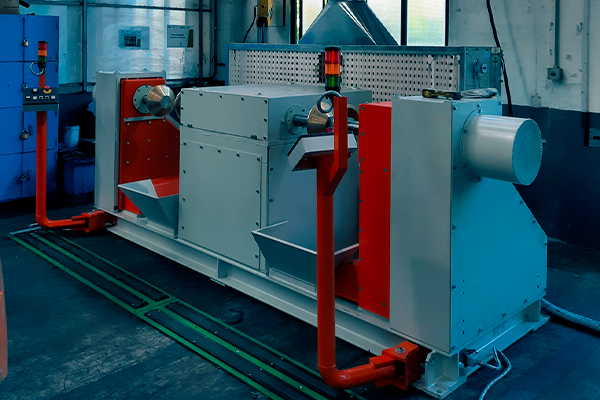
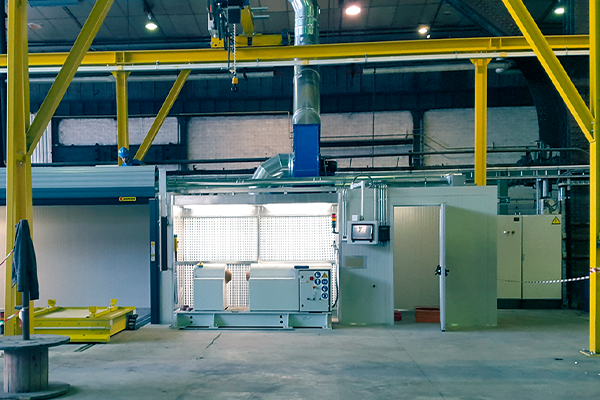
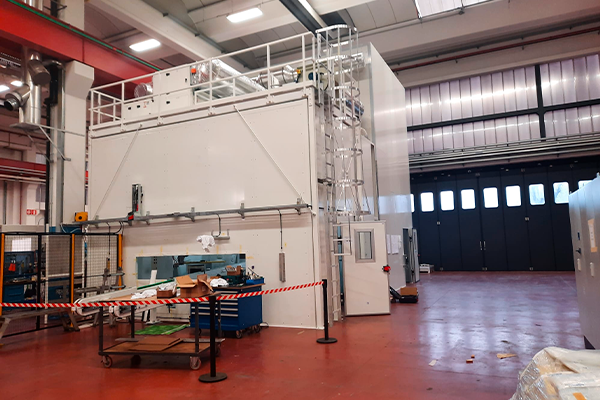
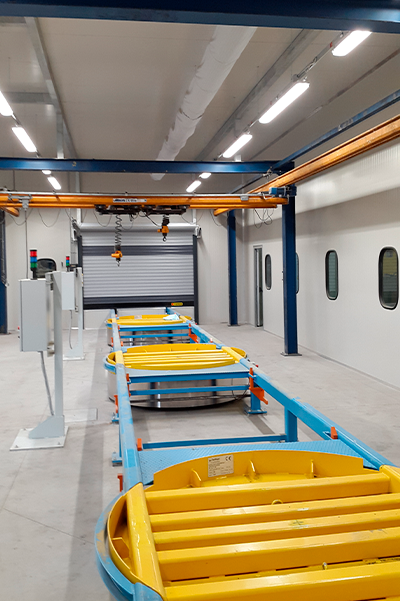
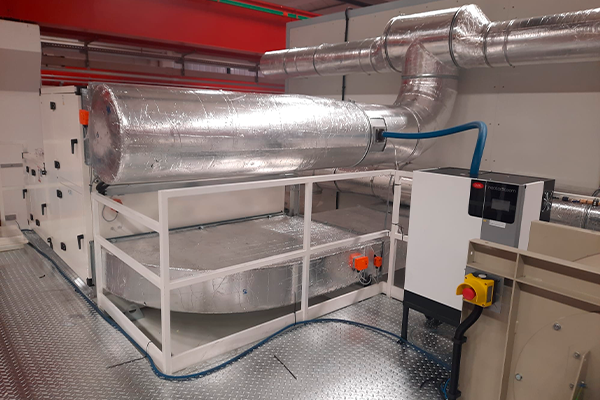
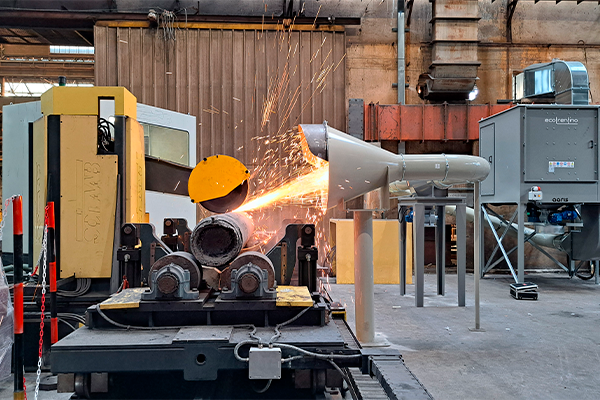
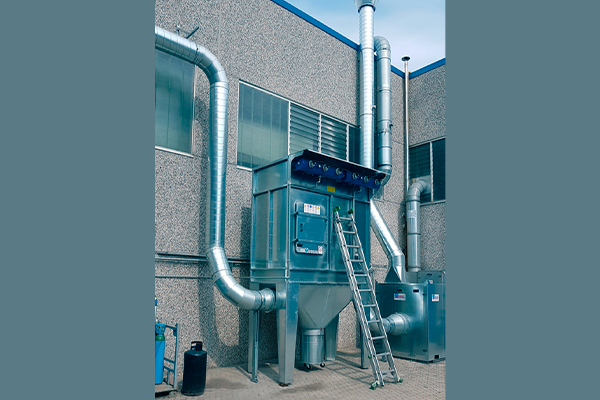
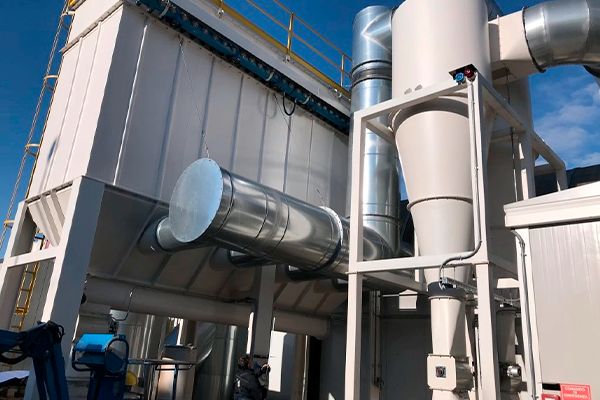
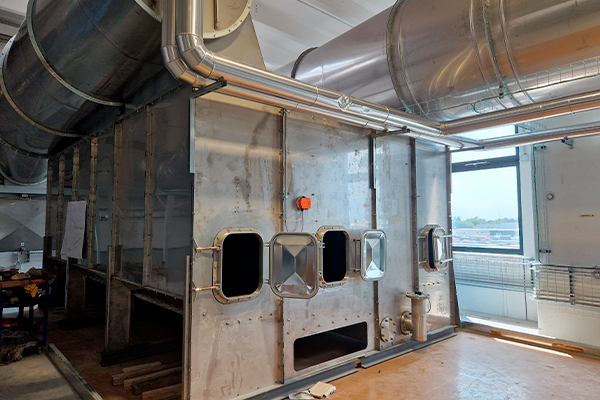
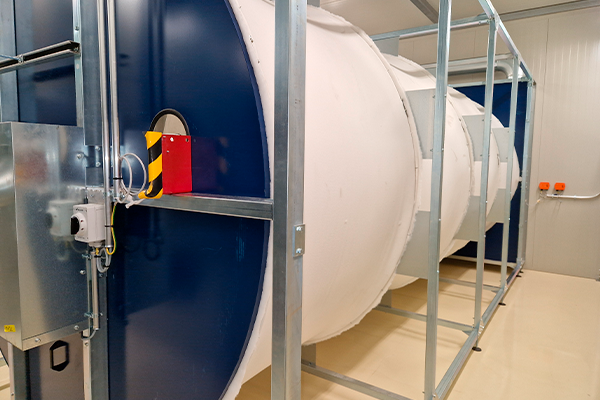
Spray booths are designed to ensure efficient air extraction and filtration during liquid coating processes, using both solvent-based and water-based products.
They are used to apply coatings on metal, wood, plastic, and other surfaces. Spray booths provide an effective, compact, and safe solution to control the dispersion of airborne particles within the working environment, improving finishing quality and protecting operators.
A properly engineered spray booth not only enhances process quality but also ensures a safer and more efficient working environment. Selecting the appropriate filtration configuration means investing in a sustainable, high-performance coating system aligned with modern production requirements.
SPRAY BOOTH CONFIGURATIONS
Several dry spray booth configurations are available, engineered to meet specific production requirements.
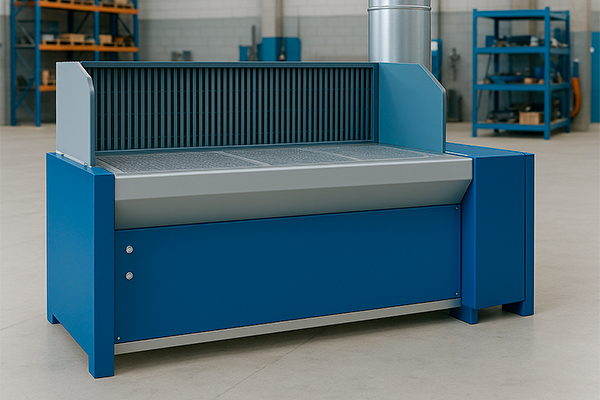
Dry spray booths: use filtration systems to capture overspray, reducing environmental impact;
Water curtain spray booths: use a water flow to effectively capture and remove excess paint particles;
Spray booths with drying oven: combine the coating and drying processes, improving production efficiency and reducing processing time.
AGGIUNGI TESTO
OPERATING PRINCIPLE OF DRY SPRAY BOOTHS
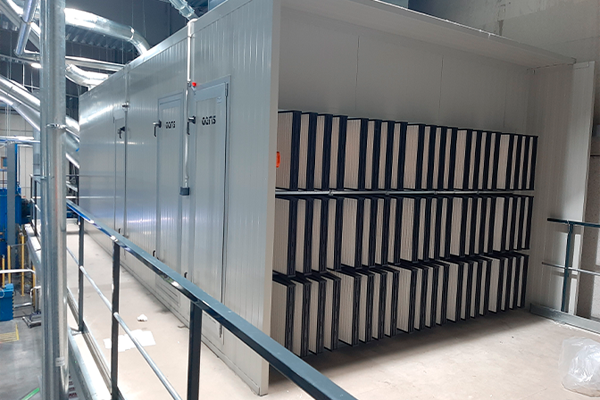
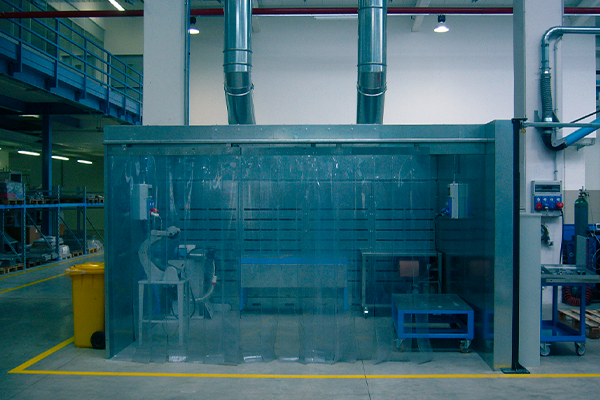
In dry spray booths, paint overspray particles suspended in the air are extracted directly through the inclined front wall, which ensures uniform air capture across the entire surface. The spray booth is constructed with a modular structure made of galvanised steel panels, sealed and assembled using high-strength fastening systems to ensure durability and airtightness. The filtration system consists of two stages: a first fire-retardant cardboard filter with staggered openings for the separation of coarse particles, and a second progressive density fibreglass filter, installed on a metal frame, designed to capture finer particulate.
ADVANTAGES OF SPRAY BOOTHS
High filtration efficiency: multi-stage filtration systems effectively capture paint particles, ensuring cleaner and safer air within the working environment;
Energy savings: high-efficiency fans and optimised airflow design help reduce energy consumption and operating costs;
Flexible Installation: available in various sizes and configurations, spray booths can be customized to fit specific production needs and space constraints;
Easy maintenance: convenient access to filter elements simplifies maintenance operations and reduces downtime;
Regulatory compliance: designed in accordance with applicable environmental and safety regulations, ensuring a safe and compliant working environment.
OUR PROJECTS
Aeris is the ideal partner for companies seeking efficiency, quality, safety, and innovation.
Request a free, personalised technical evaluation to identify the most suitable filtration solution for your application.
What are the main differences between a dry spray booth and a water curtain spray booth?
The choice depends on production frequency and output volume. Dry spray booths use static filters—such as cardboard inertial filters or fiberglass filters—to capture paint overspray. They are ideal for low- to medium-volume production or flexible manufacturing, offering lower installation costs and simplified maintenance. Water curtain spray booths, on the other hand, use a continuous water curtain to capture paint particles and convey them into a collection tank. They are the preferred solution for intensive production schedules and high-volume applications, as they maintain consistent collection efficiency over time while reducing the replacement frequency of downstream dry filters.
How are operator safety and proper airflow within the spray booth ensured?
Operator safety is achieved through precise airflow balancing. A high-efficiency fan extracts air through the spray booth, creating a constant and controlled airflow—either horizontal or vertical downdraft—which immediately removes solvent vapours and paint overspray from the operator’s breathing zone. Air velocity is carefully engineered in accordance with industrial ventilation standards to eliminate stagnant areas. Replacement air is supplied from outside the facility, properly filtered and, where required, temperature conditioned to ensure both safe working conditions and outstanding paint finish quality.
How are Volatile Organic Compounds (VOCs) removed in spray booth systems?
While the internal filtration system—whether dry or water-based—captures solid paint particles and overspray droplets, gaseous pollutants such as solvents and Volatile Organic Compounds (VOCs) require a secondary treatment stage before atmospheric discharge. Depending on contaminant concentration and airflow rate, the booth exhaust can be connected to: • Activated carbon filtration systems for solvent adsorption. • Thermal air pollution control systems for VOC destruction. This ensures full compliance with the applicable atmospheric emission regulations.
Do industrial spray booths require ATEX design and certified components?
The need for ATEX design depends entirely on the type of coating materials being used. When water-based paints are applied, explosive atmospheres are generally not present. In these cases, system design focuses on proper airflow balancing and efficient overspray filtration using either dry or water curtain filtration systems. Conversely, when solvent-based coatings are used, atomized solvents create potentially explosive atmospheres that require a detailed hazardous area classification. In these applications, the system is engineered using appropriately certified components—including spark-resistant fans, ATEX-certified motors and protected lighting fixtures—installed only within the hazardous zones and extraction ductwork where flammable vapours may be present, ensuring maximum operational safety.
What maintenance activities are essential to ensure optimum spray booth performance?
To prevent airflow reduction and dust contamination of painted components, maintenance should primarily focus on the overspray collection system. For dry spray booths, regular monitoring of differential pressure gauges is essential to ensure timely replacement of inertial filters and high-efficiency final filters before saturation occurs. For water curtain spray booths, routine maintenance includes: • Cleaning the collection tank by removing accumulated paint sludge. • Inspecting the recirculation pump filters. • Maintaining the correct dosage of flocculating chemicals to keep the water clean and efficient. For both technologies, periodic cleaning of the booth interior surfaces and inspection of the fan belt tension are essential to maintain constant airflow performance over time.