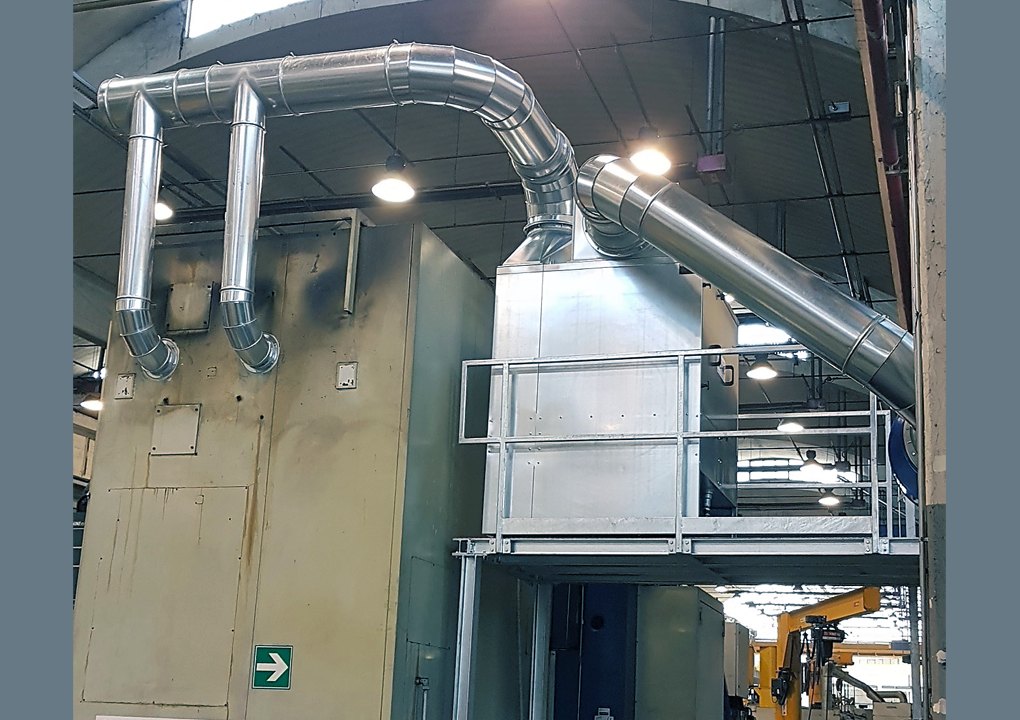
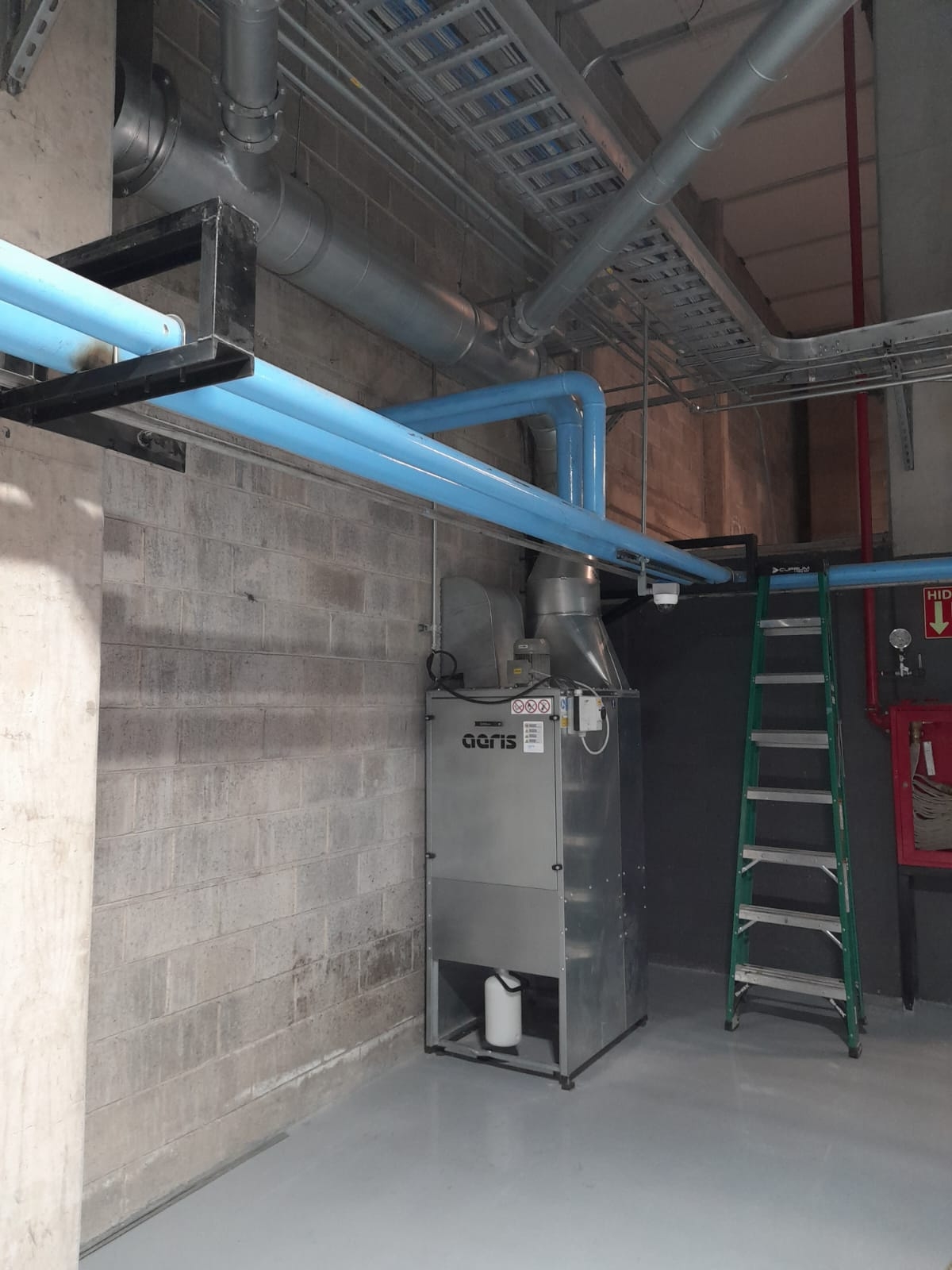
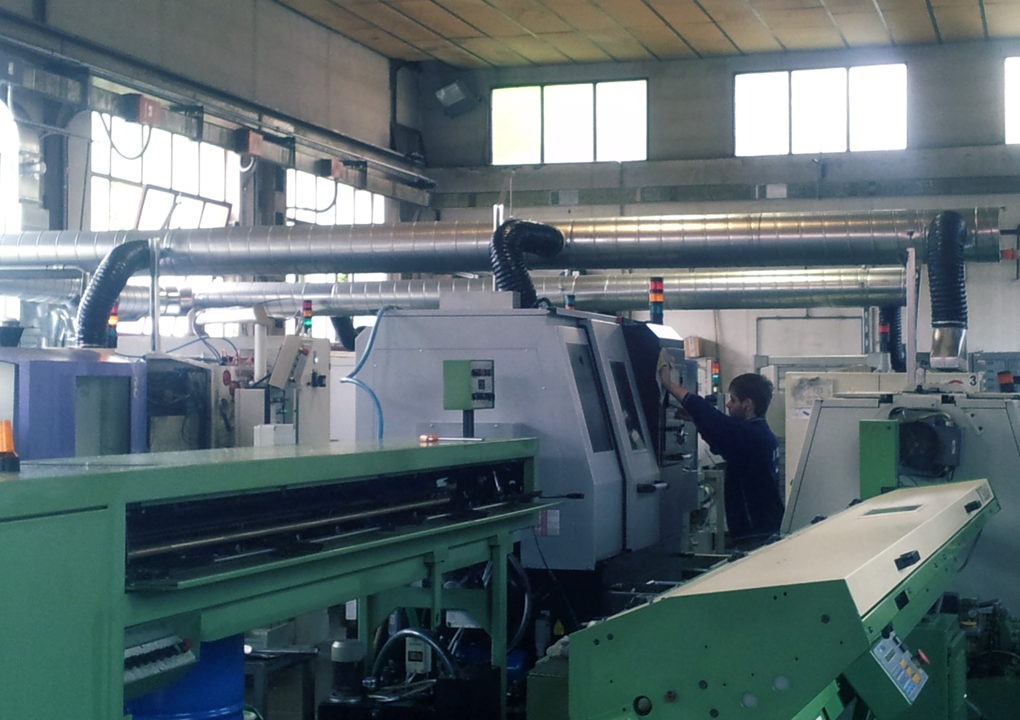
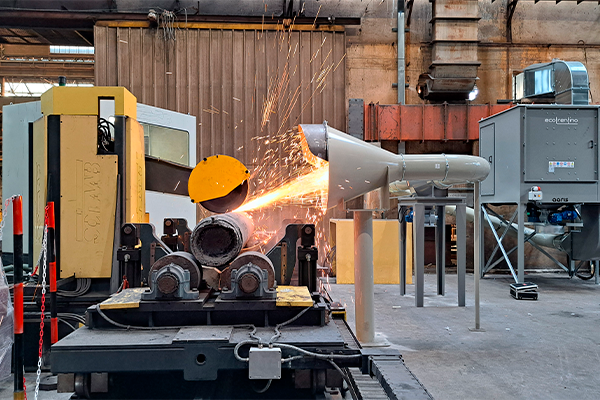
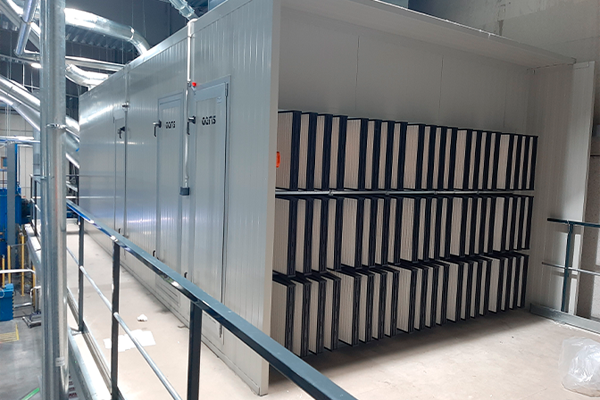
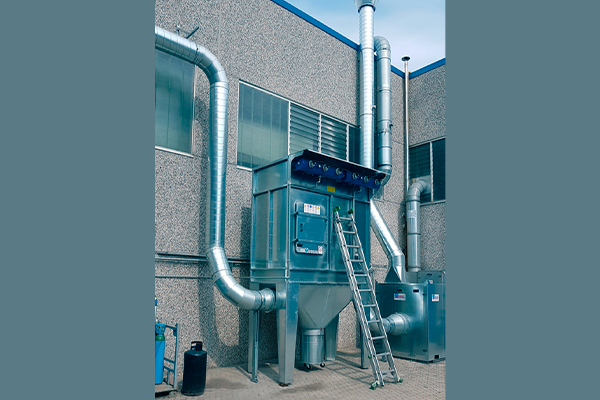
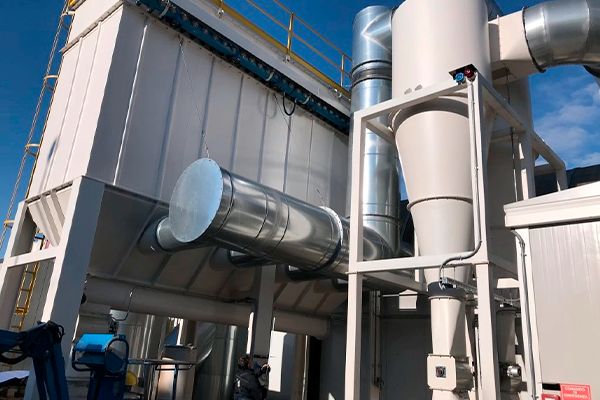
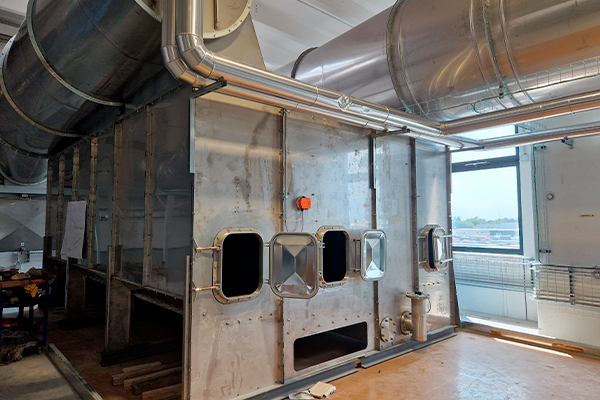
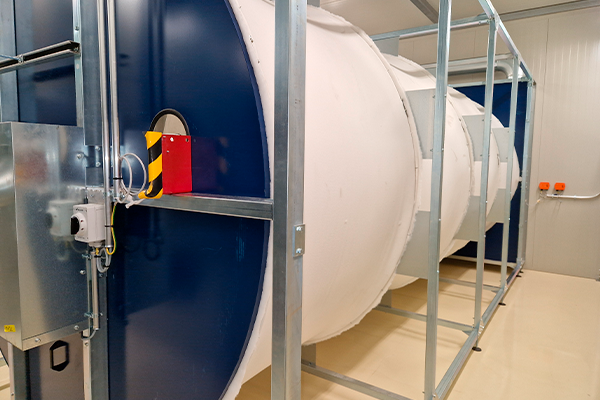
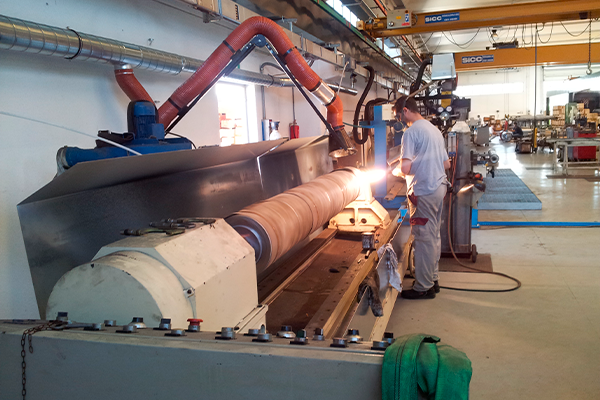
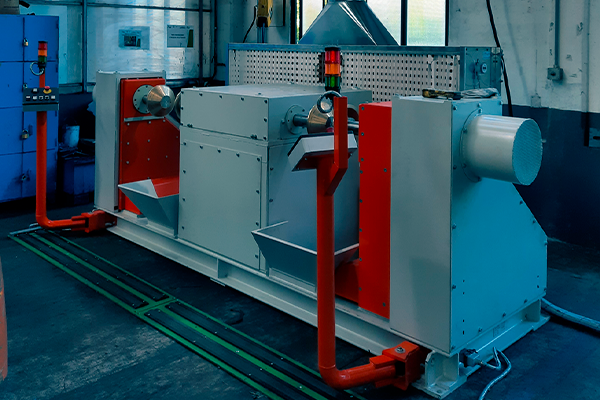
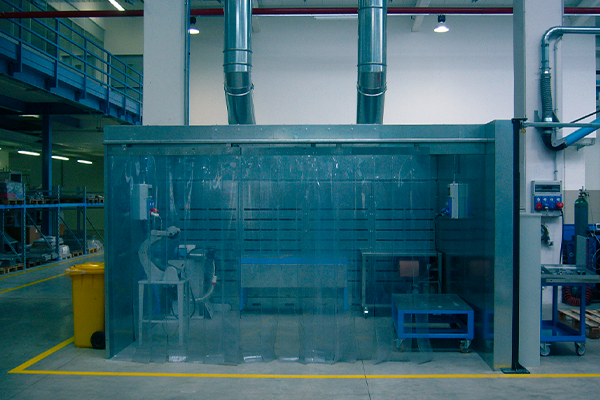
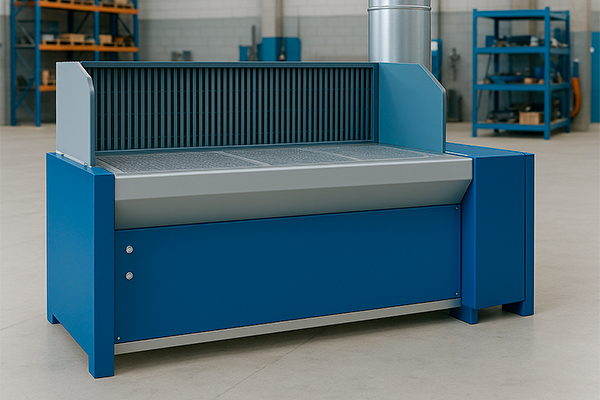
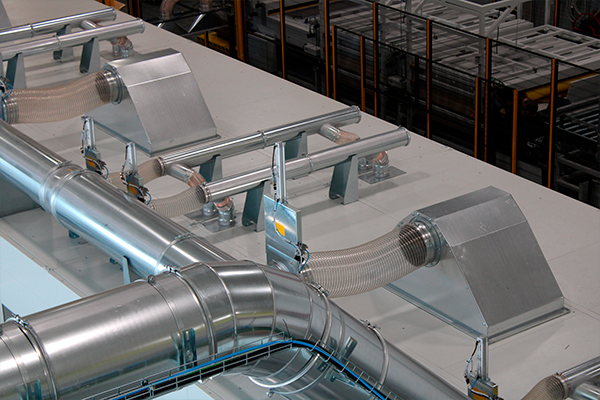
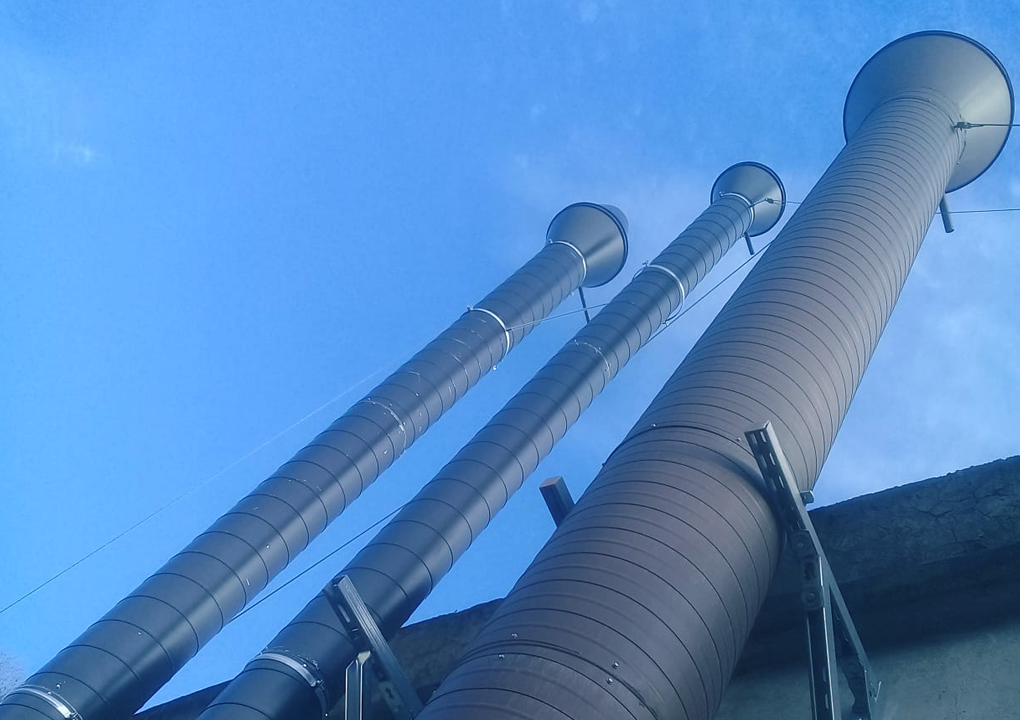
Oil mist filters are advanced filtration systems specifically designed for the effective removal of oil mist and emulsions generated during industrial machining processes and material treatment operations.
The use of oil mist filters ensures cleaner and safer working environments, protects operator health, reduces operational risks, and improves air quality while safeguarding machinery and production equipment.
OPERATION OF OIL MIST EXTRACTION SYSTEMS
Contaminated air enters the lower section of the filter and initially reaches a settling chamber, where inertial separation takes place. At this stage, the airflow velocity decreases, allowing heavier particles to fall into the collection hopper below. The remaining airflow then passes through three successive filtration stages: a droplet separator, a metal filter, and an oil collection pocket.
During the filtration process, coalescence causes the smaller oil mist particles to merge into larger droplets, which subsequently settle and are collected, maintaining the efficiency of the filtration media. The purified air is then discharged through the side outlet.
ADVANTAGES OF OIL MIST FILTERS
High filtration efficiency: effective removal of oil mist and emulsions from the air;
Extended service life of filter elements: inertial pre-separation protects the filter media;
Easy maintenance: modular design and convenient access to simplify filter replacement and cleaning operations;
Durable construction: manufactured with heavy-duty sheet metal panels and sealed to ensure maximum airtightness.
OUR PROJECTS
Aeris is the ideal partner for companies seeking efficiency, quality, safety, and innovation.
Request a free, personalised technical evaluation to identify the most suitable filtration solution for your application.
What are oil mists and in which industrial processes are they generated?
Oil mists are aerosols composed of microscopic droplets of oil, plasticizers or metalworking fluids suspended in the air. They are generated by heat, friction or mechanical atomization in a wide range of industrial applications, including: • Metalworking (CNC machining centres, lathes and grinding machines). • Textile and nonwoven manufacturing (stenter frames and high-speed looms). • Rubber and plastics processing (evaporation of plasticizers and release agents). • Foundries and heat treatment processes (quenching tanks and die-casting operations). • Food processing (atomized fats and industrial frying processes).
How does the coalescence filtration process work?
Coalescence is the physical process by which microscopic droplets of suspended liquid contaminants merge together when they come into contact with specially designed filter media. As the air passes through successive filtration stages—from metallic pre-filters to high-efficiency fibreglass coalescing cartridges—the tiny droplets collide and progressively combine into larger and heavier droplets. Once they reach a critical mass, the droplets drain by gravity into the lower collection chamber, while the purified air exits the filtration system.
Can the oil collected by the filter be recovered and reused?
Yes, provided appropriate technical checks are carried out. The oil separated by the coalescence process drains into the lower collection tank of the filter, providing a significant economic benefit. However, direct reuse in machine tools requires careful evaluation. • Straight oils can generally be reused after removing any collected fine metal chips through filtration. • Water-based emulsions may require restoration of the correct water concentration, as part of the water content may have evaporated during machining. Even when not reused, recovering the collected fluid significantly reduces the volume of hazardous waste and lowers disposal costs.
What are the risks of operating without an adequate oil mist extraction system?
The absence of an effective oil mist extraction system compromises both workplace safety and production reliability. In addition to exposing personnel to respiratory and skin disorders and creating dangerously slippery floors, oil mist particles can penetrate CNC electrical control cabinets, causing costly short circuits and machine downtime. Furthermore, the accumulation of oily residues and combustible deposits inside ductwork significantly increases the risk of fire. From both an environmental and regulatory perspective, inadequate filtration may result in severe penalties for exceeding atmospheric emission limits and increases energy consumption by preventing the recirculation of thermally conditioned air within the production facility.
What type of maintenance do these systems require?
Aeris oil mist filtration systems require simple, scheduled maintenance, monitored by a differential pressure switch that indicates when the pressure drop exceeds the optimum operating threshold. During routine maintenance: • Primary metallic pre-filters can be cleaned and regenerated. • Final coalescing filter cartridges should be replaced periodically. To ensure maximum efficiency, it is essential to verify the correct operation of the drainage system to prevent internal liquid accumulation. For systems designed with air recirculation, the downstream HEPA filter should also be inspected and replaced periodically to ensure the highest indoor air quality.