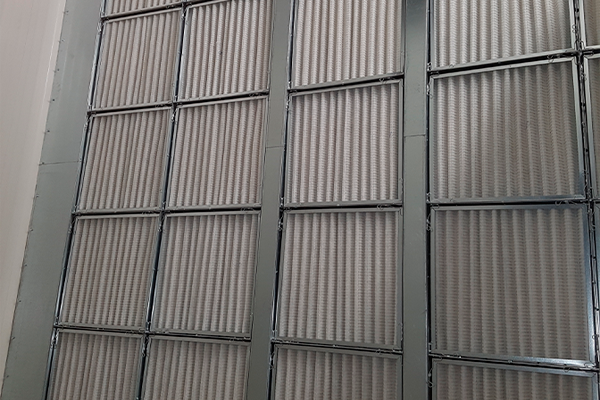
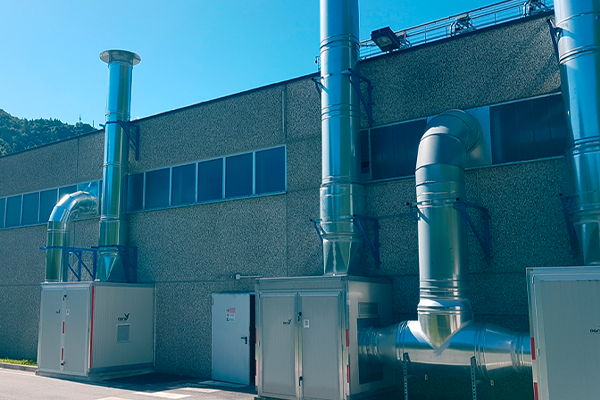
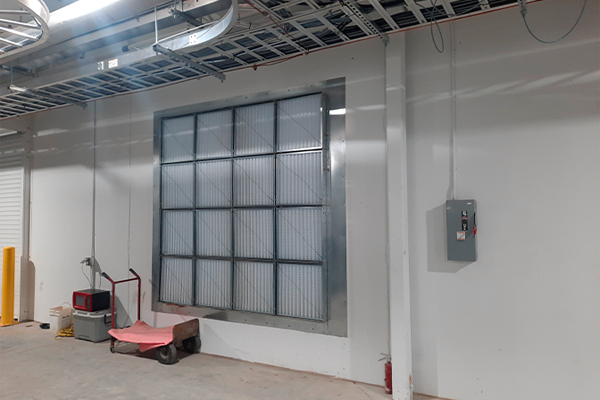
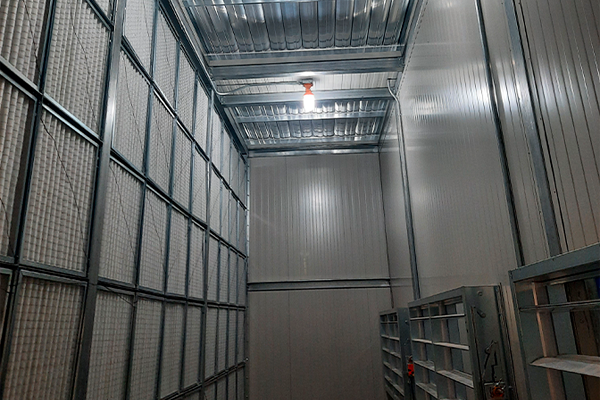
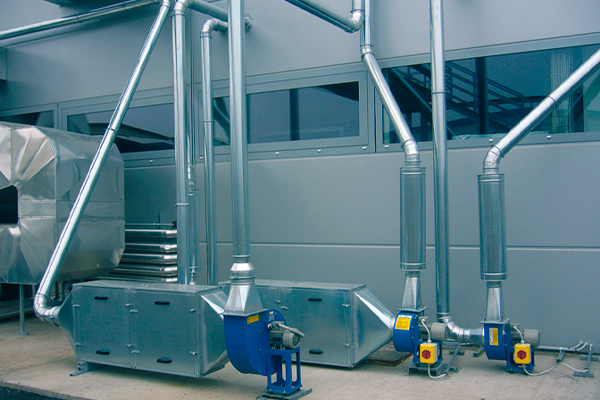
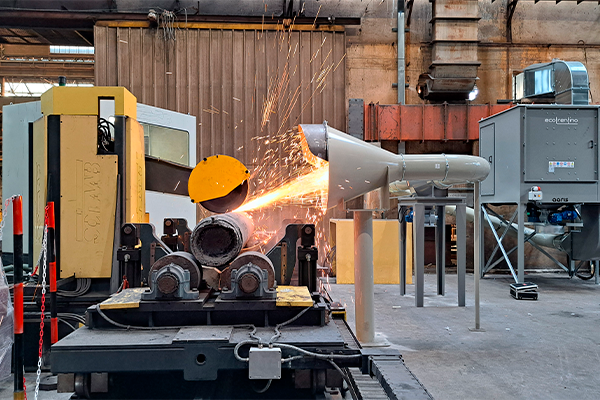
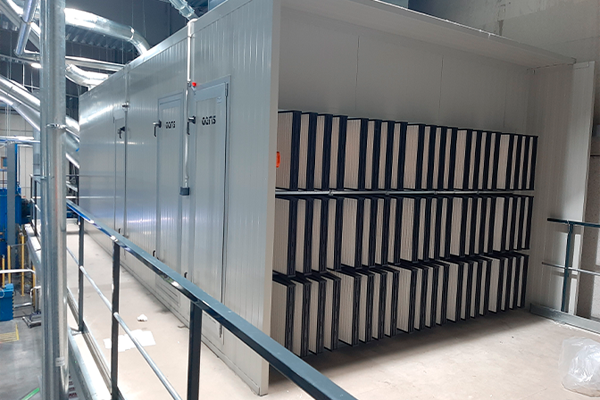
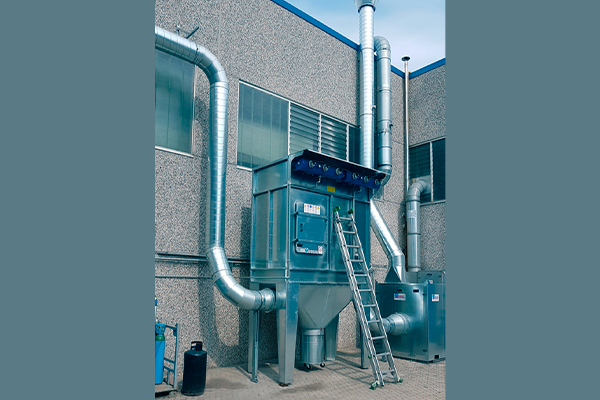
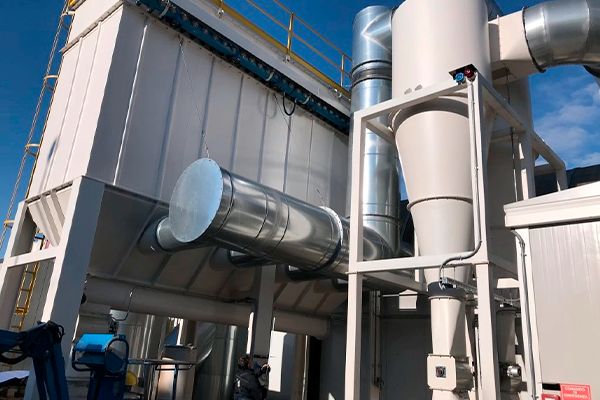
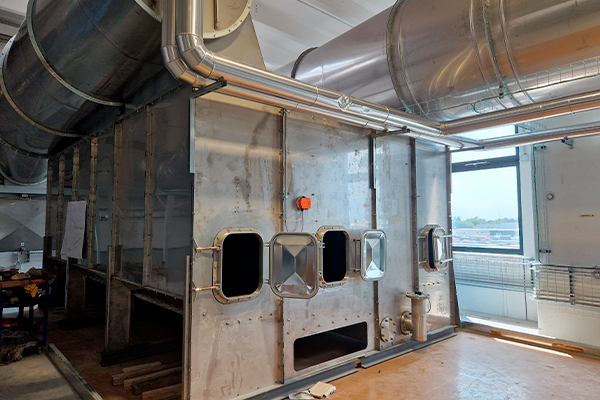
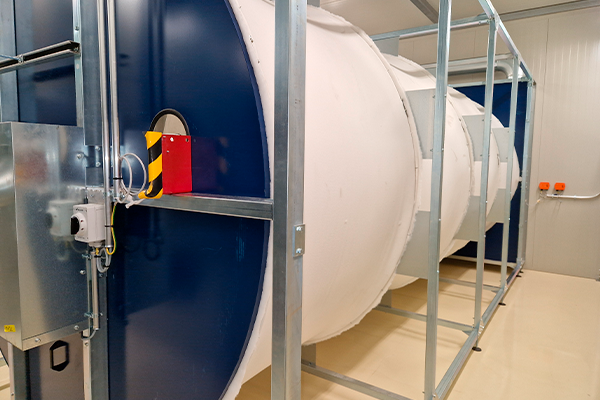
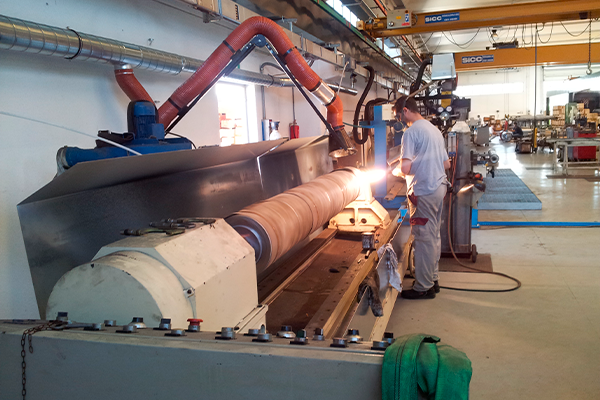
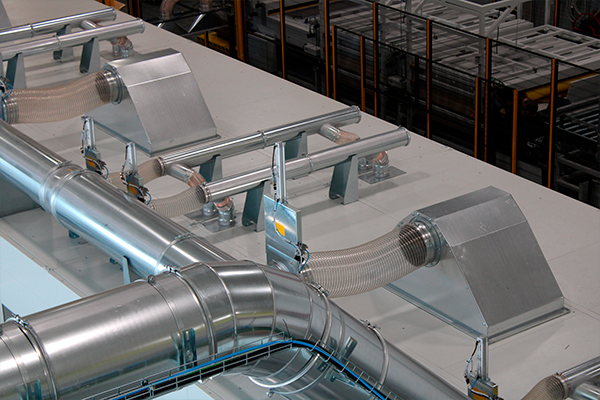
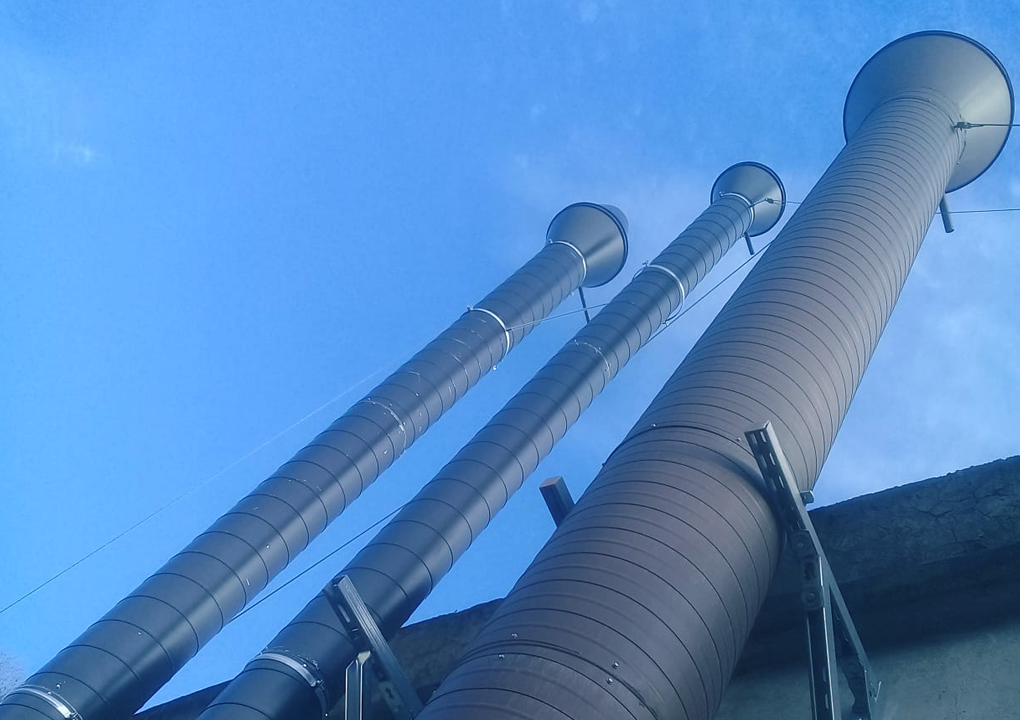
Pocket filters provide a reliable solution for air treatment in industrial environments.
They are specifically designed to capture and retain solid particles of various sizes, improving air quality and ensuring a safe and compliant working environment in accordance with applicable regulations.
Aeris pocket filters offer a durable, reliable, and flexible solution for industrial air filtration, contributing significantly to environmental quality and worker safety.
TYPES OF POCKET FILTERS
Pocket filters are mainly divided into two categories:
Soft pocket filters
Manufactured using synthetic materials or glass microfibre media, soft pocket filters provide a large filtration surface area, making them ideal for capturing fine dust while maintaining low pressure drop. They are primarily used as pre-filters or final filters in industrial and commercial HVAC systems.
Rigid pocket filters
Featuring a compact and reinforced frame, these filters are designed for environments with high airflow rates and demanding filtration requirements. They ensure extended service life, high filtration efficiency, and optimal pressure drop management, making them particularly suitable for more demanding industrial applications.
APPLICATIONS OF POCKET FILTERS
Air handling units (AHUs): Pocket filters are widely used in AHUs to ensure high air quality in industrial and commercial environments.
Spray booths: Used for air pre-filtration, they help maintain a clean working environment and ensure the quality of the finished product.
HVAC systems: They are used as both pre-filters and final filters in heating, ventilation, and air conditioning systems, improving energy efficiency and indoor air quality.
ADVANTAGES OF POCKET FILTERS
High dust holding capacity: extended service life and reduced maintenance requirements;
Low pressure drop improved energy efficiency of ventilation systems;
Versatility and modular design: wide range of sizes and efficiency levels to meet different operational requirements;
Ease of maintenance: quick replacement of filter elements, minimising system downtime.
OUR PROJECTS
Aeris is the ideal partner for companies seeking efficiency, quality, safety, and innovation.
Request a free, personalised technical evaluation to identify the most suitable filtration solution for your application.
What are the main industrial applications of pocket filters and which contaminants are they best suited for?
Industrial pocket filters are widely used for the collection of low- to medium-concentration airborne dust, fumes and fine particulate generated by a wide range of manufacturing processes. They are ideally suited for applications in the recycling and waste treatment industries, woodworking, metalworking (grinding and finishing operations), textile manufacturing, food processing and the chemical industry. They are particularly effective for collecting dry dust; however, thanks to their flexible pocket design, they also provide excellent performance when handling fibrous or light, fluffy particulate that could quickly clog other types of filtration systems.
How does the cleaning system work and how is continuous operation ensured?
Our systems feature an automatic reverse pulse-jet cleaning system. During normal operation, the airflow passes through the filter pockets from the outside to the inside, allowing dust to accumulate on the external surface of the filter media. An integrated electronic controller continuously monitors the pressure drop (differential pressure) across the filter. When the preset differential pressure limit is reached, a high-pressure pulse of compressed air is injected into the filter pockets, causing them to expand rapidly and release the accumulated dust cake, which falls into the collection hopper below. This cleaning cycle takes only a few milliseconds and is performed on individual rows of filter pockets, allowing the filtration system to operate continuously without interrupting the extraction process.
How are the filter media and the geometry of the filter pockets selected?
Selecting the appropriate filter media is essential to ensure maximum filtration efficiency and long service life, and depends on the chemical and physical characteristics of the contaminant. We use advanced technical filter media such as needle felt polyester and special membrane materials, available in different weights and surface finishes, including:
Oil- and water-repellent treatments for applications with residual moisture.
PTFE membrane filter media for extremely fine or agglomerating dust.
High-temperature resistant fibres for medium-temperature applications.
The geometry of the filter pockets and the spacing between them are carefully engineered to optimize airflow velocity and maximize the effective filtration area within the available housing dimensions.
Can industrial pocket filters be installed in ATEX classified hazardous areas?
Yes. Whenever the collected dust presents an explosion hazard—such as metal, organic, plastic or wood dust—the filter is designed and certified in full compliance with the ATEX Directive 2014/34/EU.
The safety configuration includes:
Antistatic filter pockets and support components to prevent electrostatic charge build-up.
Certified explosion vent panels or explosion protection systems (venting or suppression).
Proper grounding of all metallic components.
ATEX-certified electrical components and valves suitable for the specific hazardous area classification.
What maintenance checks are recommended and how can you determine when the filter pockets need to be replaced?
Routine maintenance includes periodic inspection of the electronic controller, verification of the compressed air pressure required for the pulse-jet cleaning system, and inspection of the dust collection hopper.
The main indicators that filter pockets require replacement include:
Permanently high differential pressure, indicating deep and irreversible clogging of the filter media.
A noticeable reduction in airflow at the extraction points.
Visible dust emissions from the exhaust stack, indicating possible damage or rupture of the filter media.
Under normal operating conditions, scheduled replacement every 1–2 years ensures maximum filtration performance and system reliability.