

INDUSTRIAL AIR CONDITIONING
Rooftop, Chiller
HIGH-EFFICIENCY INDUSTRIAL AIR CONDITIONERS
Industrial air conditioners are advanced climate control systems designed to ensure precise control of temperature, humidity, and air quality in production environments, warehouses, laboratories, data centres, and other facilities with demanding thermal requirements.
Unlike residential units, industrial air conditioners are engineered for continuous and reliable operation, even under demanding environmental conditions and across large areas.
ROOFTOP UNITS
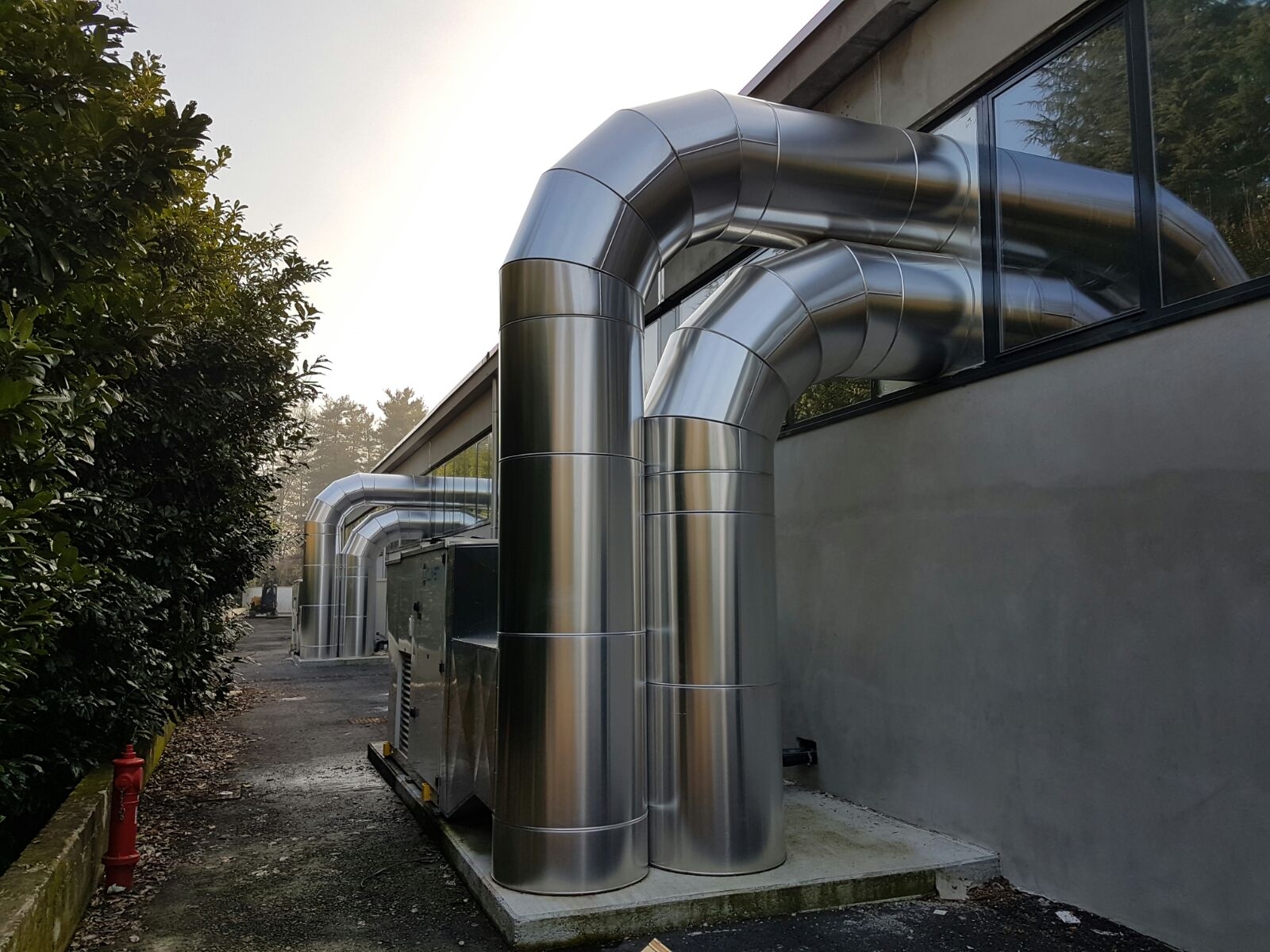
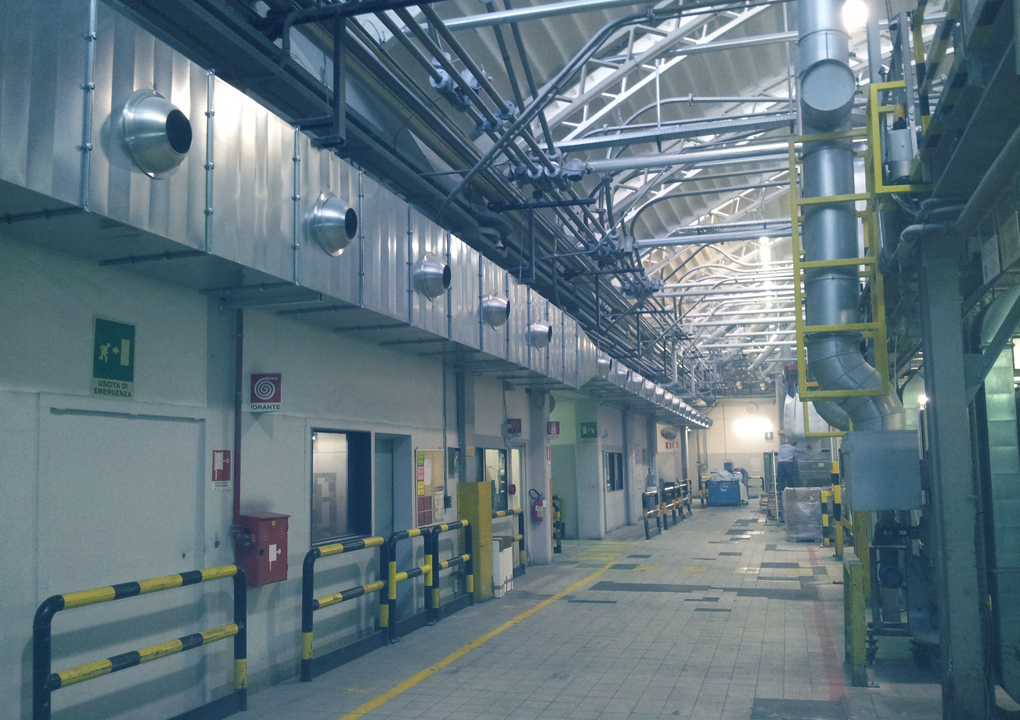
Rooftop units integrate all the components required for the refrigeration cycle—compressor, condenser, and evaporator—into a single system, often including sections for air renewal and filtration. They draw in external or recirculated air, thermally condition it (cooling or heating), control humidity levels, and distribute the treated air throughout the facility via a ducted distribution system.
Their simplified installation and centralised maintenance make rooftop units an efficient and versatile solution for conditioning large-volume industrial environments.
ADVANTAGES OF INDUSTRIAL AIR CONDITIONERS AND ROOFTOP UNITS
- Simplified installation: packaged units that do not require a dedicated plant room or central plant. All components are integrated into a single structure, facilitating installation and reducing commissioning time;
- Optimised use of indoor space: rooftop or outdoor installation frees up valuable space inside the facility;
- High energy efficiency: available in high-efficiency configurations with heat recovery, inverter technology, and modular capacity control to reduce energy consumption;
- Easy maintenance: all components are accessible from a single external unit, reducing service time and maintenance costs;
- Fresh air and recirculation management: ability to treat outside air for ventilation, filtration, and air quality control, ensuring optimal comfort and healthy indoor conditions.
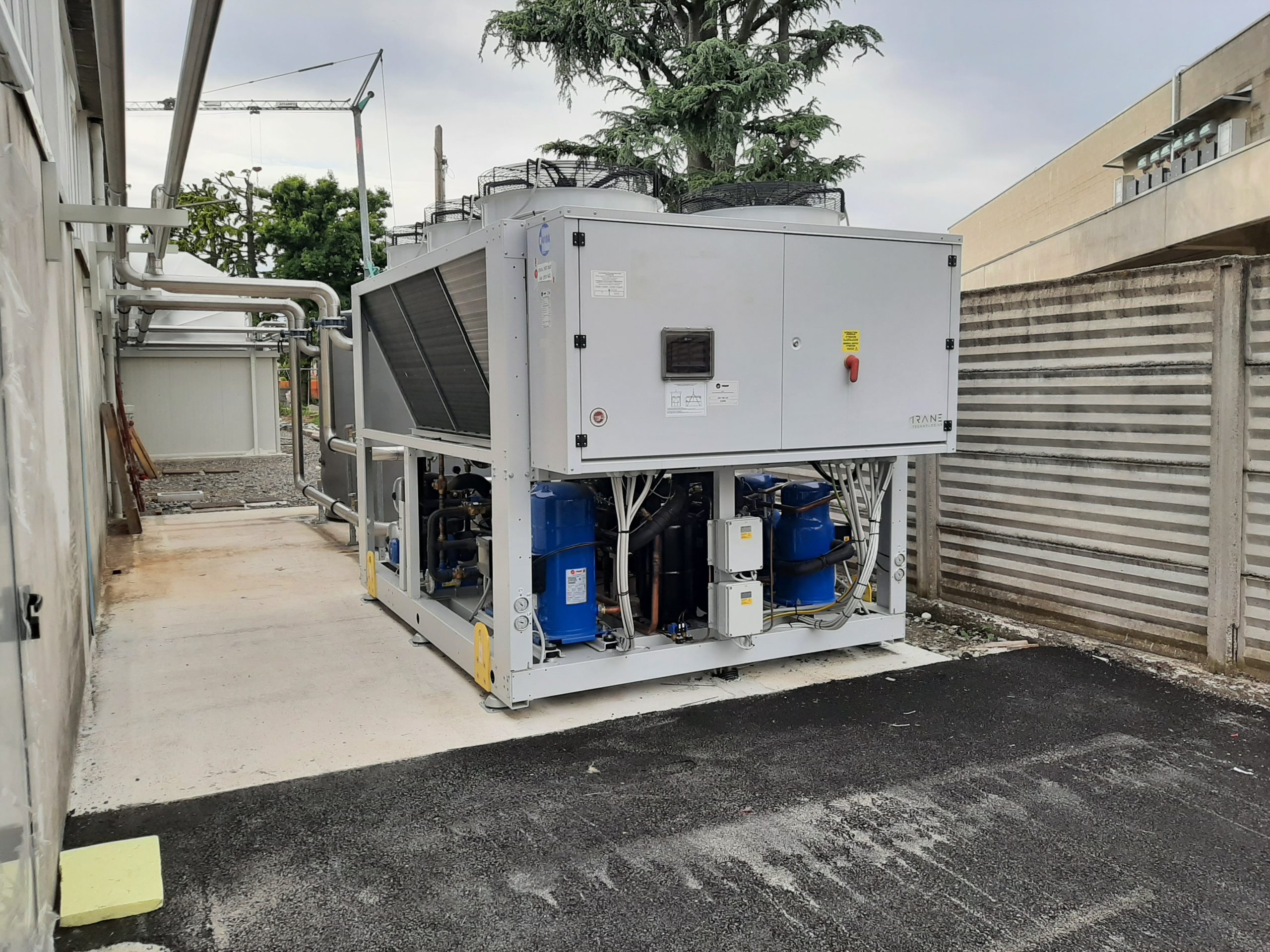
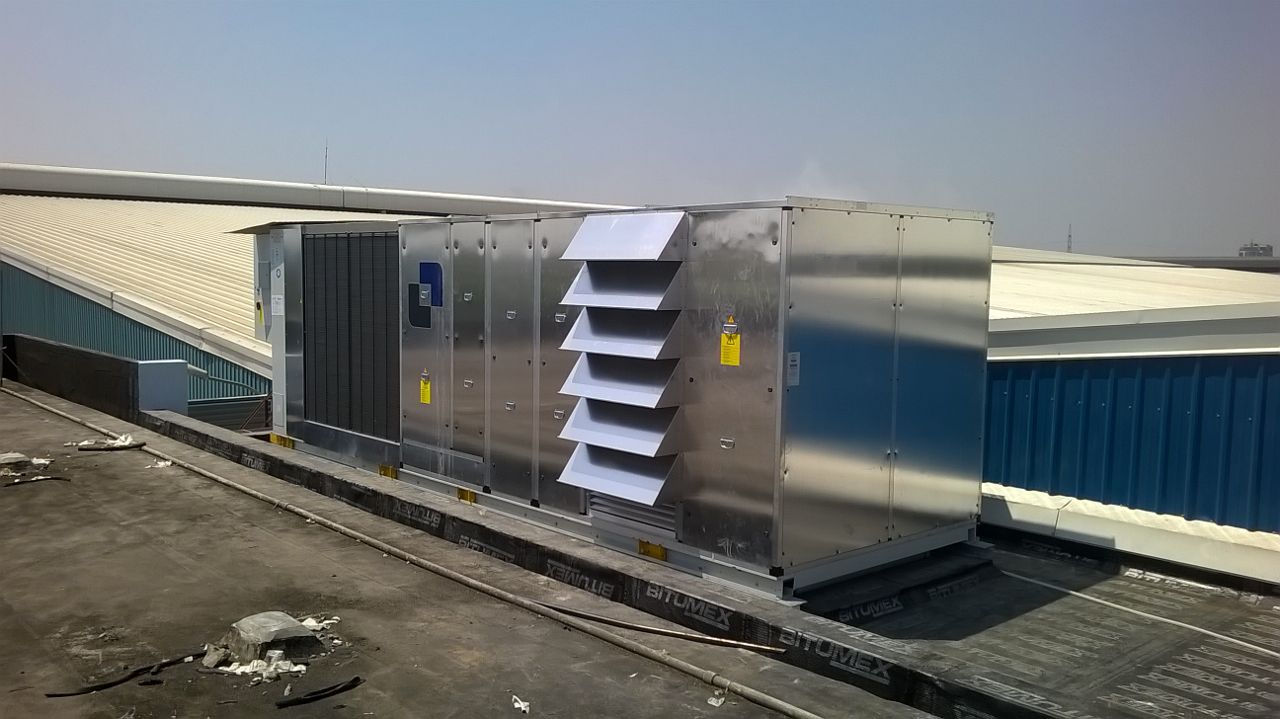
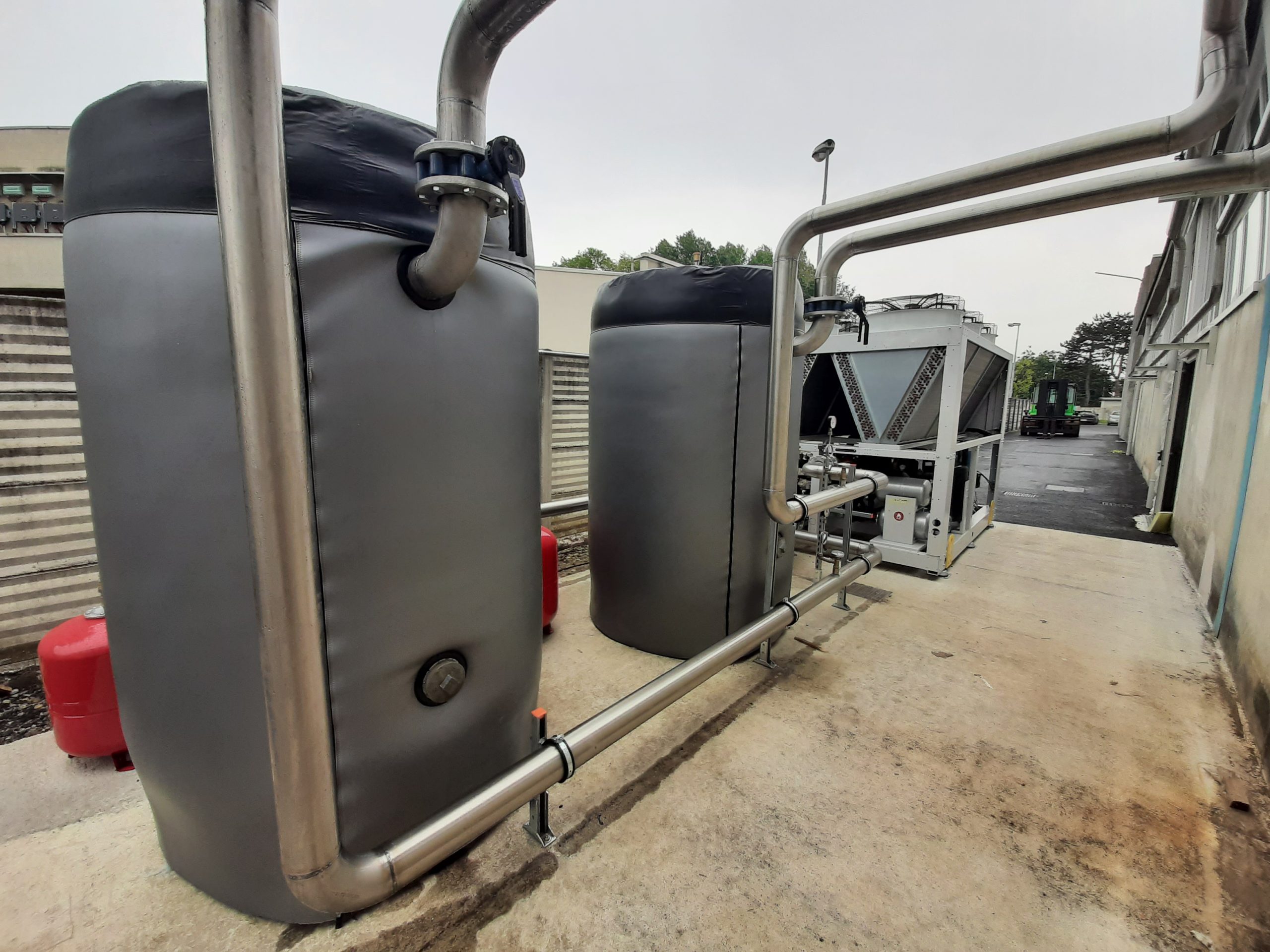
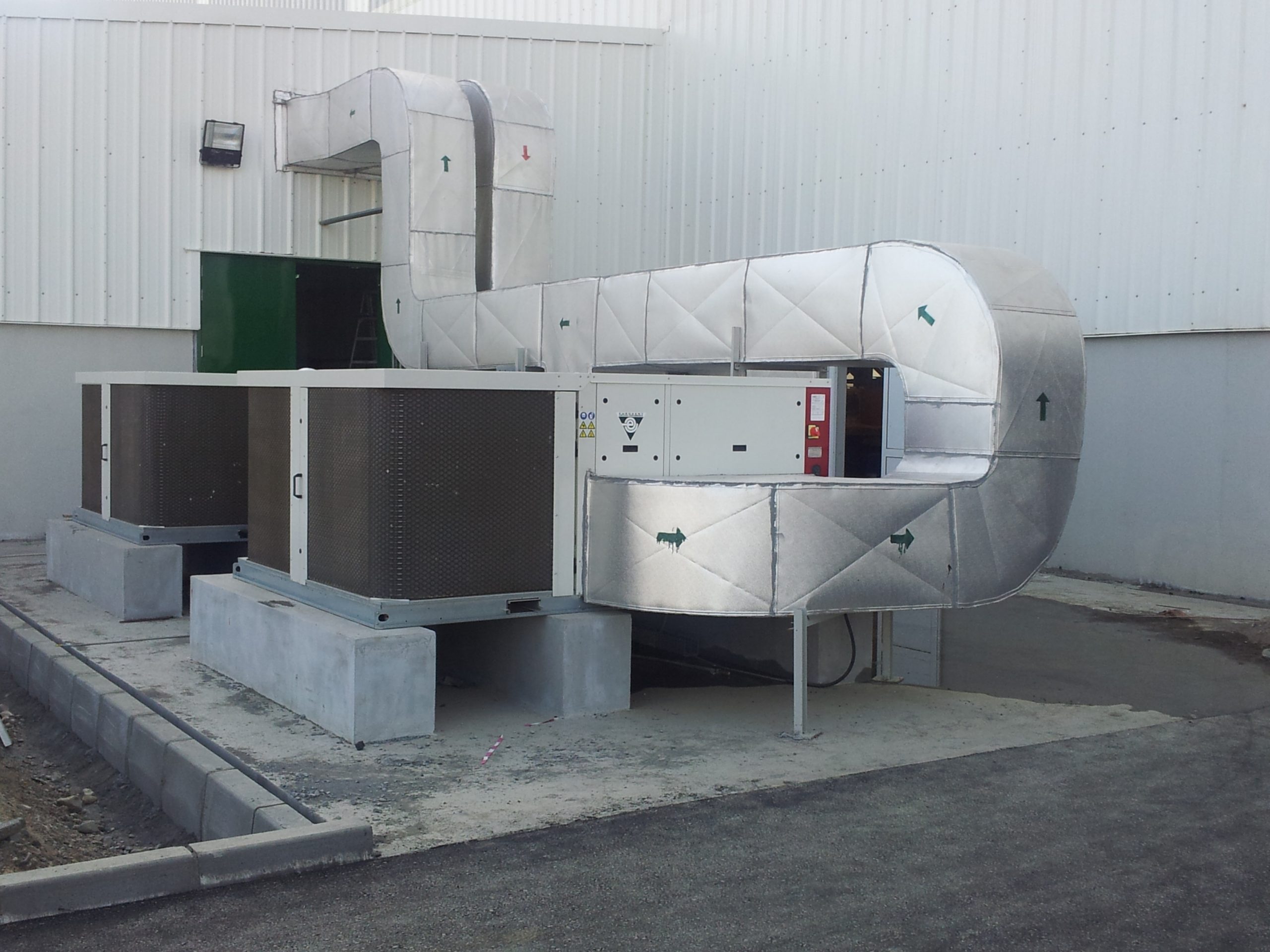
Aeris is the ideal partner to improve comfort and productivity in your industrial environment with our customised solutions.
Request a free technical evaluation to identify the most suitable solution for your application.
FILTRI A CARTUCCE ...
APPLICATIONS AND INDUSTRIES
These systems are used across a wide range of industrial sectors, including:
FAQ
What are the main differences between an industrial air conditioning system and a commercial HVAC system?
Industrial air conditioning systems are specifically designed to ensure continuous 24/7 operation while handling the substantial thermal loads generated by industrial machinery, furnaces and extrusion lines.
Unlike commercial HVAC systems, whose primary purpose is occupant comfort, industrial systems maintain precise indoor environmental conditions to protect production processes and sensitive raw materials.
From a construction perspective, industrial units feature highly insulated reinforced panel structures, corrosion-resistant casings and oversized heat exchanger coils with protective coatings.
They also incorporate high-capacity multi-stage filtration systems to prevent process dust from fouling the heat exchangers and reducing thermal efficiency.
Why is precise humidity control so important in industrial processes?
Accurate humidity control is essential because relative humidity directly affects both material stability and process consistency. Excessively dry air promotes electrostatic charge build-up, which can interfere with printing lines, electronic equipment and automated production systems. It may also cause paper, wood and textile fibres to shrink or become brittle.
Conversely, excessive humidity can lead to condensation on machinery and metal surfaces, accelerating corrosion while affecting the flow characteristics of chemical powders, plastics and food ingredients.
This may result in material caking and blockages within pneumatic conveying and dosing systems.
Which technologies are used to humidify the air in large industrial facilities?
Within industrial Air Handling Units, humidity control is typically achieved using adiabatic humidification systems.
These systems incorporate either wetted media sections or high-pressure atomizing nozzle systems.
The water evaporates by absorbing sensible heat from the air stream, either through direct evaporation from the wetted media or by atomization into extremely fine droplets.
This process maintains the precise humidity level required by the manufacturing process while also providing a natural cooling effect that reduces the cooling demand on the refrigeration system.
To prevent water carryover into the ventilation ductwork, all humidification sections are equipped with downstream droplet separators (drift eliminators).
Which industrial sectors require custom-engineered temperature and humidity control systems?
Custom-designed temperature and humidity control systems are essential wherever indoor environmental conditions directly affect product quality or process reliability.
Typical applications include:
• Rubber and plastics processing, printing and paper converting industries, where these systems remove high thermal loads while preventing dimensional changes in paper and plastic films that could lead to registration or drying defects.
• Textile manufacturing, where precise humidity control preserves fibre elasticity and minimizes yarn breakage on high-speed machinery.
• Electroplating facilities, foundries and heavy engineering plants, where large volumes of conditioned make-up air are required to compensate for air extracted by local exhaust ventilation systems.
In these environments, specially engineered units maintain the correct pressure balance while incorporating acid-resistant construction materials and motors isolated from the process air stream.
How can these systems contribute to the overall energy efficiency of an industrial facility?
Maximum energy efficiency is achieved through the integration of intelligent airflow control and high-performance heat recovery technologies. Electrical energy savings are obtained by using high-efficiency fans equipped with Variable Frequency Drives (VFDs), allowing airflow to be continuously adjusted according to the actual production requirements. Where outdoor conditions permit, free cooling strategies significantly reduce—or even eliminate—the need for mechanical refrigeration. Thermal energy savings are achieved through cross-flow plate heat exchangers or run-around coil heat recovery systems, both designed to ensure complete physical separation between the exhaust and supply air streams.
This eliminates any risk of cross-contamination while recovering valuable thermal energy from the exhaust air before it is discharged.