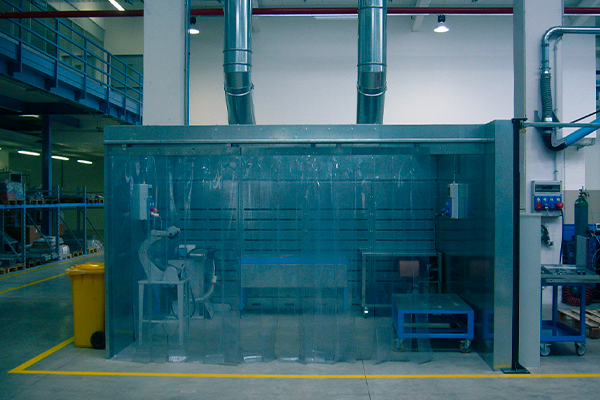
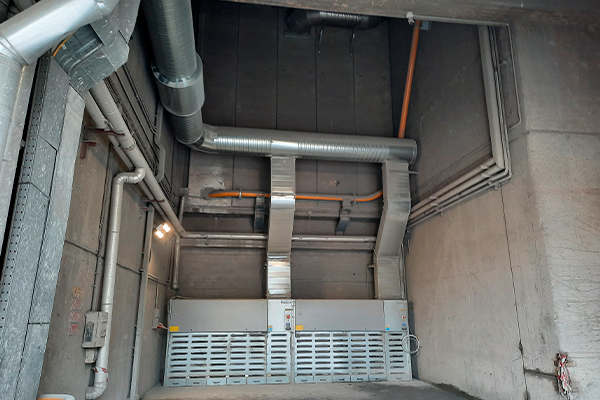
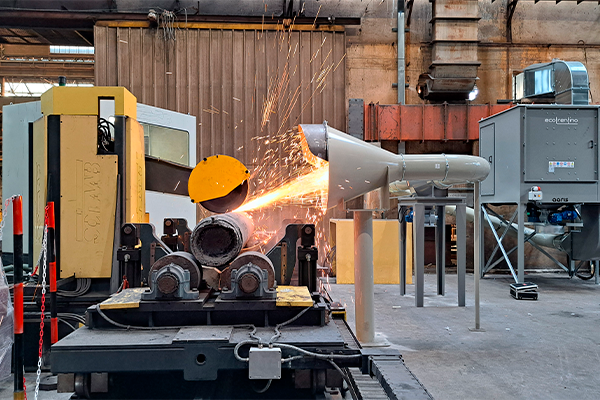
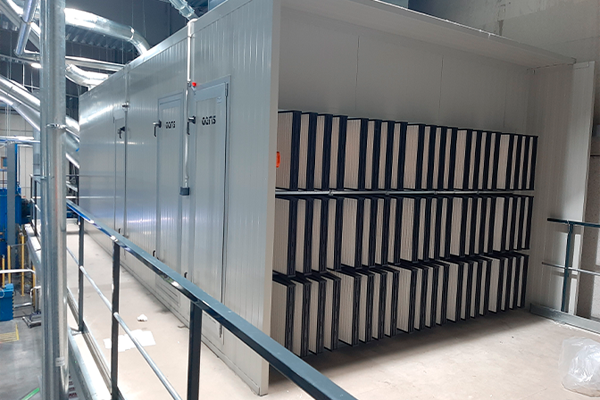
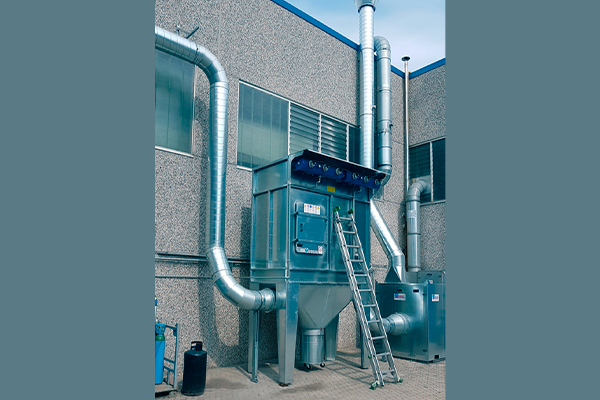
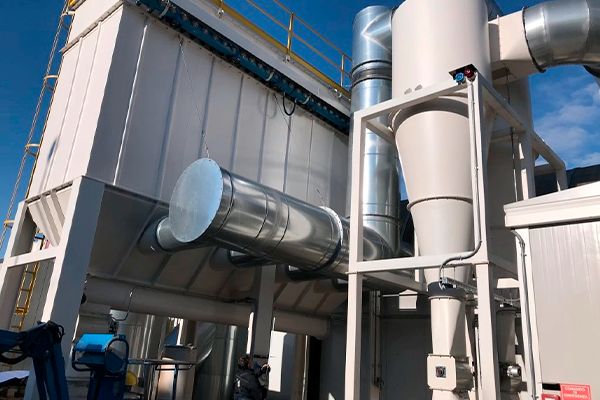
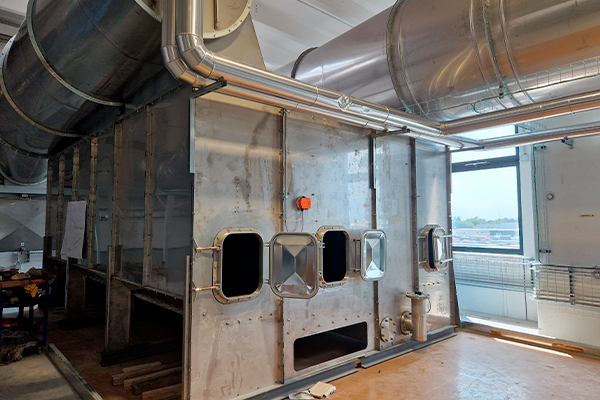
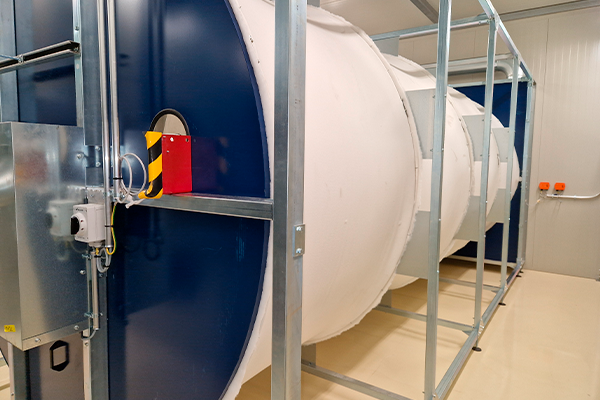
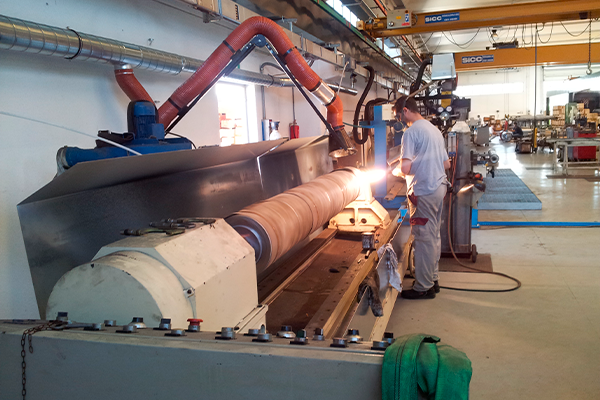
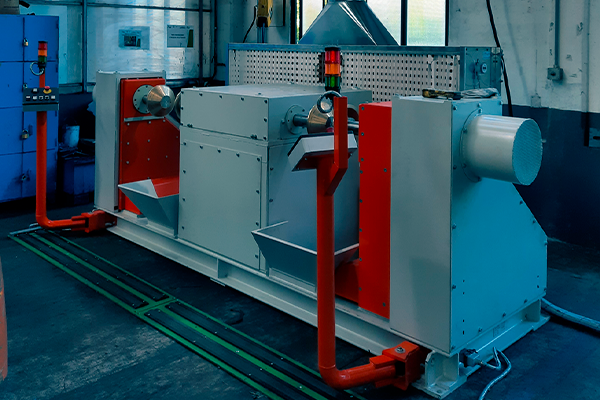
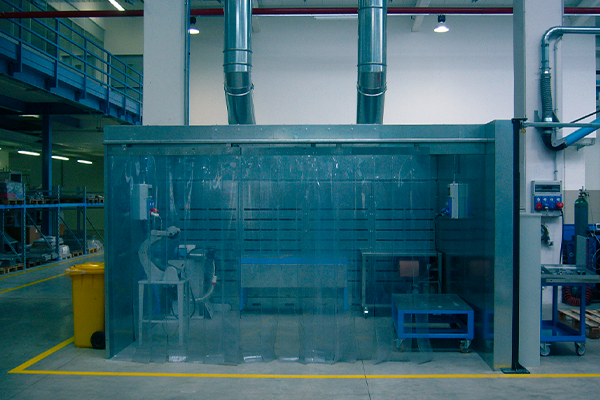
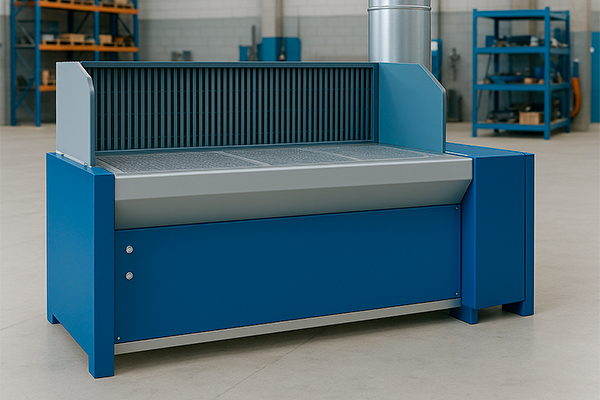
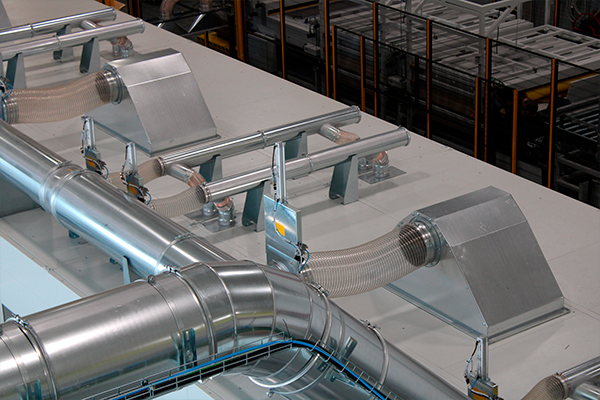
Aeris extraction walls operate through a front-facing extraction system positioned directly in front of the operator, ensuring immediate and targeted capture of contaminants such as fine dust, chemical vapours, and mist generated by paints and solvents. Once captured, the contaminated air is conveyed through ductwork to high-efficiency filtration systems (dry or multi-stage filters), ensuring safe handling and compliance with applicable regulations.
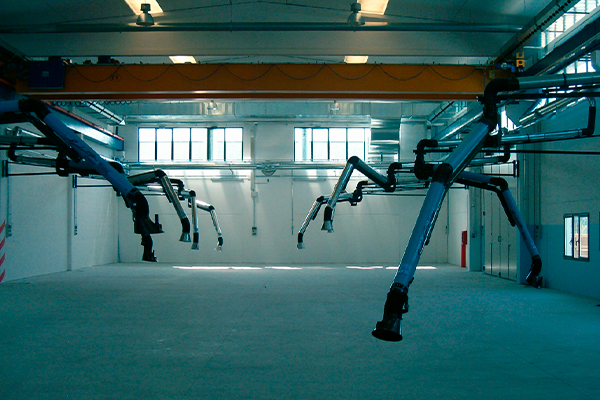
Aeris designs and manufactures dedicated solutions such as extraction walls for the effective removal of dust, fumes, fibres, oil mist, and VOCs, ensuring maximum safety, high performance, and long-term reliability. See alsodowndraft tables, extraction hoods, and extraction arms.
ADVANTAGES OF EXTRACTION WALLS
Maximum operator safety: significantly reduce exposure to toxic or hazardous emissions during finishing and coating processes;
High capture efficiency: the front-facing extraction system ensures effective source capture directly at the point of emission;
Cleaner working environments: significantly improve air quality, creating safer, healthier, and more productive workplaces;
Flexibility and modular design: engineered to adapt to different production layouts and industrial process requirements;
Easy maintenance: Aeris systems provide convenient access to filter elements and can be equipped with automatic cleaning systems to minimise maintenance operations;
Regulatory compliance: all Aeris solutions are designed in full accordance with applicable occupational safety, environmental protection, and industrial emission regulations.
OUR PROJECTS
Aeris is the ideal partner for companies seeking efficiency, quality, safety, and innovation.
Request a free, personalised technical evaluation to identify the most suitable filtration solution for your application.
What is an extraction wall and how does it differ from a conventional extraction hood or a downdraft table?
An extraction wall is a modular vertical extraction system designed to capture airborne contaminants—such as dust, fumes and vapours—across large working areas. Unlike an overhead extraction hood, which draws contaminants upward through the operator’s breathing zone, or a downdraft table, which is limited to work performed directly on the work surface, an extraction wall generates a uniform horizontal airflow across the entire working area. This airflow immediately moves hazardous contaminants away from the front of the operator, providing effective protection for both the breathing zone and the field of vision.
Which industrial applications are best suited for extraction walls?
Extraction walls are recommended for operations involving large workpieces or extended working surfaces that cannot be accommodated on conventional workstations. Typical applications include: • Sanding. • Surface finishing. • Dry grinding of wood, metal, marble and fiberglass. • Heavy structural steel welding. Within the recycling and waste treatment industry, extraction walls are particularly suitable for the manual dismantling of large end-of-life equipment and bulky WEEE (Waste Electrical and Electronic Equipment) components. In these applications, the vertical extraction surface captures dust generated by pneumatic tools during dismantling operations, preventing contaminants from rising into the operator’s breathing zone.
How does the filtration system inside an extraction wall operate?
The filtration configuration depends on the particle size and the characteristics of the contaminant. For dry dust and sanding residues, the extraction wall incorporates a primary mechanical pre-filtration stage to remove coarse particles, followed by high-efficiency cartridge filters. An automatic reverse pulse-jet cleaning system periodically cleans the filter cartridges, allowing the collected dust to fall into the lower dust collection drawers. When solvents or chemical vapours are present, the extraction wall acts as a mechanical pre-filter to capture paint overspray and particulate, while the extracted air is directed to a downstream activated carbon filtration system. Alternatively, the extraction wall can also be supplied as a simple extraction plenum without integrated filters, specifically engineered for connection to an existing centralized extraction and filtration system.
Can extraction walls be configured for ATEX-classified hazardous areas?
Yes. Whenever the application involves combustible dust—such as wood dust or resin particles—or flammable solvent vapours, the extraction wall can be specifically configured for safe operation in ATEX-classified areas. The safety configuration includes: • Antistatic filter media to prevent electrostatic charge build-up. • Continuous electrical grounding of the entire steel structure. • Spark-resistant fans equipped with ATEX-certified motors. However, for highly reactive and explosive metal dusts such as aluminium or titanium, dry extraction systems are generally not recommended. For these specific applications, the engineering solution should be based on dedicated wet dust collection systems.
What routine maintenance is required and how is extraction wall performance monitored?
System performance is monitored by means of a differential pressure gauge, which measures the pressure drop across the filter media. An increase in differential pressure indicates filter loading. For cartridge filtration systems, this value automatically controls the activation of the reverse pulse-jet cleaning cycle. For pocket filters or inertial filters, it indicates when filter replacement is required. Routine maintenance includes: • Periodic emptying of the lower dust collection drawers while checking the integrity of the sealing gaskets to prevent air leakage that could reduce face velocity. • Cleaning of the extraction grille to remove coarse debris. • Inspection of the fan belt tension to ensure constant airflow performance over time.