

INDUSTRIAL VENTILATION
and air treatment systems
INDUSTRIAL VENTILATION AND AIR TREATMENT SYSTEMS
Aeris industrial ventilation and air treatment systems improve air quality within production environments, enhancing comfort, safety, and operational performance.
We use advanced technologies and custom-engineered solutions, integrating industrial ceiling fans, extractors, air handling units, and intelligent airflow management systems.
Whether removing heat, humidity, or indoor contaminants, our industrial ventilation systems ensure a stable indoor climate, reduce energy consumption, and improve working conditions in industrial facilities.
OPERATING PRINCIPLE OF INDUSTRIAL VENTILATION SYSTEMS
Industrial ventilation systems operate through a precise balance between air supply and air extraction, achieved through the integration of the following components:
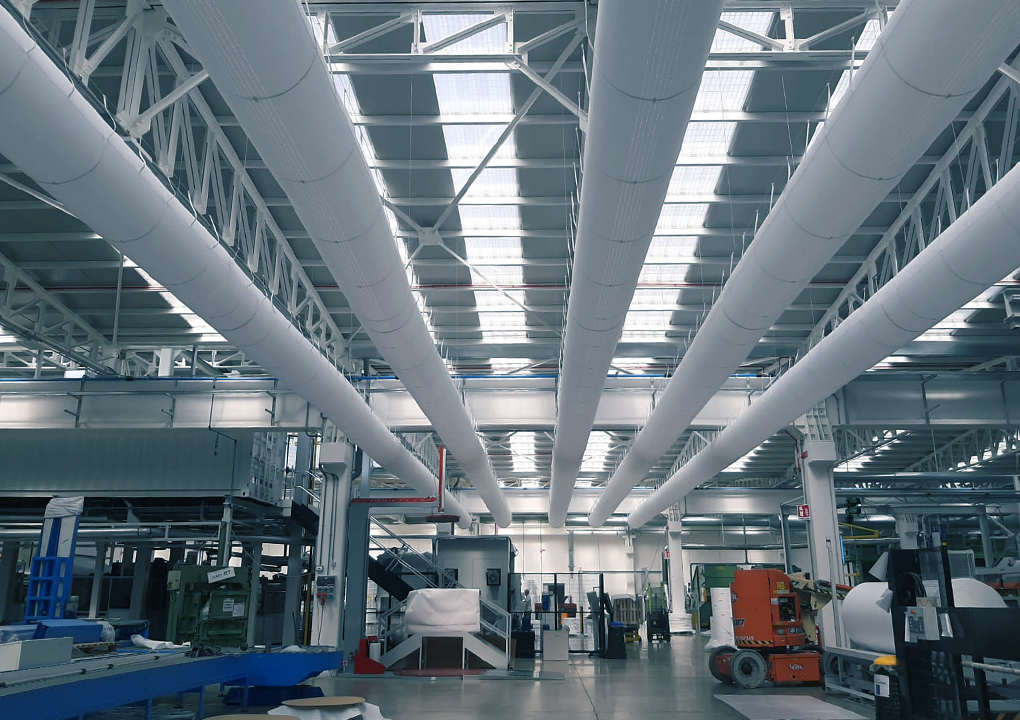
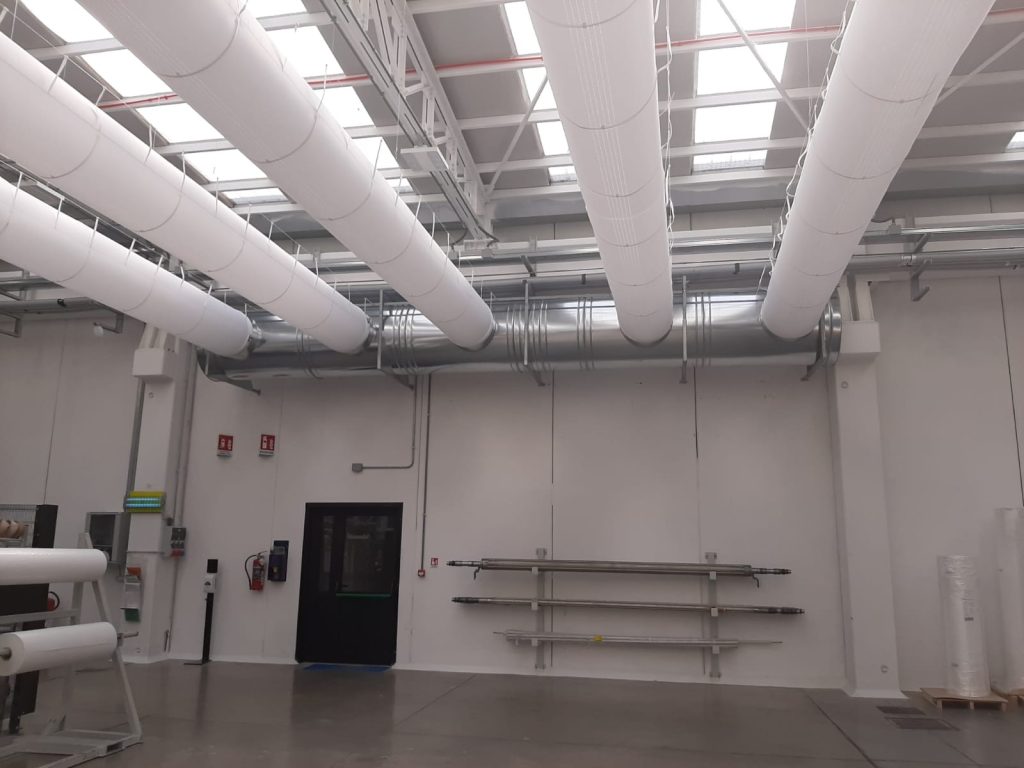
- Industrial warehouse fans and industrial ceiling fans, which promote air recirculation and thermal destratification;
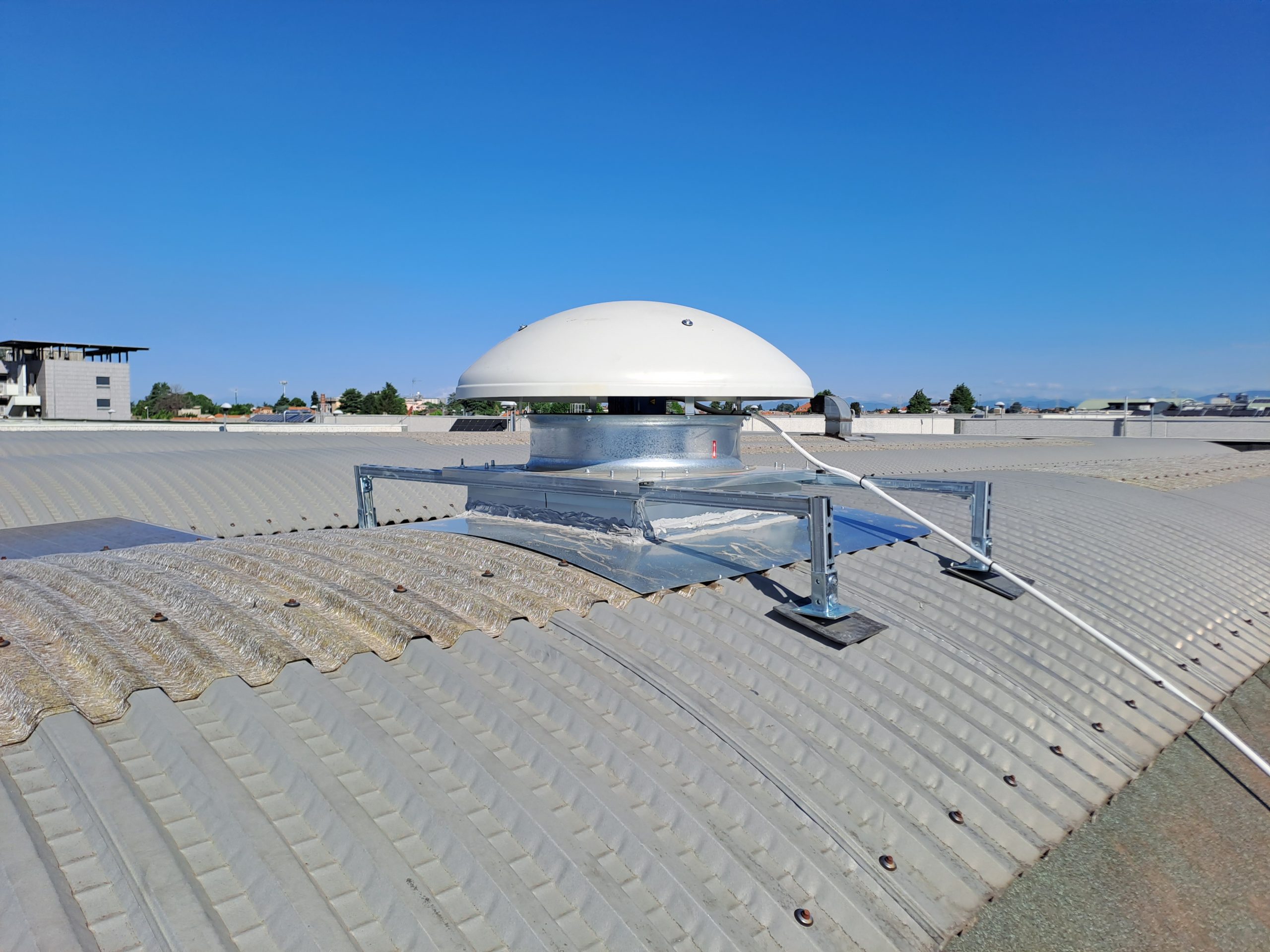
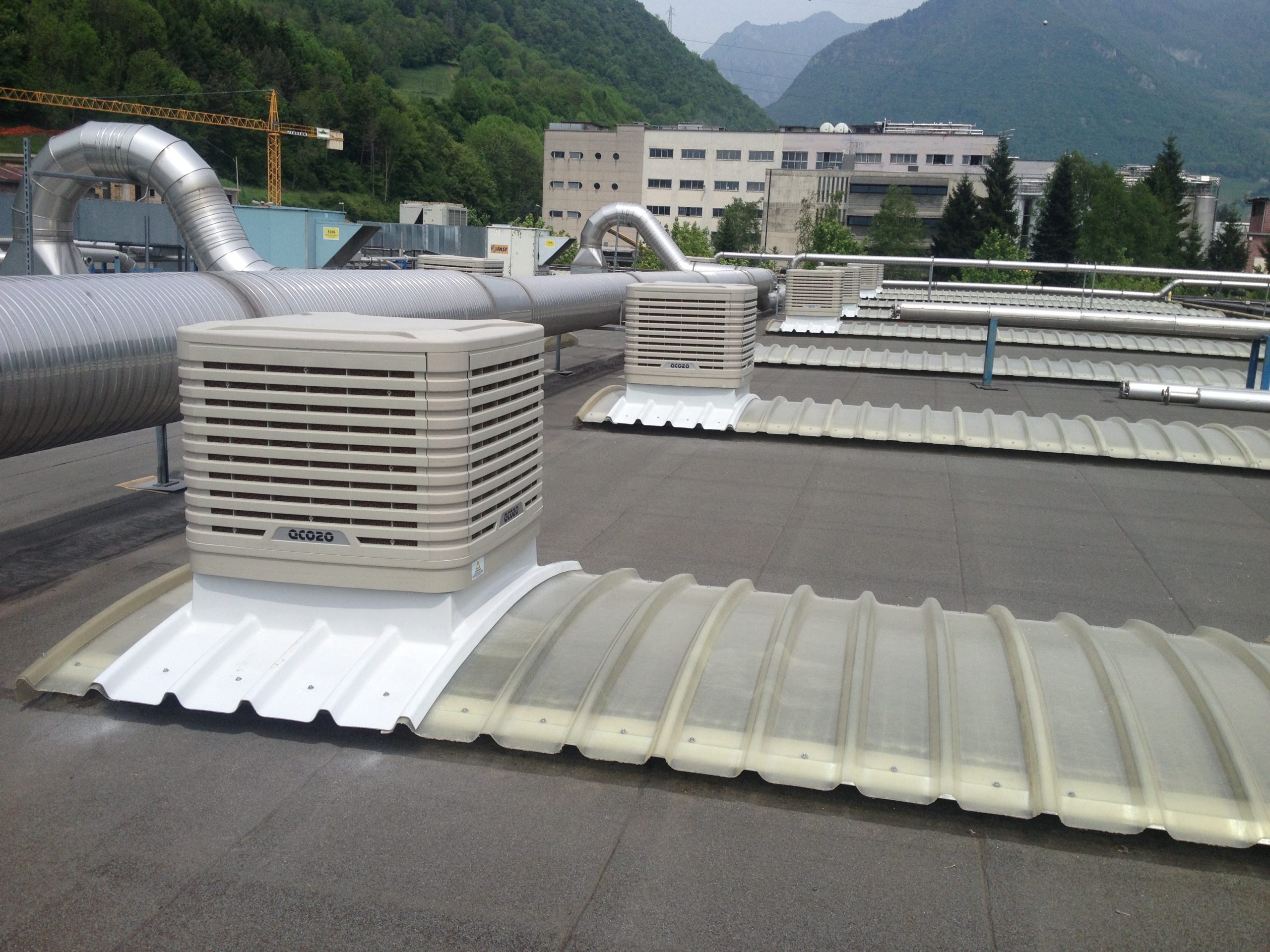
- Extraction fans for the removal of stale air, installed on walls, roofs, or integrated into duct systems, depending on the facility layout and system configuration;
- The combined use of extractors and fans to ensure continuous and controlled airflow, improving environmental conditions and reducing health risks;
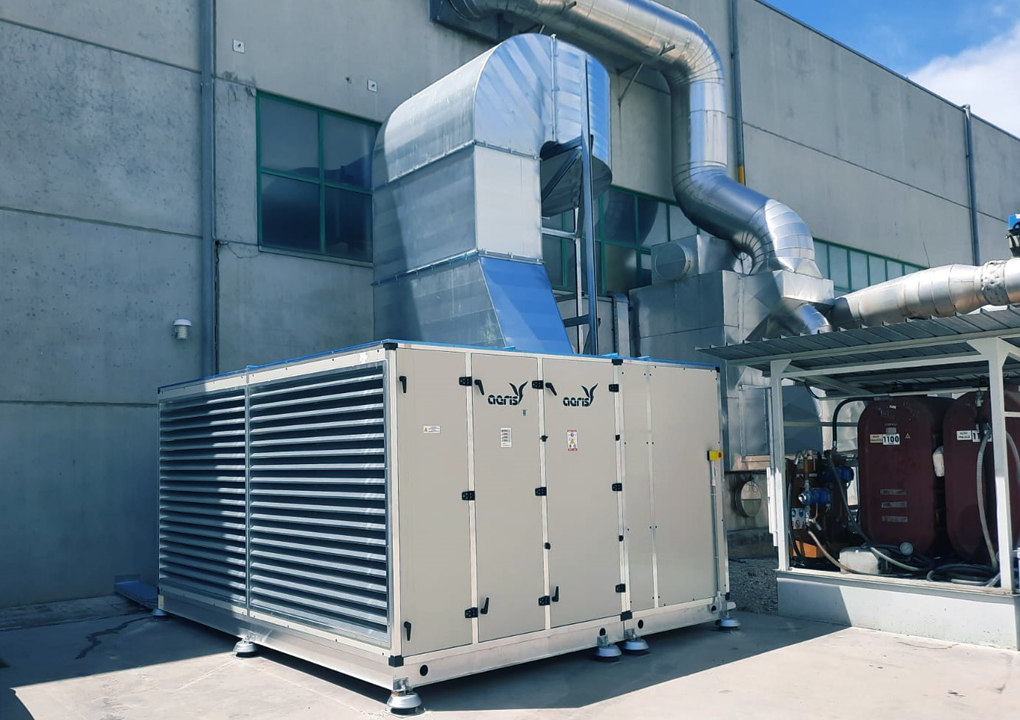
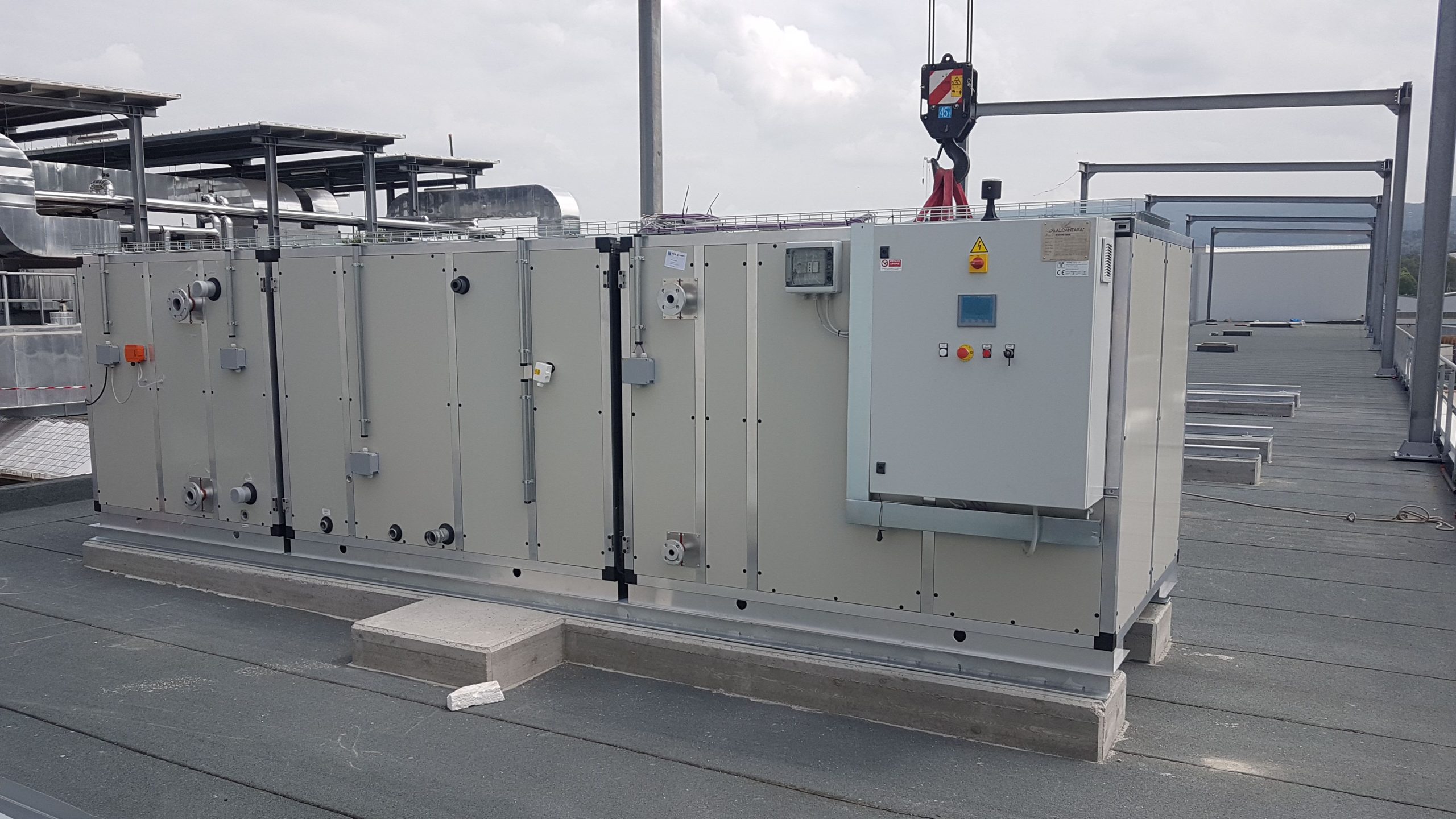
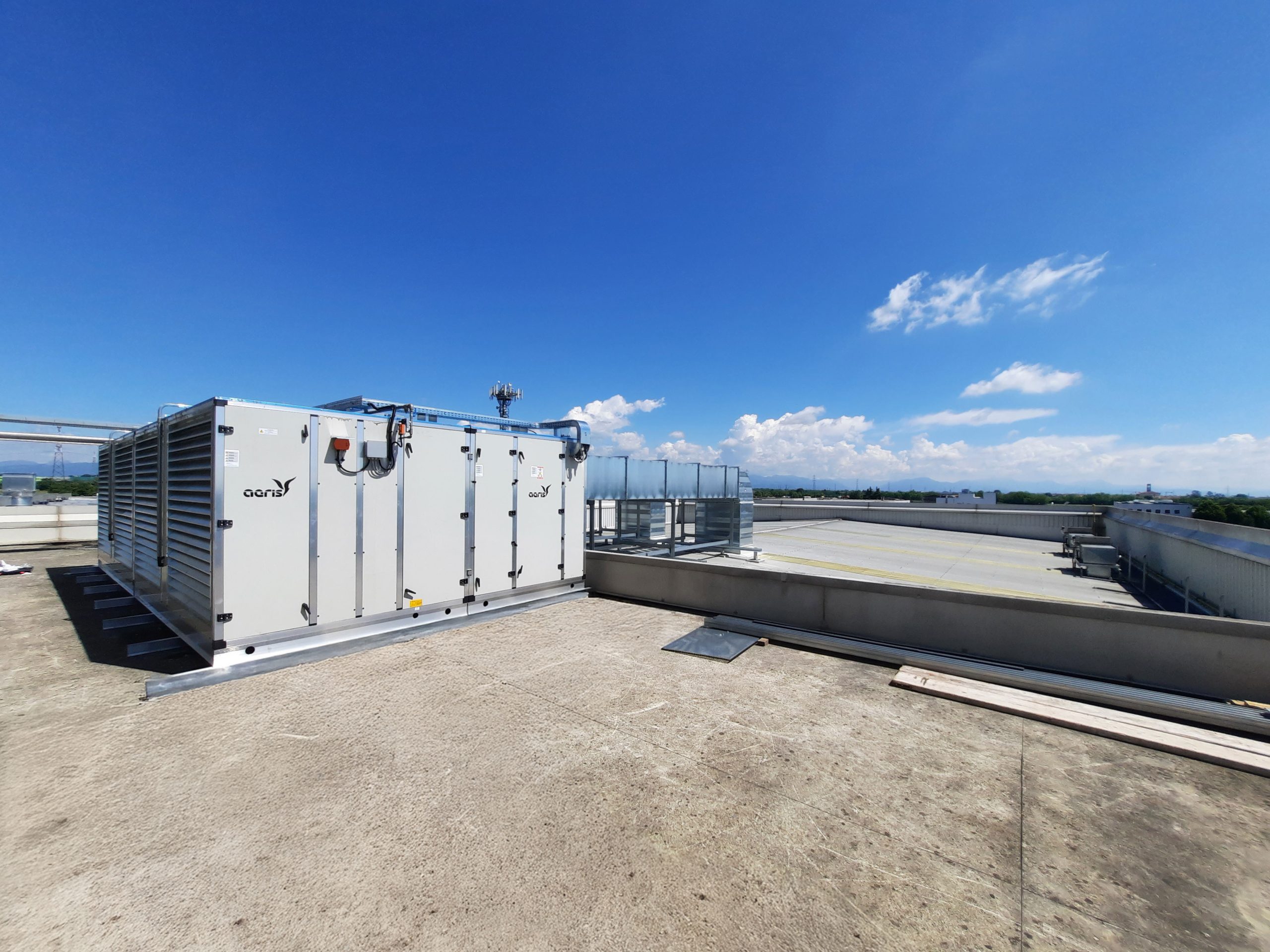
- Air handling units (AHUs), which filter and condition the air, optimising temperature and overall air quality.
ADVANTAGES OF INDUSTRIAL VENTILATION SYSTEMS
- Improved operator comfort, also during summer;
- Reduction of thermal stratification and excess humidity;
- Continuous air exchange;
- Reduced energy consumption;
- Suitable solutions for all types of industrial buildings;
- Compatibility with existing heating or cooling systems.
Aeris is the ideal partner for companies seeking efficiency, quality, safety, and innovation.
Request a free, personalised technical evaluation to identify the most suitable filtration solution for your application.
FILTRI A CARTUCCE ...
APPLICATIONS AND INDUSTRIES
FAQ
What are the main benefits of installing a mechanical ventilation system in an industrial facility?
An industrial mechanical ventilation system ensures a constant and controlled air exchange throughout the production facility. Its main benefits include the elimination of heat and humidity build-up, the dilution of odours and residual contaminants that cannot be captured at the source, and the maintenance of optimal working conditions for personnel. This significantly reduces the risk of heat stress and fatigue while improving overall workplace comfort, productivity and operational efficiency.
What are Air Handling Units (AHUs) and what role do they play in industrial ventilation?
Air Handling Units (AHUs) are the central components of advanced industrial ventilation and air conditioning systems. Rather than simply moving air, AHUs provide complete air treatment before supplying it to the production areas. A typical industrial AHU performs the following functions:
• Air Filtration – Removing airborne dust and external contaminants to protect both personnel and production equipment.
• Air Conditioning – Controlling air temperature and humidity throughout the year according to process requirements and operator comfort.
Depending on the application, AHUs may also include heat recovery systems, heating and cooling coils, humidification or dehumidification sections, and advanced air quality monitoring devices.
How can thermal stratification be eliminated in large industrial buildings?
In high-bay industrial buildings, warm air naturally rises and accumulates beneath the roof, while colder air remains at floor level. This phenomenon forces heating systems to operate at maximum capacity, resulting in unnecessary energy consumption.
Our industrial ventilation systems use a carefully engineered combination of extraction fans and air circulation systems to generate a continuous and controlled airflow.
This constant air movement eliminates thermal stratification, mixes the air throughout the building and distributes the temperature evenly from floor to ceiling, significantly reducing heating energy consumption.
Which industrial sectors benefit most from ventilation and air treatment systems?
General ventilation is recommended for virtually all industrial facilities, but it becomes particularly important in industries characterized by high thermal loads or widespread airborne emissions.
Typical applications include:
• Foundries and forging plants, for the removal of radiant heat.
• Metalworking industries.
• Rubber and plastics processing.
• Woodworking facilities.
• Paper and packaging industries.
• Chemical and pharmaceutical manufacturing.
In these sectors, accurate control of the indoor climate and air quality is essential to ensure process stability, product quality and operator safety.
Can industrial ventilation and dust extraction systems be integrated with Air Handling Units (AHUs)?
Yes. The integration of local exhaust ventilation systems with Air Handling Units is essential to maintain the correct air balance throughout the facility. Whenever significant volumes of air are extracted to capture contaminants, the AHU supplies an equivalent quantity of filtered and temperature-conditioned outdoor make-up air.
This prevents excessive negative pressure inside the building, avoiding uncontrolled air infiltration, difficulties in opening doors and other operational issues. From an energy efficiency perspective, these systems can be integrated with cross-flow heat exchangers or run-around coil heat recovery systems.
These technologies recover thermal energy from the extracted air before discharge and transfer it to the incoming fresh air supplied by the AHU, significantly reducing heating and cooling energy consumption.