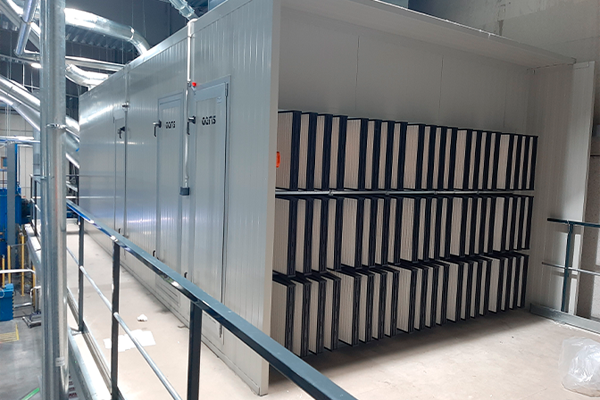
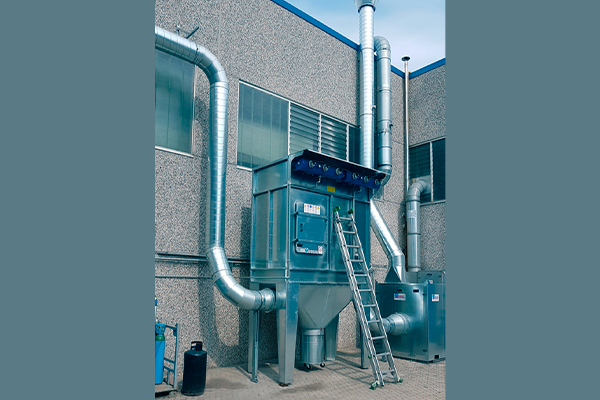
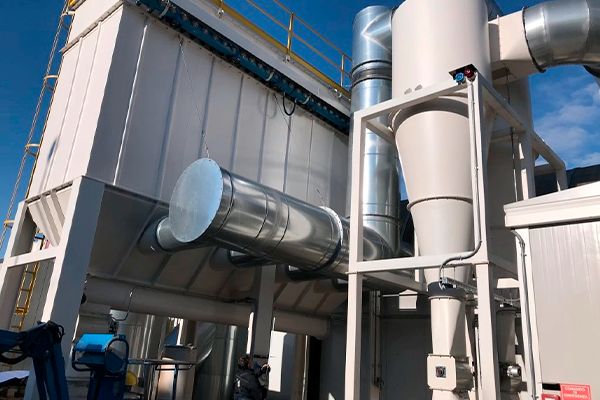
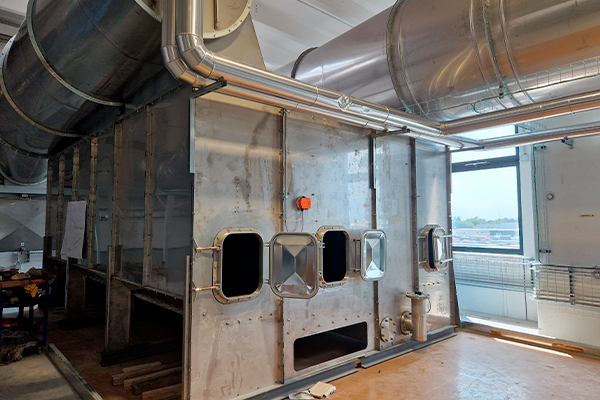
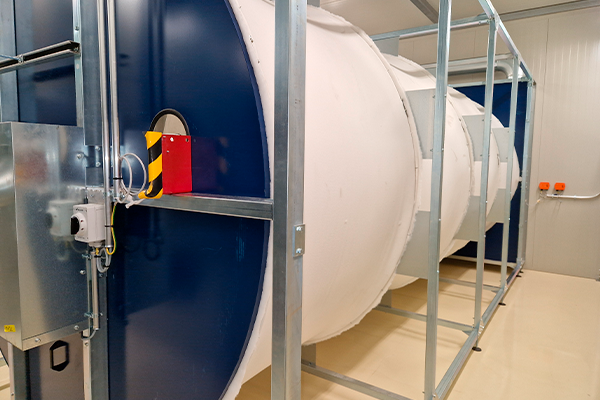
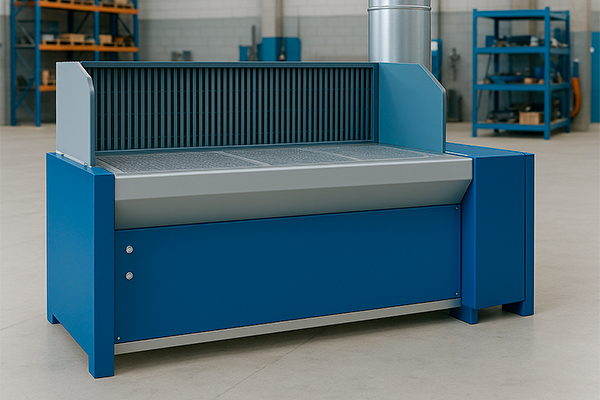
Used in ventilation systems or as an additional stage in HVAC units. These filters are compact and easy to replace, ideal for odour and VOC filtration in confined spaces.
These systems ensure effective removal of airborne pollutants through the use of high-quality activated carbon, improving air quality in working environments and ensuring compliance with environmental regulations.
Industrial activated carbon filters are engineered to meet specific operational requirements, providing a reliable and efficient solution for the treatment of industrial emissions while protecting both worker health and the surrounding environment.
OPERATION OF INDUSTRIAL ACTIVATED CARBON FILTERS
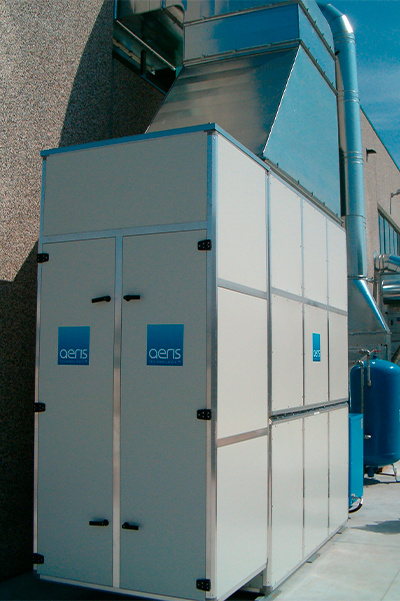
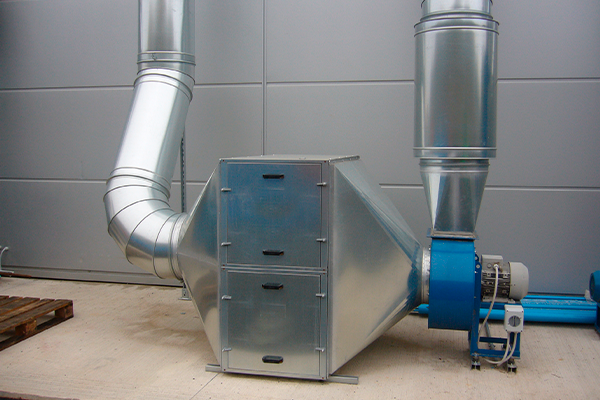
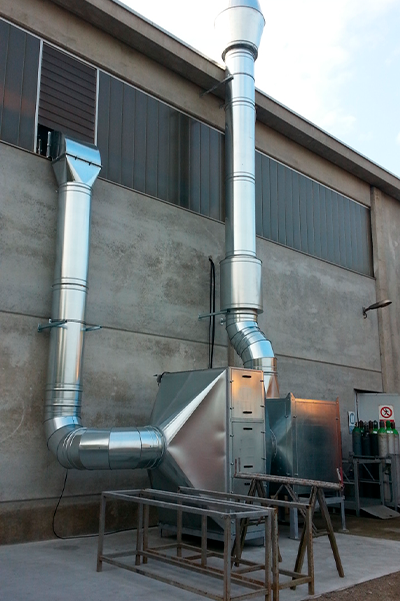
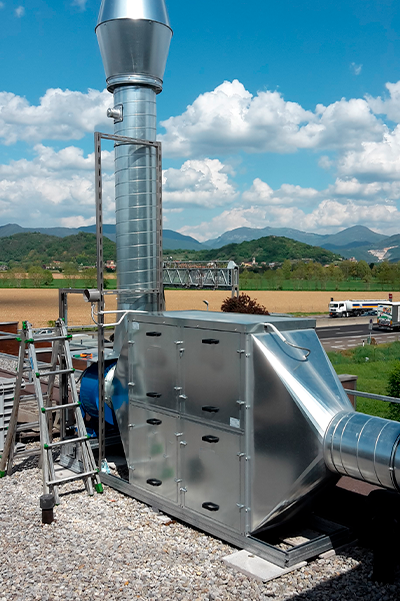
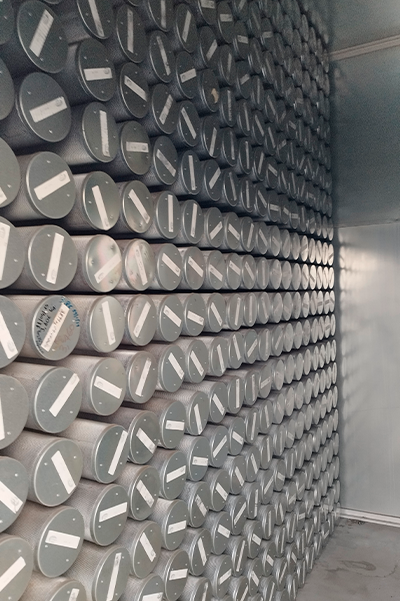
Contaminated air enters the industrial activated carbon filters and first passes through two preliminary filtration stages, consisting of metal filters and fabric filters, which capture coarse solid particles and protect the activated carbon media. The airflow then passes from the outside to the inside of the activated carbon cartridges, where, thanks to optimised airflow velocity and contact time, VOCs and solvents are effectively adsorbed. The purified air is subsequently discharged, ensuring optimal air treatment performance.
This process is based on physico-chemical adsorption rather than mechanical filtration (used in pocket or cartridge filters) and is particularly effective for the removal of:
TYPES OF ACTIVATED CARBON FILTERS FOR INDUSTRIAL APPLICATIONS
There are various configurations available depending on the type of system and treatment requirements:
Activated Carbon Panel Filters
Used in ventilation systems or as an additional stage in HVAC units. These filters are compact and easy to replace, ideal for odour and VOC filtration in confined spaces.
Activated Carbon Cartridge Filters
Similar to dust cartridge filters but filled with activated carbon granules. They offer high adsorption capacity and are suitable for medium to large industrial installations.
Deep Bed Filters
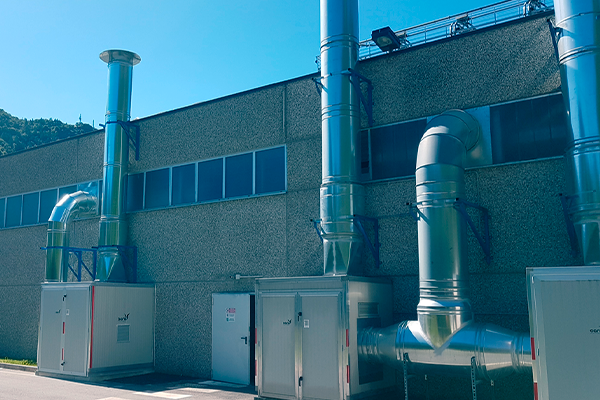
Consisting of a container filled with granular activated carbon, these filters provide prolonged contact time between air and carbon, enhancing adsorption efficiency. They are ideal for chemical and pharmaceutical plants, laboratory air treatment, paint industries, and surface treatment processes.
These filters integrate pre-filtration stages (e.g., cartridge or pocket filters) followed by an activated carbon stage, ensuring combined removal of particulate matter and gaseous contaminants.
OUR PROJECTS
Aeris is the ideal partner for companies seeking efficiency, quality, safety, and innovation.
Request a free, personalised technical evaluation to identify the most suitable filtration solution for your application.
How does the filtration process in activated carbon filters work and what does "adsorption" mean?
Activated carbon removes gaseous contaminants through a physico-chemical process known as adsorption (not to be confused with absorption). Activated carbon has an extremely porous internal structure, providing an exceptionally large specific surface area—up to more than 1,000 m² per gram of carbon. As the contaminated air stream passes through the activated carbon bed, gas molecules and odorous compounds are captured and retained within these microscopic pores through molecular attraction, allowing clean air to exit the filtration system.
Which industrial contaminants are activated carbon filters best suited for?
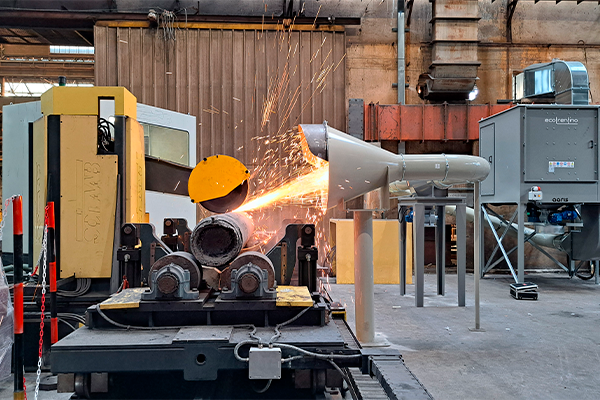
Activated carbon filters are the standard solution for the removal of Volatile Organic Compounds (VOCs), solvents, chemical fumes, acid gases and unpleasant odours. Typical applications include: • Paint spraying and coating processes • Industrial printing • Fiberglass and plastics manufacturing • Chemical and pharmaceutical industries • Waste storage and treatment facilities • Laboratories Activated carbon filters are not suitable for collecting dust or solid particulate, as these contaminants rapidly clog the carbon pores and significantly reduce adsorption efficiency.
How is the service life of activated carbon determined and how often should it be replaced?
The service life of activated carbon is not fixed but depends on three main factors: • System airflow rate. • Contaminant concentration. • Daily operating hours. Activated carbon has a maximum adsorption capacity, typically retaining contaminants equivalent to approximately 15–20% of its own weight. Once all the micropores become occupied, the carbon is considered saturated and must be replaced or regenerated. In properly designed industrial applications, activated carbon is typically replaced every six to twelve months, depending on operating conditions.
What precautions should be taken upstream of an activated carbon filter to protect it?
To ensure maximum performance and protect the activated carbon bed from premature saturation or structural damage, the air stream must be properly pre-treated. A mechanical pre-filtration system—such as pocket filters or panel filters—should always be installed upstream to remove any dust or solid particulate before it reaches the activated carbon. In addition, both air temperature and relative humidity must be carefully monitored. Operating temperatures above 50°C or excessive humidity levels can significantly reduce the adsorption capacity of activated carbon.
How can you determine when activated carbon is saturated and needs to be replaced?
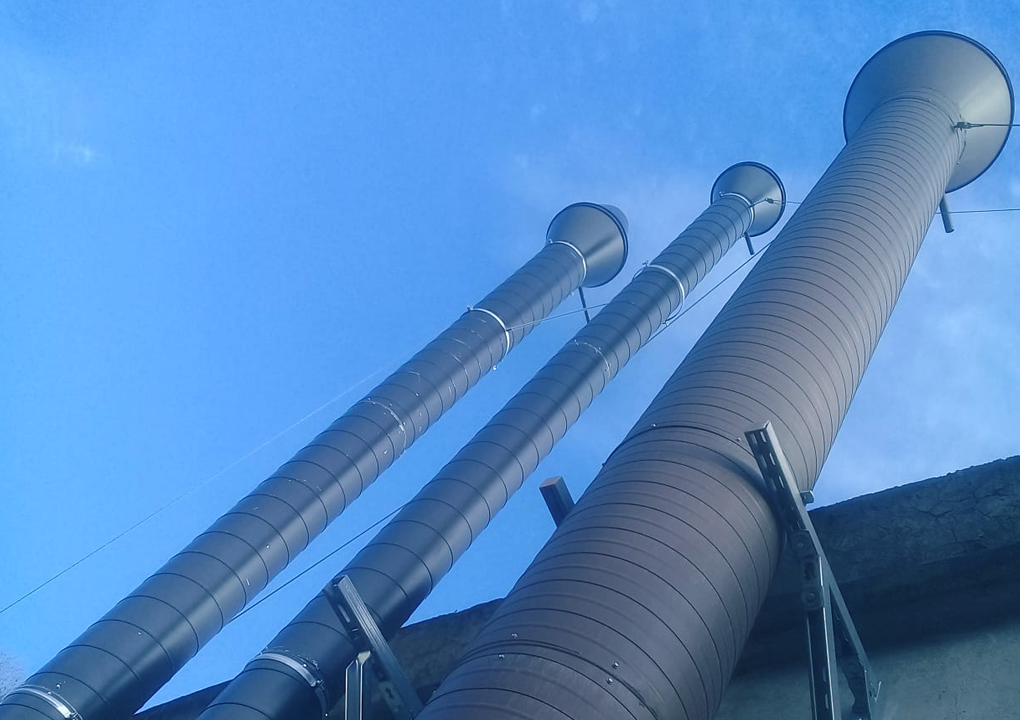
The most obvious indication that activated carbon has reached saturation is the reappearance of the characteristic odour of the contaminant at the exhaust stack or the detection—through emission analysis—of VOC concentrations exceeding the applicable regulatory limits. Unlike fabric filters, where clogging results in an increase in differential pressure, activated carbon saturation does not produce significant changes in system pressure drop. For this reason, maintenance is based on: • Odour monitoring. • Periodic chemical analysis of exhaust emissions. • Scheduled replacement intervals determined during the system design phase according to the estimated contaminant load.